As an Application Architect in the Enterprise AI Program, you will provide technical direction, architectural oversight, and hands-on engineering leadership across scrum teams building production AI-enabled software.
This role sits between enterprise/program architecture and delivery teams, helping translate business needs and platform strategy into practical, scalable, secure, and maintainable technical solutions.
This is a senior technical leadership role for someone who can:
- Shape architecture and implementation patterns
- Guide teams building AI-enabled applications, agents, workflows, and integrations
- Validate technical direction through code, demos, and proofs of concept
- Establish reusable patterns, templates, and reference implementations
- Stay close to the codebase through code reviews, technical spikes, troubleshooting, and situational code contributions
- Evaluate emerging AI technologies and educate the team through practical examples
This role is not a full-time feature development position, but it is also not a hands-off architecture role. The Application Architect is expected to remain technically close to the platform and contribute directly when architectural complexity, delivery risk, production issues, or emerging platform patterns require senior technical involvement.
You will help lead architecture across:
- Enterprise AI platform capabilities
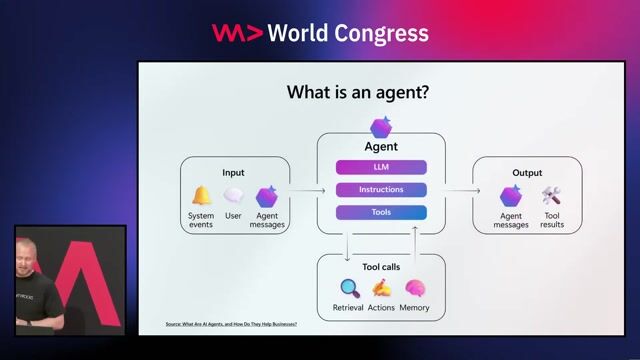
- LLM-powered agents and agent workflows
- Retrieval-augmented generation, or RAG, patterns
- Model Context Protocol-style tool integrations
- Durable workflow and orchestration patterns
- Internal and external AI-enabled applications
- Secure integrations with Salesforce and internal Ascensus systems
- Observability, evaluation, testing, and production support patterns
- AI-assisted engineering practices using tools such as Cursor, Claude Code, or similar platforms
We are looking for an architect who is practical, hands-on, delivery-oriented, and deeply curious about where AI engineering is headed. You should be able to set direction without creating unnecessary complexity, mentor engineers without becoming a bottleneck, and turn emerging technology into working examples that help teams move faster with confidence., * Translate business needs into practical AI platform architecture.
- Provide technical direction across multiple scrum teams.
- Align implementation decisions with enterprise architecture and platform strategy.
- Guide teams building agents, RAG pipelines, workflows, tools, integrations, and AI-enabled applications.
- Establish reusable patterns, templates, reference implementations, and engineering standards.
- Review designs and coach teams toward secure, scalable, observable, and maintainable solutions.
- Stay actively connected to the codebase through code reviews, technical spikes, POCs, reference implementations, troubleshooting, and situational code contributions.
- Evaluate emerging AI tools, models, frameworks, orchestration patterns, and development practices.
- Translate technical exploration into practical guidance, demos, reusable examples, and implementation standards.
- Help teams resolve technical impediments and production issues.
- Promote consistency and reuse across teams without slowing delivery.
- Communicate clearly with technical and non-technical stakeholders., * MCP registry, tool governance, tool security, or act-as-user integration patterns
- Durable workflow platforms such as Temporal
- Event-driven systems, message queues, or orchestration patterns
- Salesforce integrations or enterprise system integrations
- Observability platforms such as Langfuse, New Relic, OpenTelemetry, Azure Log Analytics, or similar tools
- AI evaluation frameworks, golden tests, prompt/version management, or quality measurement practices
- Secure software design for systems that handle sensitive or regulated data
- DevOps, infrastructure, deployment automation, containerization, or cloud-native application patterns
- AI-powered development tools such as Cursor, Claude Code, or similar tools
- Creating technical demos, POCs, or internal enablement materials to help engineering teams adopt new technologies
- Technical documentation, architecture decision records, solution diagrams, and executive-level technical communication
- Working with SDETs, DevOps engineers, support engineers, software managers, product owners, and enterprise architects, * Set technical direction for AI platform capabilities and implementation patterns.
- Partner with other architects to align team-level designs with broader platform strategy.
- Ensure solutions are secure, scalable, reliable, observable, and maintainable.
- Help teams make good tradeoff decisions around speed, quality, complexity, cost, and long-term supportability.
AI Platform Patterns
- Guide architecture for LLM-powered agents, RAG pipelines, prompts, skills, tools, and workflows.
- Define reusable patterns for AI application development.
- Establish standards for tool integrations, orchestration, observability, evaluation, and production readiness.
- Support responsible AI engineering practices that improve accuracy, transparency, reliability, and user trust.
Hands-On Technical Leadership
- Stay close to the codebase through regular code reviews, design reviews, POCs, reference implementations, and complex troubleshooting.
- Contribute directly to application, platform, workflow, integration, or agent code when senior technical involvement is needed.
- Build working demos, technical spikes, starter templates, and reference implementations.
- Experiment with emerging AI technologies, tools, models, frameworks, and orchestration patterns.
- Turn technical exploration into practical team guidance and reusable implementation standards.
- Assist with production issues requiring senior engineering judgment.
- Use hands-on learning and code-level involvement to coach engineers and raise the technical bar.
Collaboration and Communication
- Work closely with program architects, application architects, software managers, engineers, SDETs, DevOps engineers, support teams, product partners, and business stakeholders.
- Explain architecture decisions and tradeoffs clearly.
- Document solution designs, patterns, diagrams, standards, and decision records.
- Promote reuse and consistency across teams.
- Help socialize new technologies, patterns, and platform capabilities., You will be successful in this role if you:
- Set clear technical direction that teams can actually execute.
- Help teams move faster without creating unnecessary complexity or long-term risk.
- Build reusable patterns that improve consistency, quality, and delivery speed.
- Make AI platform capabilities easier for teams to understand, use, test, and support.
- Remain close enough to the codebase to make architecture decisions that are practical, credible, and executable.
- Contribute directly when the team needs senior technical help.
- Turn emerging AI technologies into practical examples, demos, and reusable patterns.
- Mentor engineers and raise the technical bar across teams.
- Communicate architecture in a way that is useful to engineers, leaders, and business partners.
- Help the Enterprise AI Program scale from individual solutions to a repeatable platform model.


.png)
 Dominik Krichbaum · WWC Europe 2026
 Stan Girard · WWC 2024
 Patrick Schnell · Coffee With Developers


.gif)
.png)