

MH
Michael Hunger
Graph and AI Trends 2026: Why Is AI Running but Not Yet Delivering?
9 months ago
Act as a trusted senior technical architect and advisor to client leadership, bridging the gap between cutting-edge AI capabilities and core business transformation.
Oversee multiple architectural delivery streams, making high-impact decisions on technology stacks, framework selection, and infrastructural trade-offs across the 7-layer AI stack. Responsibilities
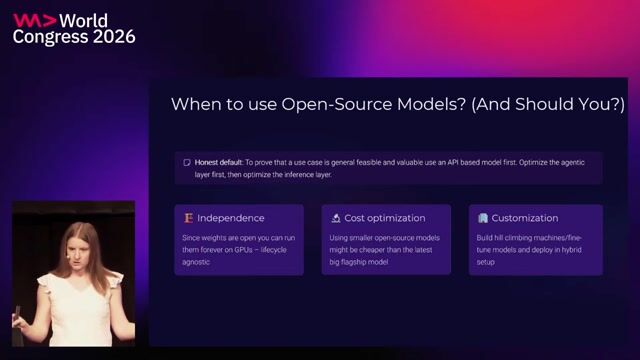
Enterprise AI Strategy & Trade-Off Analysis: Define multi-year GenAI roadmaps by evaluating structural architecture trade-offs across the 7-layer LLM stack. Compare Commercial APIs (e.g., GPT-4o, Claude 3.5 Sonnet) vs. Hosted Open-Source LLMs (e.g., Llama 3) based on cost, latency, and data privacy.
Advanced Architecture Oversight: Review and approve macro-level AI architectures. Architect scalable data ingestion pipelines, selecting between standard semantic RAG, Agentic RAG, or GraphRAG depending on enterprise complexity.
Advanced Observability & Monitoring: Design deeply integrated AI observability (OBS) layers tailored for LLMs. Implement specialized tools (e.g., LangSmith, Phoenix, Arize) to track token consumption, trace complex agentic reasoning loops, and monitor model drift and hallucination rates in production.
Robust Data Protection Strategy: Architect comprehensive data protection pipelines utilizing Enterprise Data Loss Prevention (DLP) tools. Ensure data is sanitized before hitting external APIs and implement robust semantic caching to prevent sensitive data leakage.
Executive Consulting & Technical Pitching: Lead onshore client-facing engagements, pitching complex AI solutions to C-suite stakeholders, translating engineering trade-offs into clear financial and operational ROI frameworks.
Consulting Skills: High-impact executive presence; extensive experience in technology consulting, solution scoping, and technical proposal architecture.
Senior Technical Architecture Mastery: Deep hands-on background in enterprise integration patterns. Expert-level capability in comparing orchestration layers (e.g., LangChain vs. LlamaIndex vs. Semantic Kernel) and evaluating modern execution environments (vLLM, TensorRT-LLM).
Cloud & Vector Strategy: Deep familiarity with dictating enterprise data storage choices by comparing managed vector services (Pinecone) vs. distributed open-source engines (Milvus/Qdrant) or extending existing relational systems (pgvector).
Qualifications: Master’s in computer science, AI, or IT Management; 12-18 years of progressive IT/AI experience, heavily indexing on senior technical architecture and client delivery.
Be an Early Applicant Remote Hiring Remotely in United States 200K-280K Annually Expert/Leader Remote Hiring Remotely in United States 200K-280K Annually Expert/Leader Lead enterprise GenAI strategy and architecture across the 7-layer LLM stack. Advise C-suite, design scalable ingestion and RAG/agentic pipelines, implement observability (token tracing, drift/hallucination monitoring), enforce data protection/DLP and semantic caching, and oversee large onshore client delivery and technology trade-off decisions. The summary above was generated by AI
Direct the enterprise GenAI technology portfolio and lead large-scale, onshore client engagements., The typical base pay range for this role across the U.S. is USD $200,000 - $280,000 per year.
This job is hosted externally. Click below to view the full posting and apply.
Talks and stories from around this role — technically off-topic, practically not.
52 sec
 Malte Lensch · World Congress 2026 Europe
2:27 min
 Edo · World Congress 2024
6:08 min
 Matthias Niehoff · World Congress 2024
4:52 min
 Anshul Jindal +1 · World Congress 2025
2:08 min
 Julián Duque · World Congress 2025
2:51 min

.gif)