
Secure coding
18 moments from 16 videos · 1:28:28 total
This playlist gathers expert guidance on writing secure code to help software engineers preemptively eliminate vulnerabilities during the build phase.
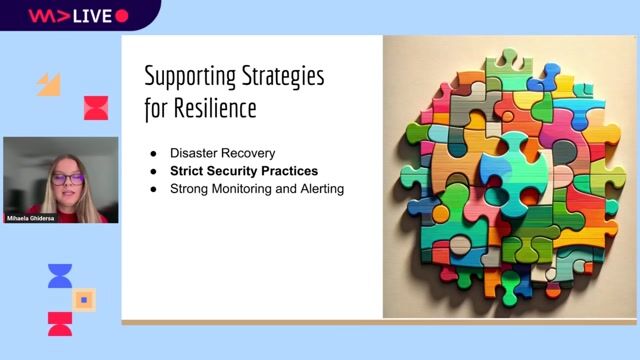
Applying secure coding practices and proactive system monitoring
Training developers to mitigate common application vulnerabilities and implementing continuous system scanning prevents minor disruptions from escalating into major operational outages.
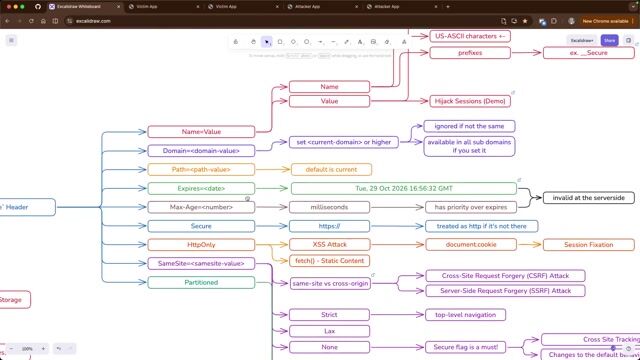
Securing cookie names and encrypting sensitive session values
Superficial encoding leaves data vulnerable, requiring robust encryption algorithms and secure name prefixes to protect sensitive session variables.
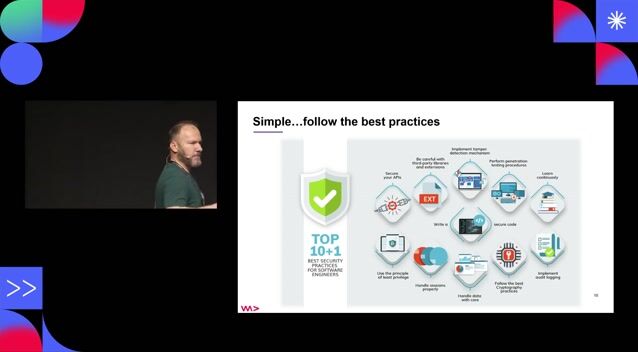
Writing secure code and utilizing threat modeling methodologies
Validating active user inputs and applying the STRIDE security framework proactively prevents deep operational system vulnerabilities.
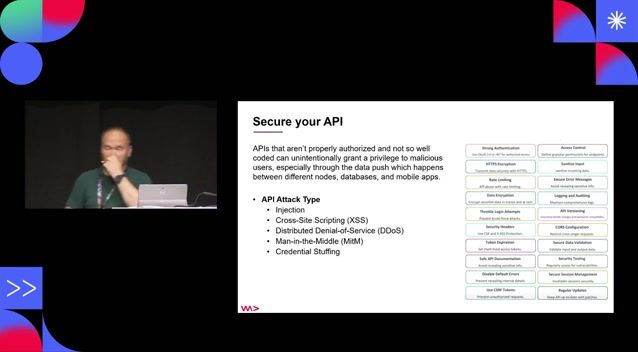
Securing exposed application programming interfaces against unauthenticated access
Enforcing strict authentication and transport layer encryption prevents malicious external actors from intercepting sensitive API endpoints.

Implementing guidelines for strong and secure web passwords
Developers must enforce specific constraints like mixed capitalization, symbols, and length boundaries on login forms.
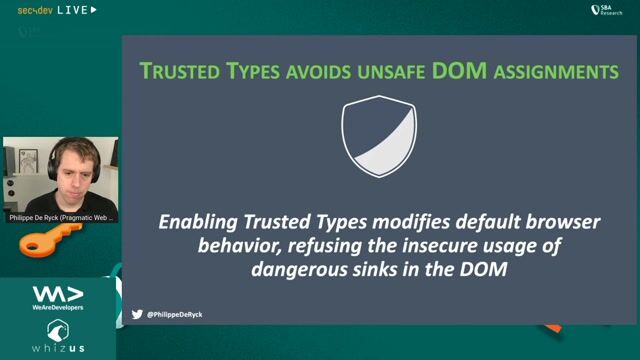
Improving code security with trusted types in development environments
Catching and fixing improper DOM assignments during local development secures applications globally.

Making security a foundational feature in software development
Using secure frameworks and educating teams early prevents vulnerabilities from becoming afterthoughts.
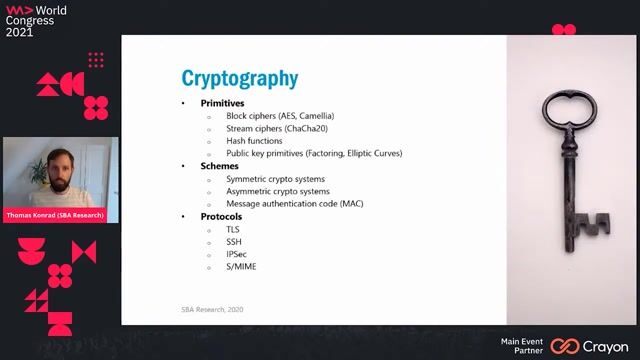
Implementing strong cryptography, session management, and concurrency
Establishing non-guessable session identifiers and avoiding race conditions prevents severe logic exploits.
Validating and encoding inputs to prevent injection attacks
Differentiating input validation from sanitization safely embeds untrusted data into target structures.

Introduction to secure development and OWASP SAMM
Why focusing purely on secure coding is insufficient without a comprehensive secure development lifecycle.
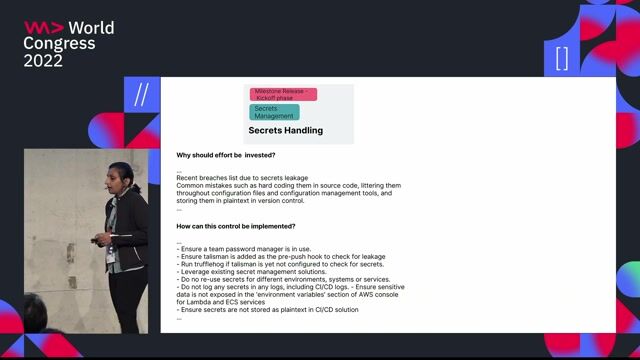
Contextualizing the why and how of security requirements
Providing real-world threat context and specific implementation guidance helps developers understand the value of secure coding.
Mitigating vulnerabilities with automated scanning and secure practices
Implementing automated static application testing within local editor environments to continuously prevent directory traversal injections.
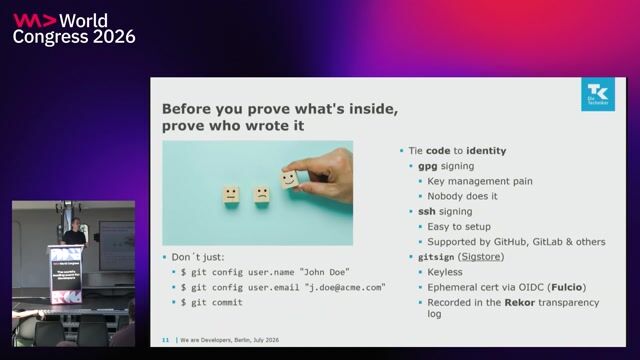
Securing code provenance with digital identity signatures
Cryptographically tying developer identity to code commits secures code systems against spoofing and establishes verifiable provenance.
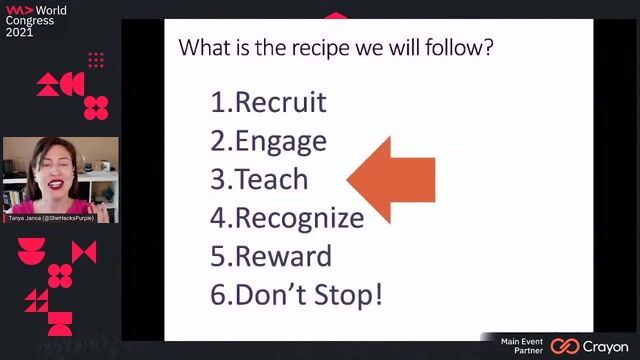
Teaching and coaching security concepts for lasting impact
Providing scoped training on secure coding, architecture, and tooling while delegating appropriate responsibilities effectively.
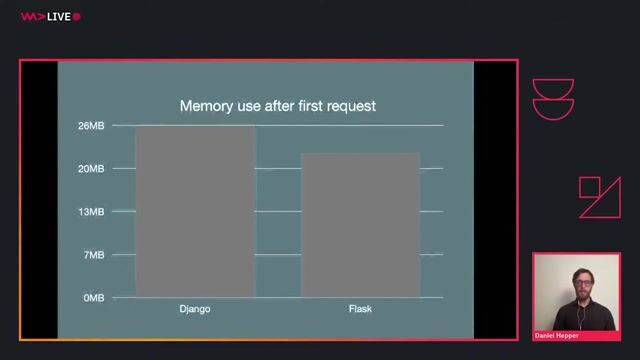
Security defaults and preventing cross site request forgery
Explicit security configuration settings and protective framework environments inherently defend novice software developers against severe web vulnerabilities.

Securing frontend applications against untrusted user inputs
Treating applications as fortresses helps developers protect digital identities and block malicious entry points.
Securing token signatures and preventing authentication failures
Avoiding critical authentication flaws by using strong cryptographic secrets and secure session management patterns.
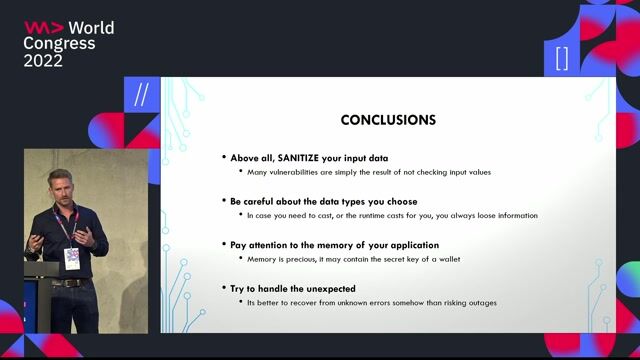
Core principles for input validation and memory safety
Strict input sanitization, careful data type casting, and proactive memory management form the foundation of secure software.
Your mix. Instantly.
More mixes
AI & Machine Learning
AI coding agents
AI & Machine Learning
MCP (Model Context Protocol)
AI & Machine Learning
RAG
Languages & Frameworks
TypeScript
Languages & Frameworks
React
Languages & Frameworks
Java
Cloud, Platform & Data
Platform engineering
Cloud, Platform & Data
Observability
Cloud, Platform & Data
Infrastructure as code
Architecture, Quality & Security
System architecture
Architecture, Quality & Security
Code review
Architecture, Quality & Security
Software supply chain security
Leadership, Career & Community
Engineering strategy
Leadership, Career & Community
Developer experience
Leadership, Career & Community