


World Congress 2026 Europe Jul 9, 2026 Session details

3x Performance: A Humbling Journey

Luca Trușcă

Why did fixing a four-second mobile load time take four humbling months? Discover how eliminating CORS pre-flight requests and exposing broken analytics tripled performance for Adobe Express.

Pause
Mute Enter Fullscreen
#1 about 2 min

Context and performance challenges in Adobe Express on mobile

Shipping a computationally heavy mobile component before optimizing performance resulted in unacceptable latency out of target bounds.

#2 about 1 min

Identifying frontend performance targets with percentiles

Evaluating median and tail latency metrics revealed that the mobile component was drastically above functional performance budgets.

#3 about 2 min

Mapping the frontend mental model to backend API calls

Assuming sequential network requests caused the bottleneck prevented immediate identification of inter-service network boundaries.

#4 about 4 min

Reducing API latency by eliminating CORS preflight requests

Moving authentication headers to URL parameters converts cross-domain calls into simple requests that completely bypass slow preflight checks.

#5 about 3 min

Optimizing slow startup checks for paid user states

Querying the host application directly for paid states removes a blocking initialization sequence that stalled worst-case users.

#6 about 3 min

Reducing connection handshake overhead via CDN domain consolidation

Serving multiple APIs from a single shared origin eliminates duplicate DNS lookups and secure connection handshakes on mobile gateways.

#7 about 2 min

Identifying fallback cascades masking as client latency regressions

Analyzing regional analytics uncovered a failing primary API that continuously forced slower image fallback paths.

#8 about 2 min

Fixing blind spots in analytics instrumentation and measurement

Expanding network tracking to include failed attempts accurately accounts for total wait time previously mistaken as client latency.

#9 about 2 min

Avoiding accidental performance regressions via shared CDN caches

Modifying mobile API calls to request excessive parameters unintentionally prevents cache hits from a warmer desktop traffic pool.

#10 about 2 min

Preventing cache fragmentation from dynamic localized parameter requests

Adding user locales to image APIs multiplies the required cache keys and instantly invalidates warm responses across delivery networks.

#11 about 2 min

Preloading data during client UI animation gaps

Initiating network requests simultaneously with mobile menu animations utilizes idle connection time and drastically improves perceived speed.

#12 about 2 min

Accepting unexpected upstream performance wins without deep investigation

A host application update can occasionally resolve remaining metric regressions without requiring dedicated frontend architectural changes.

#13 about 3 min

Communicating progress asynchronously across distributed engineering teams

Sharing weekly performance charts with preemptive technical context builds cross-team consensus and reduces friction for resolving blockages.

#14 about 2 min

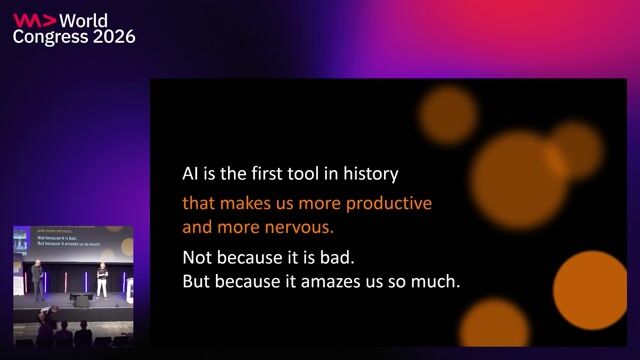
Recognizing AI limitations for debugging niche network caches

Although language models excel at technical definitions, resolving bespoke distributed network dependencies still requires deep architectural intuition.

#15 about 1 min

Three fundamental lessons for debugging complex performance bottlenecks

Relying on concrete telemetry, understanding backend boundaries, and prioritizing visibility are the cornerstones of multi-team infrastructure transformations.

#16 about 1 min

Gathering targeted analytics for specific component lifecycle flows

Collecting metrics modeled around exact product requirements ensures ongoing optimizations actually improve critical production user paths.

Matching moments

1:10 min

Identifying system bottlenecks for comprehensive application performance optimization

Milica Aleksic Milica Aleksic +1 · World Congress 2023

4:52 min

Evaluating performance impacts of advanced CSS animations

Aaron T. Grogg · Coffee With Developers

4:47 min

Final performance results and key architectural takeaways

Yedidya Schwartz · LIVE

6:47 min

Understanding the business impact of frontend performance

Jonas Kröger · LIVE

3:10 min

Debugging performance bottlenecks with developer tools

Cathrin Möller · World Congress 2023

1:28 min

Optimizing performance across JSON methodologies and backend stacks

Alen Pokos · LIVE

Upcoming sessions on this topic

Open session

World Congress 2026 North America

September 24, 2026 · 14:50–15:20

Stage 9

How to generate business value through performance optimizations

Nikolai Sidiropulo

Software Engineer at Meta

Nikolai Sidiropulo
Open session

World Congress 2026 North America

September 25, 2026 · 14:10–14:40

Stage 7

Why Your iOS App Feels Broken After an Hour: Diagnosing Long-Session Performance on Real Devices

Vasuki Uday Kiran Vudathala

Staff Performance Engineer at ServiceNow

Vasuki Uday Kiran Vudathala
Open session

World Congress 2026 North America

September 24, 2026 · 14:10–14:40

Stage 7

Designing High-Performance AI APIs: Lessons from Serving Millions of Real-Time Requests

Wayne Liu

Chief Growth Officer and Americas President of Perfect Corp.

Wayne Liu
Open session

World Congress 2026 North America

September 25, 2026 · 16:50–17:20

Stage 4

Engineering Moneyball: How We Benchmarked Google vs Meta

Jirka Bachel

Co-Founder & CEO

Jirka Bachel
Open session

World Congress 2026 North America

September 24, 2026 · 13:40–13:50

Outdoor Stage

The Autonomous Performance Agent: A Netflix Production Story

Rajat Shah

Staff Software Engineer, AI Platform, Netflix

Rajat Shah
Open session

World Congress 2026 North America

September 24, 2026 · 14:10–14:40

Stage 1

Anatomy of an AI Request: Where Latency and Cost Are Really Born

Dan Fu

VP of Kernels at Together AI

Dan Fu