
World Congress 2026 Europe Jul 10, 2026 Session details

AI Wrote the Code. Now What?

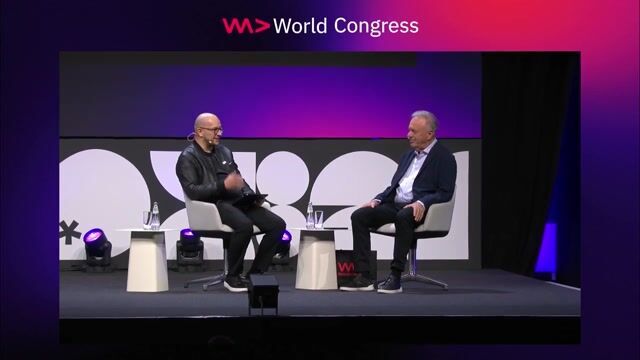
Jyoti Bansal , Daniel Gebler

Jyoti Bansal warns that generating 2.5x more code is useless if delivery remains bottlenecked. Discover how risk-based autonomy and AI agents solve the velocity paradox.

Pause
Mute Enter Fullscreen
#1 about 3 min

Understanding the AI velocity paradox in software delivery

Generating significantly more code with AI creates a bottleneck when outer loops remain constrained to human speeds.

#2 about 2 min

Implementing risk-based autonomy for automated quality control

Applying AI automation based on code risk levels ensures safe deployments without manually blocking low-risk changes.

#3 about 2 min

Assessing code risk with multi-variable scoring systems

Evaluating factors like reviewer provenance, test coverage, and code complexity determines the exact level of required human oversight.

#4 about 3 min

Refactoring legacy codebases for effective AI agent integration

Breaking large repositories into smaller units with clean APIs allows AI agents to reason effectively within limited context windows.

#5 about 4 min

Tracking token usage for accurate AI cost management

Tying developer and agent tokens directly to specific business outcomes and issue trackers accurately measures software delivery returns.

#6 about 3 min

Addressing the post-coding bottlenecks in software delivery pipelines

Automating mandatory post-coding tasks like security scanning, compliance checks, and deployments is required to handle increased code volumes.

#7 about 2 min

Adapting shift-left principles for high-volume code generation

Empowering individual developers with automated testing and security pipelines ensures rapid processing of exponentially larger AI code outputs.

#8 about 2 min

Transitioning to smaller, autonomous full-stack engineering teams

Empowering engineers to act as managers guiding multiple automated tools allows highly capable small teams to operate more efficiently.

#9 about 3 min

Embedding intelligent agents into continuous integration pipelines

Upgrading traditional automation scripts with intelligent workflow agents provides active reasoning across every step of the continuous deployment pipeline.

#10 about 2 min

Establishing multi-agent architectures for trustworthy code validation

Using separate and audited models for writing code and testing code prevents automated shortcuts and ensures strict policy governance.

#11 about 1 min

Deploying AI session monitoring tools across enterprise environments

Distributing lightweight tracking tools via mobile device management solutions enables unified visibility into developer AI interactions across the organization.

#12 about 2 min

Preventing organizational coding knowledge gaps during AI adoption

Enforcing strict code review practices ensures both junior and senior engineers remain deeply connected to the complex architectures they manage.

#13 about 2 min

Managing code ownership for internal citizen developers

Allowing business users to rapidly prototype applications requires a clear handover protocol to professional engineers for reliable production-grade scaling.

#14 about 2 min

Balancing artisanal coding skills with automated agent oversight

Combining deep algorithmic expertise with efficient oversight of automated assistants produces highly capable and competitive modern software engineers.

#15 about 4 min

Focusing on true business returns for AI adoption initiatives

Measuring software delivery success through concrete efficiency improvements and revenue growth prevents wasteful spending on arbitrary AI consumption goals.

Matching moments

2:34 min

Balancing developer autonomy with the adoption of coding agents

Clemens Wasner Clemens Wasner +4 · WWC Europe 2026

3:42 min

The promise and risk of AI coding agents

May Walter May Walter · WWC Europe 2026

5:16 min

Motivations for adopting AI to enhance developer productivity

1:55 min

Shifting developer workloads and realistic AI productivity gains

Chris Heilmann +2 · LIVE

4:03 min

Impact of AI on the software development lifecycle

Jemiah Sius Jemiah Sius +1 · WWC Europe 2026

3:33 min

Navigating developer bottlenecks and human accountability

Werner Vogels Werner Vogels +1 · WWC Europe 2026

Upcoming sessions on this topic

Open session

World Congress 2026 North America

The Broken Rung: How AI is Rebuilding Software Development from the Ground Up

Tomislav Tipurić

Chief Technology Officer, Nephos

Tomislav Tipurić
Open session

World Congress 2026 North America

Beyond the Code: Human-AI Synergies in Product Development

Ajita Kanchivakam Ananth

Staff Technical Program Manager at Google

Ajita Kanchivakam Ananth
Open session

World Congress 2026 North America

The spectrum of agentic coding: From vibe coding to high-quality software engineering

YK Sugi

Developer Experience Manager at Eventual

YK Sugi
Open session

World Congress 2026 North America

When Humans Stop Writing Code: Rethinking Languages, Compilers, and Responsibility

Simon Auer

Organizer of flutter vienna meetup and CEO of marqably

Simon Auer
Open session

World Congress 2026 North America

Agentic Drift: keeping pace with your agents

John Coghlan

Senior Director, Developer Advocacy at GitLab

John Coghlan
Open session

World Congress 2026 North America

AI ROI: The Hard Unit Economics of AI-Native Engineering

Manu Gurudatha

Manu Gurudatha, VP of Engineering at PagerDuty

Manu Gurudatha