

World Congress 2026 Europe Jul 10, 2026 Session details

From Space to Software: Reliability Lessons 40 Years After Challenger

Robert Barron

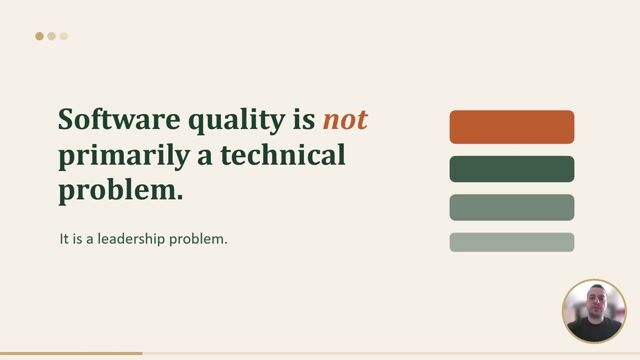
The Challenger disaster wasn't just a technical glitch; it was a catastrophic leadership failure. Learn how to prevent the normalization of deviance in your software delivery.

Pause
Mute Enter Fullscreen
#1 about 2 min

Applying space exploration lessons to software operations

How historical space exploration challenges provide crucial reliability insights for modern software engineering.

#2 about 2 min

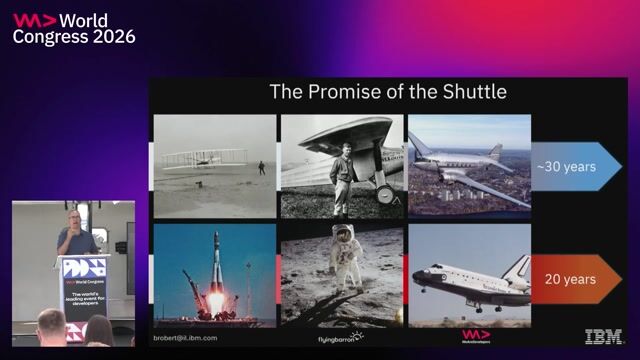
The illusion of a standardized operational space shuttle

Categorizing the primitive space shuttle as a standard, operational vehicle obscured underlying experimental risks.

#3 about 2 min

Schedule pressure and the relentless push to launch

Mounting delays and promises of commodity spaceflight created massive organizational pressure to ignore issues.

#4 about 2 min

Mechanical failure caused by a frozen O-ring component

The Challenger disaster originated from extreme cold temperatures compromising the technical seals of the rocket.

#5 about 2 min

Management ignoring critical engineering warnings and telemetry data

Leadership misread telemetry data and dangerously shifted the burden onto engineers to prove failure instead of safety.

#6 about 2 min

Normalization of deviance in modern software engineering teams

Treating near-miss production issues as business as usual creates catastrophic risk when under delivery pressure.

#7 about 2 min

Cultivating system reliability as a critical leadership responsibility

Flawless code and perfect system redundancy cannot prevent disasters without a supportive organizational safety culture.

#8 about 2 min

Prioritizing deployment safety over aggressive software shipping deadlines

Responsible leadership prevents failures by prioritizing engineering concerns and system safety over arbitrary speed goals.

Matching moments

1:54 min

Applying reliability principles to software engineering leadership

Maxim Schepelin Maxim Schepelin · WWC Europe 2026

3:49 min

Rethinking user errors through a spacecraft docking failure

Andrey Sitnik · WWC 2023

1:49 min

The feedback loop of leadership choices and technical outcomes

Oskar Kruschitz Oskar Kruschitz · Europe 2026 Virtual

2:08 min

Navigating and mitigating the impacts of broken engineering cultures

Oskar Kruschitz Oskar Kruschitz · Europe 2026 Virtual

2:29 min

Promoting a culturally safe environment for technical innovation

Eleanor Rumsey · LIVE

3:08 min

Preventing catastrophic failures in high-stakes software

Lars Hupel · WWC 2023

Upcoming sessions on this topic

Open session

World Congress 2026 North America

Culture Doesn't Scale Itself: Leading Engineering Teams Through Hypergrowth and the AI Transition

Thanos Baskous

VP of Engineering and Co-founder of Cogent Security

Thanos Baskous
Open session

World Congress 2026 North America

It passed auth, then production caught fire

Alex Olivier

Co-founder & CPO @ Cerbos | OpenID AuthZEN Co-chair

Alex Olivier
Open session

World Congress 2026 North America

The Geometry of Incidents: What User-Impact Shapes Reveal About Platform Architecture

Bala Subrahmanyam Kambala

Staff Platform Engineer at Oracle Cloud Infrastructure

Bala Subrahmanyam Kambala
Open session

World Congress 2026 North America

Closing the Visibility Gap: Lessons from Safety Critical Agentic Systems

Vivek Pandit

Principal Engineer at Cadence

Vivek Pandit
Open session

World Congress 2026 North America

Reinventing Testing Practices in the AI Era

Eric Deandrea

Java Champion & Senior Principal Software Engineer, IBM

Eric Deandrea
Open session

World Congress 2026 North America

Your Evals Passed. Your Agent Just Emptied a Database.

Tejas Pravinbhai Patel

IEEE Award-Winning Researcher | Best Keynote Speaker | Sr. Software Engineer at Amazon | AI Systems & Agent Architect

Tejas Pravinbhai Patel