

World Congress 2026 Europe • Jul 10, 2026 • Session details

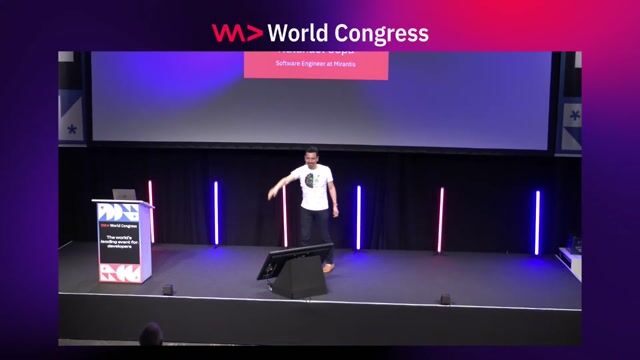
Your Kubernetes Node Is Not a Server: Rethinking the OS Layer

Natanael Copa

Stop patching fragile Kubernetes nodes. Booting directly into RAM as immutable firmware eliminates configuration drift and perfectly aligns bare metal with the ephemeral nature of containers.

Pause
Mute Enter Fullscreen
#1 about 2 min

Introduction to K3s and Alpine Linux host environments

Using lightweight operating systems enables minimal, single-binary Kubernetes distributions designed for simple deployments.

#2 about 4 min

Why Kubernetes nodes should not operate as traditional servers

Running nodes as long-lived servers creates risky upgrades, configuration drift, and unnecessary attack surfaces.

#3 about 3 min

Questioning the necessity of disks in immutable operating systems

Removing the hard drive from worker nodes entirely eliminates persistent state and simplifies hardware requirements.

#4 about 2 min

Consolidating the boot process into unified kernel images

Combining the kernel, early user space, and boot arguments into a secure EFI executable standardizes the startup routine.

#5 about 2 min

Limitations of executing Kubernetes directly from an initramfs

Attempting to start worker processes from the initial RAM disk fails because root transitions require a real kernel mount.

#6 about 2 min

Workarounds for mounting filesystems in RAM-based execution environments

Copying the initial filesystem into a temporary mount and transitioning the root allows the worker to successfully join clusters.

#7 about 2 min

Architecture of an immutable worker node booting from RAM

Fetching configurations from metadata and running entirely in memory transforms the operating system layer into hardware-like firmware.

#8 about 2 min

Security and maintenance advantages of node replacement models

Booting a fresh node instead of applying component patches guarantees consistency while drastically reducing the available attack surface.

#9 about 2 min

Hardware constraints and trade-offs of diskless edge operations

Eliminating local drives prevents data theft but requires careful management of time-sensitive join tokens and memory capacity limits.

#10 about 2 min

Practical use cases for diskless Kubernetes worker nodes

Ephemeral nodes provide a clean execution state for edge computing stations, automated testing workflows, and untrusted physical locations.

#11 about 7 min

Demonstrating a diskless working node deployment from RAM

Booting a customized kernel image dynamically configures a fully operational worker running purely in memory without underlying storage.

#12 about 2 min

Attaching persistent block storage for localized container workloads

Mounting a discrete drive exclusively for runtime variables enables local pod storage without compromising the immutable root environment.

#13 about 3 min

Provisioning secure unified kernel images via network booting

Delivering the initial executable directly over local networks finalizes the diskless concept and bypasses traditional cloud storage paradigms.

#14 about 4 min

Managing memory constraints and ephemeral configuration states

Operating without swap space means administrators must carefully throttle memory utilization and accept configurations as strictly non-persistent parameters.

Matching moments

4:43 min

Managing the complexity of bare metal Kubernetes deployments

Josip Stuhli Josip Stuhli · WWC Europe 2026

5:23 min

Implementing serverless abstractions natively on kubernetes infrastructure

Oliver Arafat · LIVE

11:32 min

Audience questions on security, limitations, and Kubernetes crossover

Maurice Brinkmann · LIVE

1:54 min

Speaker background and open source Kubernetes edge computing projects

Gaurav Gahlot Gaurav Gahlot · WWC Europe 2026

1:52 min

Utilizing Kubernetes as a foundation for internal platforms

Adam Bien · WWC 2021

4:48 min

Evolving from application containers to bootable systems

Cedric Clyburn Cedric Clyburn +1 · WWC 2025

Upcoming sessions on this topic

Open session

World Congress 2026 North America

Run your agents in Kubernetes: Build once, deploy anywhere. But really?

Michal Salanci

Senior Systems Engineer at ESET Cybersecurity

Michal Salanci
Open session

World Congress 2026 North America

Stop Running Mystery Meat in Production

Jeroen van Erp

Technical Advocate @ SUSE

Jeroen van Erp
Open session

World Congress 2026 North America

Offloading IoT State: Solving the Memory Crisis on Legacy Hardware

Pravin Nagare

Senior Software Engineer, Roku

Pravin Nagare
Open session

World Congress 2026 North America

Trust, But Verify: Continuous GPU Validation at Scale

Kyle Bell

VP of AI @ TensorWave

Kyle Bell
Open session

World Congress 2026 North America

Boring Failover: Predictable Region Recovery Across 5,000 Microservices

Garvit Kataria, Sahil Sabharwal

Garvit Kataria
Sahil Sabharwal
Open session

World Congress 2026 North America

rm -rf: Horror Stories From Unsandboxed AI Agents (and How Docker Fixes This)

Rishab Kumar

Staff Developer Evangelist @ Twilio

Rishab Kumar