Toma Puljak

A Deep Dive into Development Environment Configuration Standards

What if you could configure a dev environment once and have it work perfectly for everyone? Learn how with three open-source 'environment as code' standards.

A Deep Dive into Development Environment Configuration Standards
#1about 3 minutes

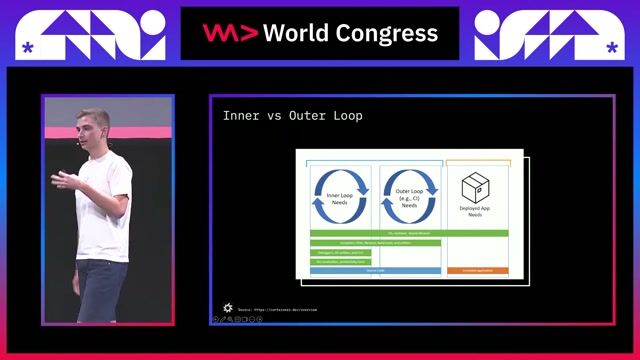
Understanding the inner and outer loop of development

The development environment comprises the inner loop for coding and debugging, while the outer loop handles CI and deployment.

#2about 2 minutes

Identifying what to standardize in your dev environment

Standardization should focus on system-wide packages, IDE configurations, and compute resources, treating the environment as code.

#3about 2 minutes

Using Docker as a baseline for environment standardization

Docker and Docker Compose provide a powerful foundation for standardizing system dependencies but lack native support for IDE and compute resource configuration.

#4about 5 minutes

A deep dive into the Dev Container standard

The Dev Container standard uses a `devcontainer.json` file to define the environment, including IDE extensions, settings, and resource requirements.

#5about 4 minutes

Building cloud-native workspaces with the Devfile standard

Devfile is a CNCF standard that uses a YAML schema and the Odo CLI to manage Kubernetes-native development and deployment workflows.

#6about 4 minutes

Achieving reproducible environments with Nix and NixOS

Nix is a functional package manager that ensures reproducible and isolated environments, while NixOS extends this concept to the entire operating system.

#7about 2 minutes

How to choose the right dev environment standard

Select a standard like Dev Containers, Devfile, or Nix based on your team's needs for containerization, Kubernetes integration, or OS-level immutability.

Related jobs
Jobs that call for the skills explored in this talk.

Featured Partners

Related Articles

View all articles

From learning to earning

Jobs that call for the skills explored in this talk.