


DA
Dr. Andy R. Terrel - NVIDIA
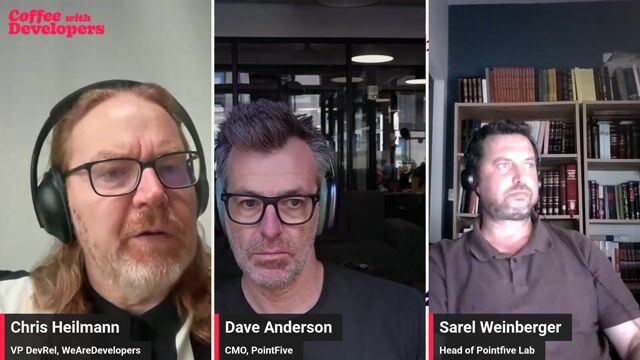
Coffee With Developers
•
Feb 26, 2025
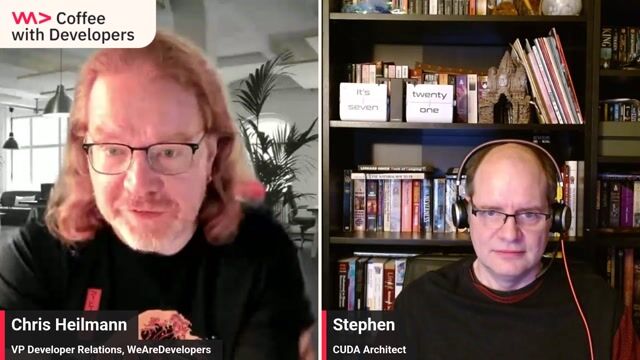
Coffee with Developers - Stephen Jones - NVIDIA
Stephen Jones
- Discuss this with your agent
- Open in Claude
- Open in ChatGPT
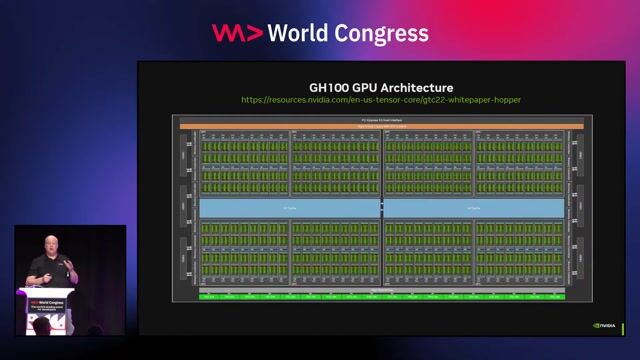
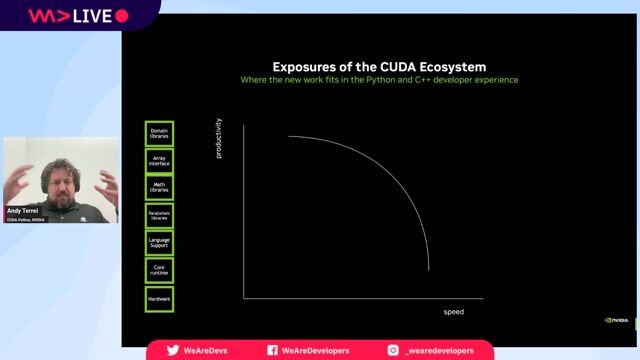
Stephen Jones asserts the future of computing depends on fracturing hardware into highly specialized domains. See how NVIDIA tackles fundamental physics bottlenecks by evolving CUDA and elevating Python.
Matching moments
2:33 min
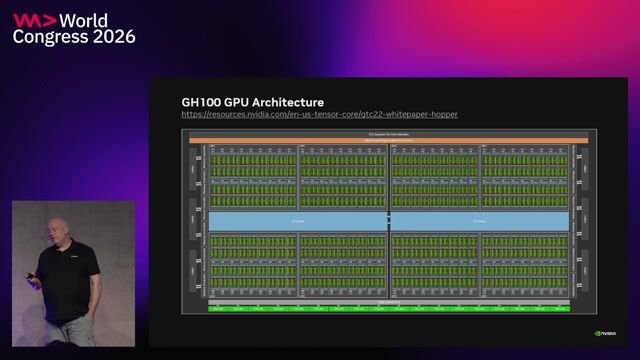
Architecting CUDA and the AI software stack
 Michael Kagan +1 · World Congress 2026 Europe
2:27 min
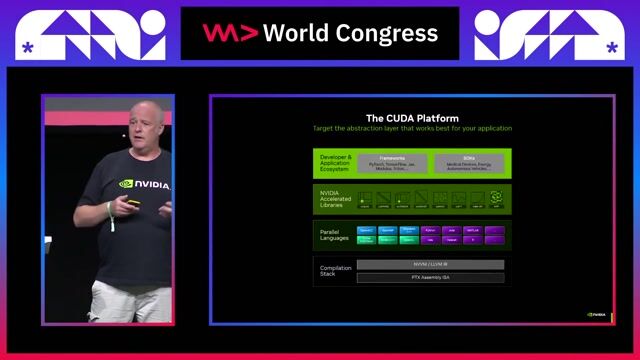
Exploring the CUDA ecosystem and levels of abstraction
 Paul Graham · World Congress 2025
2:15 min
Introduction to CUDA and general-purpose GPU computing
Paul Graham · World Congress 2026 Europe
4:37 min
Simplifying parallel programming with the CUDA ecosystem
Paul Graham · LIVE
2:08 min
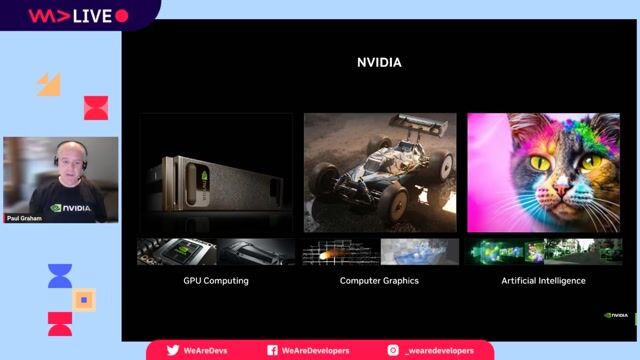
History and scale of NVIDIA GPU computing
Paul Graham · LIVE
3:32 min
Evolution of general purpose GPU computing and Python
Paul Graham · World Congress 2025
More from Coffee With Developers
Related videos
Related articles

DC
Daniel Cranney

BB
Benedikt Bischof
.gif)
DC
Daniel Cranney

From learning to earning
Jobs that call for the skills explored in this talk.
about 1 month ago
•
Verified
GPU Cluster Engineer, Systems & Platform

Sciforium
San Francisco, United States
Expert
$150k–220k
Kubernetes
17 days ago
Principal Software Engineer, AI Compute Infrastructure

ARM
Seattle, WA, United States
Expert
$262k
Linux
Grafana
Pytorch
about 1 month ago
•
Verified
GPU Kernel Engineer
Sciforium
San Francisco, United States
Expert
$190k–250k
PyTorch
about 1 month ago
•
Verified
Lead Software Engineer, Model Serving Platform
Sciforium
San Francisco, United States
Expert
$230k–300k
Python
17 days ago
Principal Software Engineer, AI Inference Runtime
ARM
Seattle, WA, United States
Expert
$262k
Compilers
Low Latency
Concurrency
about 1 month ago
•
Verified
Distributed Training and Inference Engineer
Sciforium
San Francisco, United States
Expert
$190k–250k
Linux kernel