









BB
Benedikt Bischof
Building resilient .NET applications for the modern age
- Discuss this with your agent
- Open in Claude
- Open in ChatGPT
System outages cost millions. Stop relying on naive error handling. Build fault-tolerant .NET applications using Polly, Aspire, and chaos engineering to prevent cascading failures.
Matching moments
2:00 min
Enhancing distributed application resilience using the Polly project
 Don Schenck · World Congress 2024
3:00 min
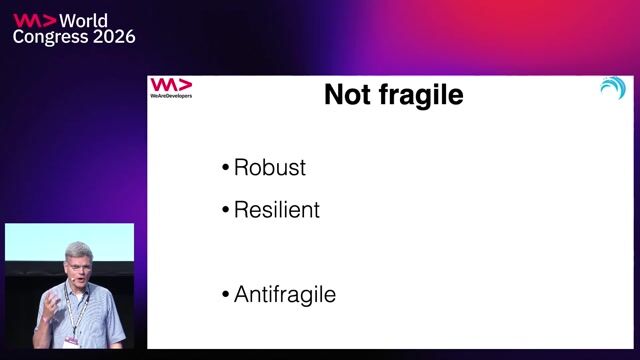
Identifying examples of system resilience and fragility in technology
 Jan de Vries · World Congress 2026 Europe
5:05 min
Balancing strict application boundaries with resilient execution architectures
 André Behrens · World Congress 2026 Europe
3:46 min
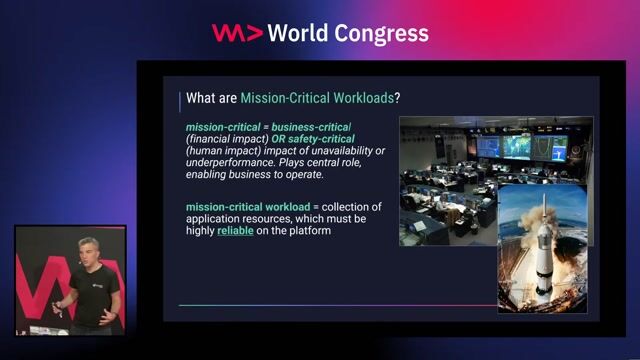
Understanding system resilience and the costs of failure
Mihaela-Roxana Ghidersa · LIVE
5:00 min
Navigating complexity and anti-patterns in modern software architecture
Mihaela-Roxana Ghidersa · LIVE
3:20 min
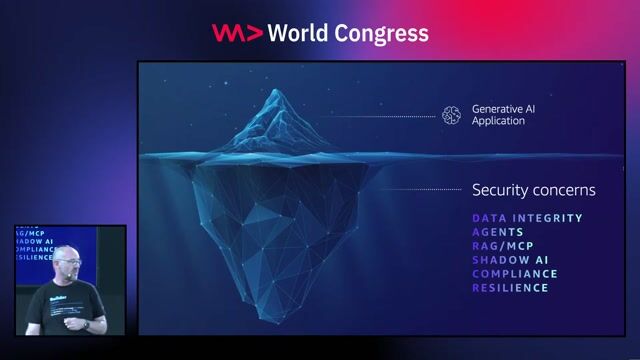
Building robust system resilience across all stack layers
Mihaela-Roxana Ghidersa · LIVE
More from World Congress 2025
Related videos
Related articles
.gif)
CH
Chris Heilmann

IK
Igor Khokhriakov
CH
Chris Heilmann

CH
Chris Heilmann

From learning to earning
Jobs that call for the skills explored in this talk.
about 2 months ago
Identity, Defense & Resilience - Network Security - Manager

PwC
Los Angeles, CA, United States
Expert
$99k–232k
Cybercrime
Cyber Security
Network Security
about 2 months ago
Identity, Defense & Resilience - Network Security - Manager
PwC
Florham Park, NJ, United States
Expert
$99k–232k
Cybercrime
Cyber Security
Network Security
about 2 months ago
Identity, Defense & Resilience - Network Security - Manager
PwC
Seattle, WA, United States
Expert
$99k–232k
Cybercrime
Cyber Security
Network Security
about 2 months ago
Identity, Defense & Resilience - Network Security - Manager
PwC
Philadelphia, PA, United States
Expert
$99k–232k
Cybercrime
Cyber Security
Network Security
about 2 months ago
Identity, Defense & Resilience - Network Security - Manager
PwC
Detroit, MI, United States
Expert
$99k–232k
Cybercrime
Cyber Security
Network Security
about 2 months ago
Identity, Defense & Resilience - Network Security - Manager
PwC
San Jose, CA, United States
Expert
$99k–232k
Cybercrime
Cyber Security
Network Security