World Congress 2022 Jun 15, 2022

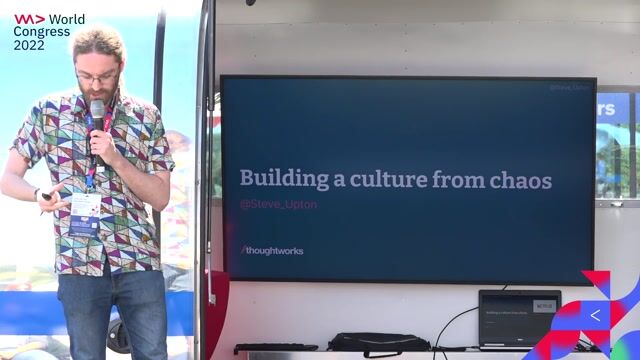
Building a culture from chaos

Steve Upton

Stop assuming architectural resilience. Intentionally break your systems to uncover hidden failures. Discover how chaos engineering builds both robust microservices and a psychologically safe organizational culture.

Pause
Mute Enter Fullscreen
#1 about 4 min

Transitioning architecture to microservices at Netflix

Splitting monolithic applications into microservices exponentially increases points of failure and demands resilient architecture.

#2 about 4 min

Testing system resilience with the Simian Army

Simulating random server shutdowns and latency changes validates the structural hypotheses of resilient architecture.

#3 about 4 min

The core experimental loop of chaos engineering

Inducing controlled failures creates crucial opportunities to learn from incidents and systematically improve production reliability.

#4 about 5 min

Defining the core properties of complex systems

Software systems scale in complexity through high component multiplicity and non-linear interdependent connections.

#5 about 8 min

How complex adaptive systems evolve and adapt

Human observers and past interactions constantly alter complex environments, guaranteeing unintended cascading consequences.

#6 about 5 min

Applying agile principles to complex system uncertainty

Rigid upfront planning fails in adaptive environments, forcing teams toward iterative methodologies that continuously respond to changing variables.

#7 about 7 min

Embedding failure acceptance into daily engineering culture

True cultural change requires engineering organizations to repeatedly practice learning from mistakes rather than merely declaring support for psychological safety.

#8 about 4 min

Designing and safely executing controlled chaos experiments

Effective failure testing requires thoughtful target selection accompanied by a limited blast radius and automated rollback mechanisms.

#9 about 4 min

Safely probing and intervening in complex ecosystems

Managing unpredictability involves testing coherent hypotheses through safe-to-fail diagnostic probes equipped with clear dampening plans.

#10 about 4 min

Second-order cultural effects of practicing chaos engineering

Beyond technical resilience, routine failure testing fundamentally reshapes how engineering teams analyze and approach unknown systemic risks.

Matching moments

3:00 min

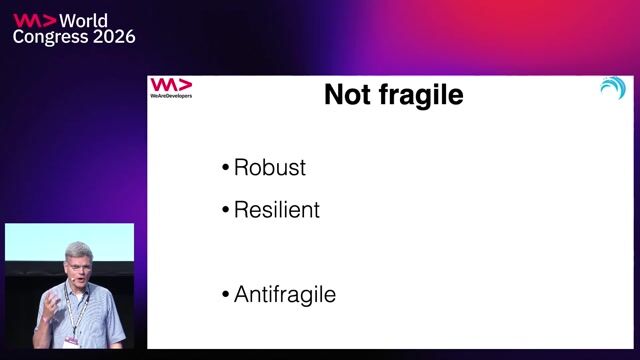
Identifying examples of system resilience and fragility in technology

Jan de Vries Jan de Vries · World Congress 2026 Europe

2:30 min

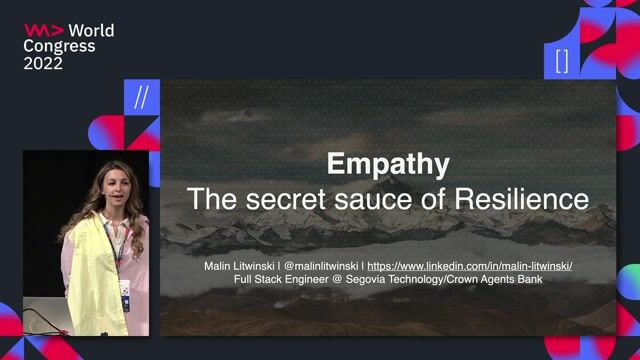
Implementing proactive learning through scheduled chaos engineering

Malin Litwinski · World Congress 2022

2:08 min

Navigating and mitigating the impacts of broken engineering cultures

Oskar Kruschitz Oskar Kruschitz · Europe 2026 Virtual

1:09 min

Establishing psychological safety to encourage continuous system experimentation

Jan de Vries Jan de Vries · World Congress 2026 Europe

7:41 min

Validating resilience assumptions through chaos engineering experiments

Lyubomir Bozhinov Lyubomir Bozhinov · Europe 2026 Virtual

6:02 min

Balancing failure culture with continuous operational quality standards

Rudi Bauer Rudi Bauer +2 · Cappuccino with HR

Upcoming sessions on this topic

Open session

World Congress 2026 North America

September 25, 2026 · 11:40–12:10

Stage 3

Culture Doesn't Scale Itself: Leading Engineering Teams Through Hypergrowth and the AI Transition

Thanos Baskous

VP of Engineering and Co-founder of Cogent Security

Thanos Baskous
Open session

World Congress 2026 North America

September 25, 2026 · 11:40–12:10

Stage 2

Reinventing Testing Practices in the AI Era

Eric Deandrea

Java Champion & Senior Principal Software Engineer at IBM

Eric Deandrea
Open session

World Congress 2026 North America

September 25, 2026 · 12:55–13:25

Stage 9

It’s Alive! Taming the MLOps Franken-Stack: Write, Run, and Serve with Michelangelo

Eric Wang, Paul Zimmerman

Eric Wang
Paul Zimmerman
Open session

World Congress 2026 North America

September 24, 2026 · 14:10–14:40

Stage 4

Agentic Drift: keeping pace with your agents

John Coghlan

Senior Director, Developer Advocacy at GitLab

John Coghlan
Open session

World Congress 2026 North America

September 25, 2026 · 13:30–14:00

Outdoor Stage

The Geometry of Incidents: What User-Impact Shapes Reveal About Platform Architecture

Bala Subrahmanyam Kambala

Staff Platform Engineer at Oracle Cloud Infrastructure

Bala Subrahmanyam Kambala
Open session

World Congress 2026 North America

September 24, 2026 · 16:10–16:40

Stage 1

Sandboxing the Swarm: Building Secure, Serverless AI Agents with Wasm

Lena Hall, Thorsten Hans

Lena Hall
Thorsten Hans