





BR
Benjamin Ruschin
Cappuccino with HR
•
Jan 29, 2026
Gut Feeling Is Dead: Talent Intelligence Drives Workforce Planning
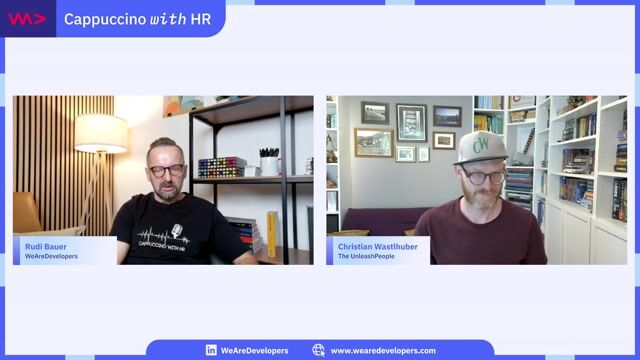
Rudi Bauer , Péter Töpler
- Discuss this with your agent
- Open in Claude
- Open in ChatGPT
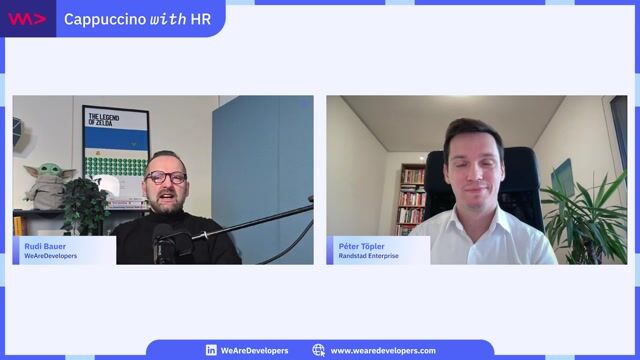
Gut feeling is dead in HR. Successful AI integration demands data-driven talent intelligence first. Learn how to connect daily workforce tasks directly to your core business strategy.
Matching moments
3:03 min
Formulating strategic human resource plans aligned with artificial intelligence
 Rudi Bauer +2 · Cappuccino with HR
2:32 min
The future of the human element in leadership
 Meghan Hennessy · World Congress 2025
1:22 min
Preparing human resources teams for generative and agentic AI
 Rudi Bauer +1 · Cappuccino with HR
3:40 min
Evolving recruiting from talent acquisition to talent architecture
Rudi Bauer +1 · Cappuccino with HR
3:26 min
Strategies for adapting talent acquisition to AI landscapes
 Robindro Ullah · World Congress 2026 Europe
3:36 min
Sustaining HR credibility through direct AI technological proficiency
Rudi Bauer +1 · Cappuccino with HR
More from Cappuccino with HR
Related videos
Related articles

DC
Daniel Cranney
CH
Chris Heilmann

CH
Chris Heilmann
From learning to earning
Jobs that call for the skills explored in this talk.
about 2 months ago
Interim Change Manager

ZEISS Group
München, Germany
Expert
E-Business
Agile Methodology
Artificial Intelligence
2 months ago
•
Verified
AI Software Engineer (Germany)

Sunhat
Berlin, Germany
Expert
€70k–100k
Remote
REST
TypeScript
AI Frameworks
about 1 month ago
SAP AI & Delivery Transformation Senior Manager

PwC
London, UK
Expert
SAP S/4HANA
Generative AI
SAP (Applications)
8 days ago
Oracle HCM Implementation Consultant - Senior Associate
PwC
Rosemont, IL, United States
Expert
$77k–202k
Oracle HCM
HR Software
Data Analytics
about 1 month ago
•
Verified
Partner Sales Director - AI Alliances - Model Providers

Dynatrace
San Francisco, United States
Expert
Remote
DevOps
AI Frameworks
Machine Learning
about 2 months ago
Manager - Oracle Recruiting Cloud (ORC)
PwC
London, UK
Oracle HCM
Bi Publisher
SC Clearance