
World Congress 2026 Europe - Virtual Stage Jul 2, 2026 Session details

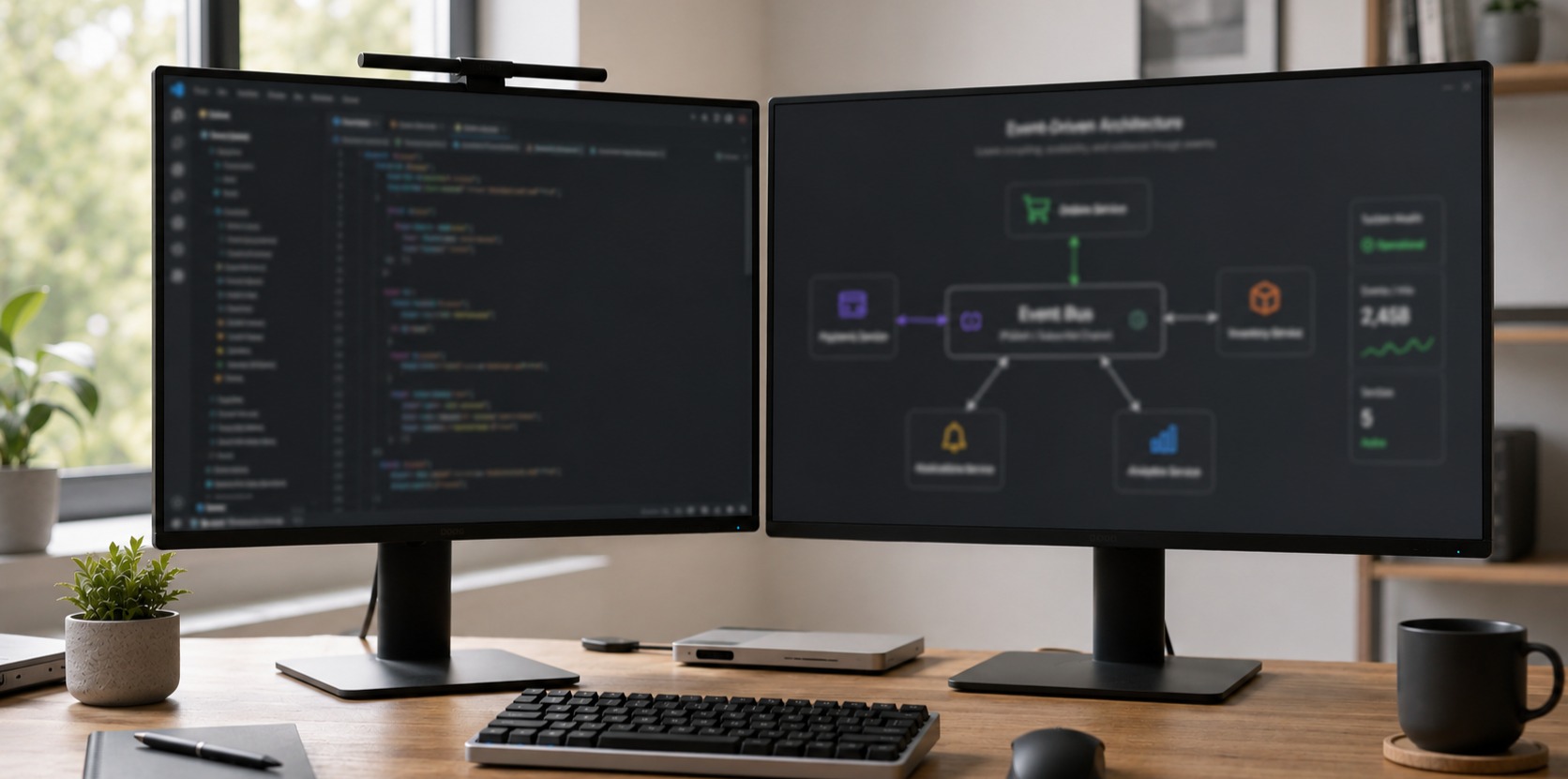
Building Scalable Multi-Agentic AI Systems in Java: Orchestrating Agents with Event-Driven Approach

Mary Grygleski

Single LLMs fail at complex enterprise workflows. Learn to build scalable, event-driven multi-agent AI systems in Java using distributed computing principles and advanced orchestration patterns.

Pause
Mute Enter Fullscreen
#1 about 6 min

Understanding the fundamental roles of agents in systems

Agents coordinate decision-making and handle multi-step goals beyond simple pattern matching.

#2 about 3 min

Extending capabilities with artificial intelligence agents

Artificial intelligence agents extend the bounded scope and reasoning limits of language models by designing workflows and calling external tools.

#3 about 5 min

Defining the core building blocks of single agents

Intelligent agents perceive their environment, maintain stateful memory, perform reasoning, and use action interfaces to interact with systems.

#4 about 4 min

Designing single-agent architectures with prompt chaining workflows

Systems structure agent operations using prompt chaining, tool calling, and stateful workflows to manage complex tasks.

#5 about 6 min

Scaling enterprise architectures with multi-agentic systems

Complex enterprise tasks require multiple specialized agents working collaboratively to increase system robustness and fault tolerance.

#6 about 4 min

Standardizing context delivery with the model context protocol

Open protocols like MCP and A2A standardize how applications provide context and facilitate communication between distributed agents.

#7 about 6 min

Addressing scalability and resilience in agentic architectures

Enterprise agentic systems must handle varying workloads and ensure fault tolerance while executing autonomous decision-making.

#8 about 5 min

Evaluating orchestrator design patterns for enterprise systems

Orchestrator patterns including worker delegation, hierarchical structures, blackboards, and market-based bidding manage distributed agent collaboration.

#9 about 6 min

Implementing agentic design patterns for reliable execution

Design patterns like reflection, tool use, and complex planning enable agents to self-correct and coordinate efficiently.

#10 about 1 min

Building multi-agent systems using popular frameworks and libraries

Development frameworks such as Autogen, LangGraph, and LangChain4J provide necessary tools for orchestrating multiple language models.

#11 about 3 min

Adopting event-driven computing for generative AI platforms

An event-driven approach manages the dynamic flow of data asynchronously to improve scalability and integration across diverse AI models.

#12 about 6 min

Applying distributed computing principles to agentic artificial intelligence

Distributed systems fundamentals like the CAP theorem guide architectural trade-offs between consistency and availability in multi-agent deployments.

#13 about 2 min

Evaluating business considerations for scaling enterprise agentic systems

Executives must prioritize scalability and resilience as board-level issues when deploying enterprise-grade artificial intelligence agents.

Matching moments

46 sec

Introduction to distributed multi-agent systems

Saoussen Chaabnia Saoussen Chaabnia · Europe 2026 Virtual

1:40 min

Applying event-driven architecture to AI agent communication

diabhey diabhey · World Congress 2025

1:30 min

Transitioning from machine learning models to complex agentic systems

Alejandro Saucedo Alejandro Saucedo · World Congress 2025

1:32 min

Architectural patterns for developing robust generative AI applications

Julián Duque Julián Duque · World Congress 2025

5:37 min

Architectural patterns for composing dynamic AI agents

Philipp Schmid Philipp Schmid · World Congress 2025

2:02 min

Shifting focus from isolated models to enterprise AI systems

Mohak Chadha Mohak Chadha · World Congress 2026 Europe

Upcoming sessions on this topic

Open session

World Congress 2026 North America

September 23, 2026 · 13:15–15:15

Stage 9

DeepAgents: Build Multi-Agent AI Systems That Actually Work

Anagha Rumade, Anjana Umapathy, Apoorva Jaiswal

Anagha Rumade
Anjana Umapathy
Apoorva Jaiswal
Open session

World Congress 2026 North America

September 23, 2026 · 15:45–17:45

Stage 12

Architecting Multi-Agent Teams: Mastering the Orchestration Patterns of ADK 2

Christina Lin

Developer Relations Engineering Manager

Christina Lin
Open session

World Congress 2026 North America

September 24, 2026 · 11:40–12:10

Stage 1

Rise of the Agents: What’s Real, What’s Next, and What Matters

Mitesh Patel

NVIDIA Corporation, Developer Advocate -- Manager

Mitesh Patel
Open session

World Congress 2026 North America

September 25, 2026 · 11:00–11:30

Tech Leaders Stage

Building Enterprise Software for AI Agents

Gil Feig, Sachin Kaura

Gil Feig
Sachin Kaura
Open session

World Congress 2026 North America

September 24, 2026 · 17:30–18:00

Stage 6

No Single Model to Rule Them All: Building Resilient AI Agents Across Open & Closed LLMs

Emmanuel Acheampong

Senior Manager Developer Relations at Crusoe AI

Emmanuel Acheampong
Open session

World Congress 2026 North America

September 24, 2026 · 14:50–15:20

Stage 7

When Agents Became Users: Rearchitecting Identity and Permissions for AI at Scale

Yoav Gal

Product Lead

Yoav Gal