





World Congress 2026 Europe - Virtual Stage • Jul 3, 2026 • Session details

The Algorithm That Nearly Killed Me: When Testing Isn't Enough

Andrew Paul

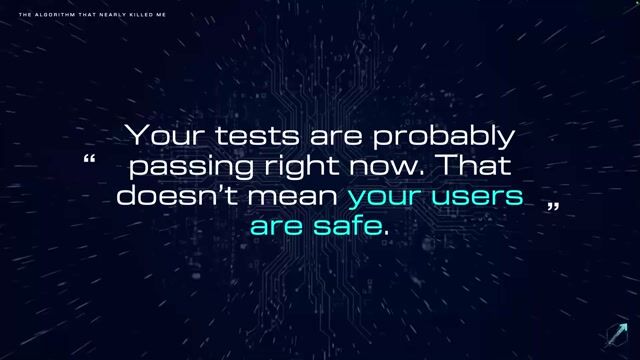
Senior engineer Andrew Paul's insulin pump nearly killed him despite perfectly passing tests. Discover how to use property-based testing to catch chaotic edge cases before they become catastrophic.

Pause
Mute Enter Fullscreen
#1 about 6 min

Personal background and biological management metrics

Maintaining tight biological control through continuous monitoring dictates how specialized medical metrics are evaluated.

#2 about 6 min

System setup and early automation warnings

A highly regulated closed-loop insulin pump introduces immediate vendor red flags before temporarily stabilizing during initial software deployment.

#3 about 7 min

Algorithm failure against diabetic medical boundaries

A life-threatening incident reveals the integration flaws between application instructions and mechanical delivery that almost caused ketoacidosis.

#4 about 6 min

Testing the edges between intersecting edge cases

Standard rules passing isolated tests can trigger dangerous software behavior when multiple edge cases intersect unexpectedly.

#5 about 4 min

Machine learning adaptation and the illusion of safety

Artificial intelligence adapts to independent patterns and introduces extreme risk when unit tests only confirm base implementation.

#6 about 4 min

Evaluating software impact instead of isolated implementation

The Post Office Horizon scandal illustrates why robust test coverage means nothing if software systematically destroys human lives.

#7 about 2 min

Distributing quality accountability across cross-functional modern teams

Removing dedicated quality assurance testers requires equipping broad engineering teams with rigorous analytical skills to evaluate complex user risk.

#8 about 7 min

Applying advanced testing strategies for complex business rules

Practical applications of interaction matrices, property-based tests, and chaos engineering ensure strict adherence to core system invariants.

#9 about 6 min

Deploying observability and dynamic controls against unexpected logic

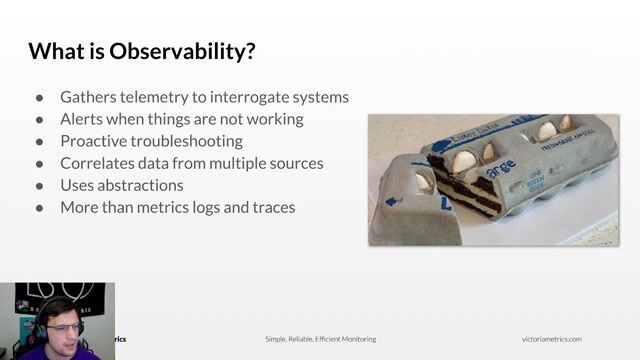
Structured validation of algorithmic decision boundaries, granular telemetry observability, and dynamic feature flags integrate directly with application threat modeling.

#10 about 3 min

Fostering empathy and accountability in engineering decisions

Understanding user environments allows engineering teams to accurately assess whether autonomous systems truly earn high-stakes human trust.

#11 about 3 min

Closing argument for prioritizing definitive user safety

Intentional transparency embedded into automated processes enforces strict limits and judges software success entirely by user preservation.

Matching moments

3:08 min

Preventing catastrophic failures in high-stakes software

Lars Hupel · World Congress 2023

6:46 min

Real-world tech failures from missing ethical guardrails

Torsten Stiller Torsten Stiller · World Congress 2025

2:40 min

Balancing technical fail-safes with proactive moral compasses

Torsten Stiller Torsten Stiller · World Congress 2025

5:14 min

Preventing severe failures through rigorous QA and organizational safeguards

Christian Seifert · World Congress 2022

2:07 min

Mitigating cascading failures in AI generated software environments

Boris Hecker Boris Hecker +3 · World Congress 2026 Europe

3:33 min

Navigating developer bottlenecks and human accountability

Werner Vogels Werner Vogels +1 · World Congress 2026 Europe