


World Congress 2021 Jun 29, 2021

Rethinking web application design for fastest possible time to interactive

Misko Hevery

Why download massive JavaScript bundles just to attach event listeners? Learn how Qwik's resumable architecture eliminates client-side hydration to achieve near-instant page interactivity.

Pause
Mute Enter Fullscreen
#1 about 1 min

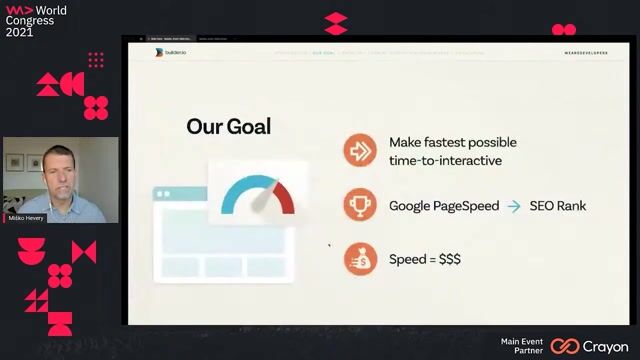
Introduction to Builder and time to interactive goals

Builder's approach to e-commerce content generation focuses on improving page speed and user retention.

#2 about 2 min

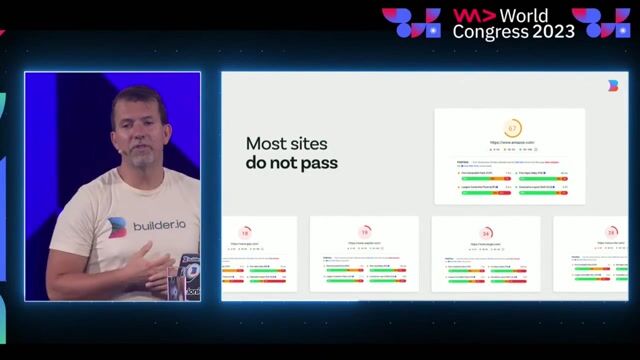
Impact of page speed and time to interactive

Poor time to interactive scores directly hurt application revenue and search engine optimization rankings.

#3 about 2 min

Introducing the Qwik open source web framework

Qwik minimizes JavaScript payloads to deliver near-instant interactivity by directly serving minimal static HTML.

#4 about 3 min

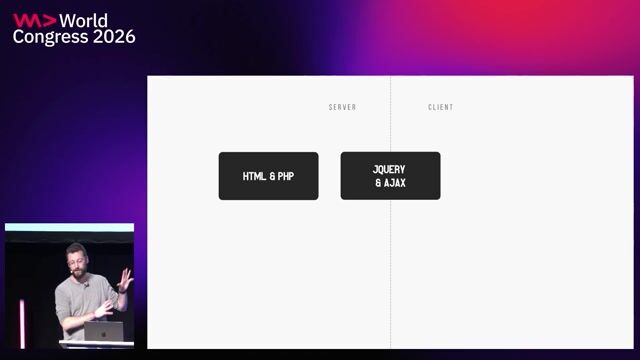
Bootstrapping bottlenecks in traditional web frameworks

Re-executing server-rendered code on the client forces unnecessary data payloads and slow initialization sequences.

#5 about 3 min

Bypassing traditional rendering steps with serialized listeners

Embedding event listener locations directly into the DOM eliminates the need for heavy client-side initialization steps.

#6 about 3 min

Demonstration of Qwik deferred code execution capabilities

Deferring JavaScript execution until user interaction creates nearly instant application startup times with minimal byte payloads.

#7 about 4 min

Moving framework state directly into the browser DOM

Storing component hierarchy and execution state inside serializable strings eliminates client-side re-rendering completely.

#8 about 7 min

Why closures break lazy loading and web performance

Synchronous event closures force developers to download massive code bundles before frontend execution begins.

#9 about 5 min

Contrasting replayable and resumable web application models

Resumable applications execute directly from server-generated state instead of re-evaluating components on the client end.

#10 about 5 min

Achieving fine grain updates without reactive subscriptions

Querying the browser DOM for state changes specifically targets modified elements without triggering cascading tree renders.

#11 about 3 min

Embracing native browser capabilities and the browser DOM

Leveraging built-in asynchronous loading and browser capabilities avoids performance traps seen in desktop-style UI paradigms.

#12 about 2 min

Summarizing the advantages of framework code resumability

Adopting stateless client architectures drastically cuts script parsing sizes and guarantees optimal web startup speeds.

#13 about 3 min

Handling lazy loading on unstable mobile network connections

Preloading files silently over network headers guarantees immediate interactivity even pending variable latency networks.

#14 about 8 min

Module federation current adoption and cloud hosting strategies

A purely resumable model inherently meets complex modularization requirements and deploys across conventional web hosting instances.

Matching moments

3:02 min

Modernizing legacy client-rendered components with server-side frameworks

Igor Minar Igor Minar +1 · World Congress 2025

3:06 min

Audience Q&A on framework limitations and specific uses

Simon Auer Simon Auer · World Congress 2022

4:22 min

Rethinking the architecture of single page web applications

Jeremy Keith · World Congress 2021

4:50 min

Balancing interactivity and load times with pre-rendering

Andreas Taranetz Andreas Taranetz · World Congress 2024

4:16 min

Addressing framework browser support and practical adoption

Marc Backes · World Congress 2021

3:52 min

Optimizing browser performance using modern island architecture

Florian Rappl · LIVE

Upcoming sessions on this topic

Open session

World Congress 2026 North America

September 24, 2026 · 14:50–15:20

Stage 9

How to generate business value through performance optimizations

Nikolai Sidiropulo

Software Engineer at Meta

Nikolai Sidiropulo
Open session

World Congress 2026 North America

September 25, 2026 · 15:30–15:40

Outdoor Stage

Offloading IoT State: Solving the Memory Crisis on Legacy Hardware

Pravin Nagare

Senior Software Engineer, Roku

Pravin Nagare
Open session

World Congress 2026 North America

September 24, 2026 · 16:10–16:40

Outdoor Stage

When Humans Stop Writing Code: Rethinking Languages, Compilers, and Responsibility

Simon Auer

Organizer of flutter vienna meetup and CEO of marqably

Simon Auer
Open session

World Congress 2026 North America

September 24, 2026 · 16:00–18:00

Stage 10

Reprompting the Wheel? Why AI Won’t Save Your Content Platform

Benni Mack

TYPO3 CMS Project Lead at TYPO3

Benni Mack
Open session

World Congress 2026 North America

September 25, 2026 · 14:50–15:20

Stage 4

Intelligence in Motion: Building the Next Generation of AI-Powered Apps on Zoom's Developer Platform

Brendan Ittelson

Chief Ecosystem Officer of Zoom

Brendan Ittelson
Open session

World Congress 2026 North America

September 25, 2026 · 16:10–16:40

Stage 4

Speed up your CI/CD pipelines by caching build & runtime artifacts

Thijs Feryn

Technical Evangelist at Varnish Software

Thijs Feryn