WeAreDevelopers LIVE Sep 1, 2021

Microservices: how to get started with Spring Boot and Kubernetes

Aleksandr Kalikov

Miro escaped a slow-building monolith by strategically transitioning to microservices. Discover how they leveraged Spring Boot and Kubernetes to conquer distributed complexity and ensure zero-downtime deployments.
Pause
Mute Enter Fullscreen
#1 about 4 min

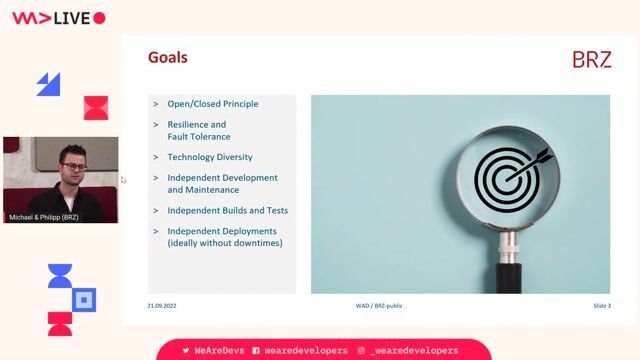
Transitioning from a monolith to a microservice architecture

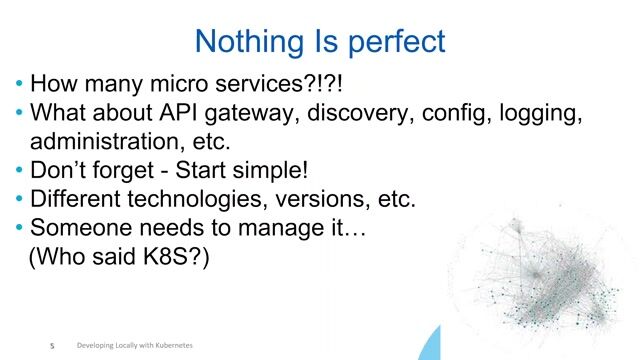
Understanding the operational complexities that accompany splitting monolithic applications into scalable distributed systems.

#2 about 3 min

Evaluating orchestration tools for distributed container deployments

Evaluating container management solutions including Kubernetes, Docker Swarm, and HashiCorp Nomad helps scale modern workloads.

#3 about 4 min

Understanding Kubernetes core components and local environment tools

Understanding how controllers, pods, and schedulers operate alongside testing solutions like Minikube resolves local cluster setup frustrations.

#4 about 1 min

Choosing a Java framework for microservice development

Comparing prominent Java frameworks and selecting Spring Boot reduces transition uncertainty for established developer teams.

#5 about 4 min

Scaffolding a Spring Boot web application with Maven

Setting up a basic REST controller in a new Spring Boot application quickly establishes initial web service boundaries.

#6 about 5 min

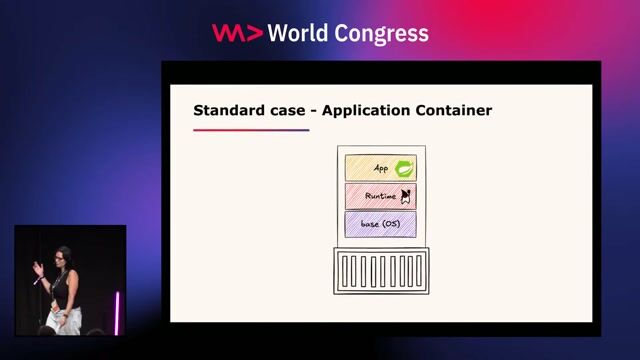
Building and optimizing Docker images using Spring Boot layers

Structuring Docker images efficiently by separating application changes from static dependencies leverages caching to optimize slow build processes.

#7 about 6 min

Deploying the Docker image into a local Kubernetes cluster

Defining standard objects like namespaces, deployments, and ingress resources enables routing external traffic directly to local containers.

#8 about 5 min

Externalizing configuration using Kubernetes config maps

Managing application properties dynamically by binding ConfigMaps directly to Spring Cloud property sources prevents static hardcoded secrets leaking.

#9 about 14 min

Configuring application observability with Micrometer and Prometheus

Exposing actionable application metrics via Spring Actuator endpoints for scraping by Prometheus Operator improves runtime visibility.

#10 about 2 min

Managing container resource limits and Java memory options

Allocating heap versus non-heap memory arguments carefully prevents out-of-memory errors by respecting hard resource constraints configured in Kubernetes.

#11 about 3 min

Configuring automated liveness and readiness probes in Kubernetes

Using predefined Actuator health indicators to continuously evaluate whether a service can accept traffic prevents routing requests to unready pods.

#12 about 8 min

Managing graceful container shutdown during rolling updates

Delaying termination signals to safely drain in-flight network traffic prevents dropped client requests from occurring during seamless version rollout deployments.

#13 about 4 min

Evaluating communication protocols for high performance microservices

Considering alternative lightweight data structures like Protocol Buffers based on load balancer requirements optimizes high volume throughput requests.

#14 about 2 min

Securing Kubernetes workloads and containerized image layers

Applying least privilege principles and performing structural image scans mitigates operational vulnerabilities embedded within unverified dependencies.

#15 about 6 min

Reviewing deployment strategies and monitoring guidelines

Answering practical platform questions on vulnerability scanning options and endpoint monitoring distinctions clarifies essential operational responsibilities.

Matching moments

3:32 min

Transitioning from monolith architectures to microservices and Kubernetes

Liviu Costea · LIVE

2:10 min

Optimizing software development for production and Kubernetes

Josh Long · World Congress 2022

3:00 min

Refactoring a complex legacy monolith into microservices

Andrew Holway · LIVE

1:39 min

Introduction to Kubernetes security challenges and opportunities

Marc Nimmerrichter · World Congress 2022

1:18 min

Technology stack for building robust microservices applications

Niklas Heidloff · LIVE

3:25 min

Evaluating microservices against traditional monolithic application design

Oliver Zimmert · LIVE

Upcoming sessions on this topic

Open session

World Congress 2026 North America

September 24, 2026 · 15:30–16:00

Stage 9

Run your agents in Kubernetes: Build once, deploy anywhere. But really?

Michal Salanci

Senior Systems Engineer at ESET Cybersecurity

Michal Salanci
Open session

World Congress 2026 North America

September 24, 2026 · 11:40–12:10

Stage 3

Stop Running Mystery Meat in Production

Jeroen van Erp

Technical Advocate @ SUSE

Jeroen van Erp
Open session

World Congress 2026 North America

September 25, 2026 · 10:20–10:50

Outdoor Stage

MicroAgents: The Microservices of the Agentic Era

Ashish Shubham

Runs the show bussiness at ThoughtSpot

Ashish Shubham
Open session

World Congress 2026 North America

September 25, 2026 · 09:00–09:30

Stage 1

Test Before Release, Enforce at Runtime: Governance for Tool-Using AI Agents

Sachin Gupta

Member of Technical Staff 2 at eBay

Sachin Gupta
Open session

World Congress 2026 North America

September 25, 2026 · 12:55–13:25

Stage 9

It’s Alive! Taming the MLOps Franken-Stack: Write, Run, and Serve with Michelangelo

Eric Wang, Paul Zimmerman

Eric Wang
Paul Zimmerman
Open session

World Congress 2026 North America

September 23, 2026 · 15:45–17:45

Stage 8

Docker's Agentic Platform: Sandboxes, MCP, and the Infrastructure of Autonomous Development

Oleg Šelajev

AI and Developer relations at Docker

Oleg Šelajev