
WeAreDevelopers LIVE
•
Dec 3, 2020
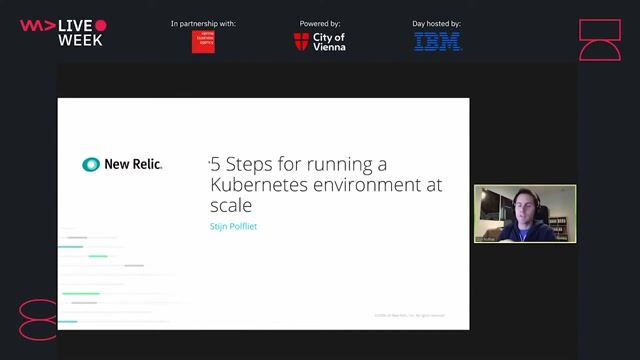
5 steps for running a Kubernetes environment at scale
Stijn Polfliet
- Discuss this with your agent
- Open in Claude
- Open in ChatGPT
Hitting memory limits will instantly terminate your production pods. Master a five-step observability strategy to troubleshoot crash loops, monitor telemetry, and confidently run Kubernetes at scale.
Matching moments
12:33 min
Exploring advanced observability stacks and distributed infrastructure challenges
Pawel Piwosz · LIVE
1:59 min
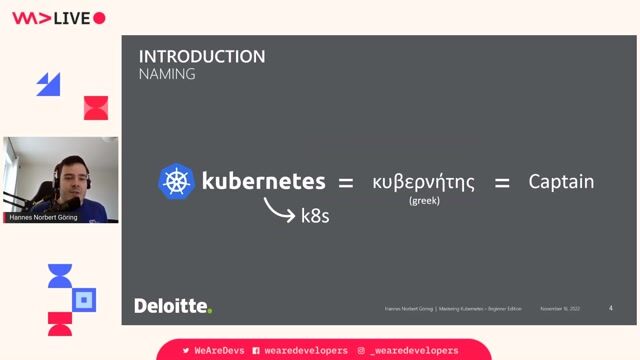
Orchestrating with Kubernetes against Docker and accessing slides
Philipp Krenn · World Congress 2022
1:39 min
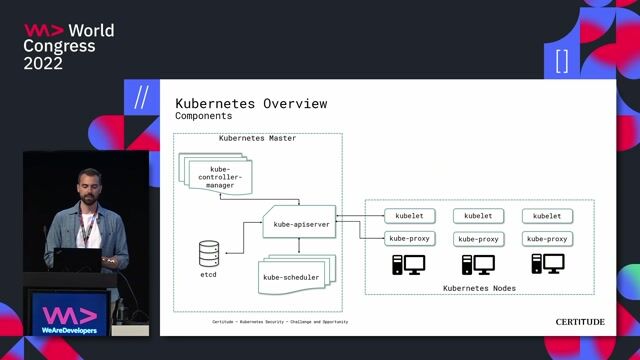
Introduction to Kubernetes security challenges and opportunities
Marc Nimmerrichter · World Congress 2022
1:10 min
Optimizing Kubernetes clusters for resource and cost efficiency
 Christian Grieger · Europe 2026 Virtual
3:32 min
Transitioning from monolith architectures to microservices and Kubernetes
Liviu Costea · LIVE
5:04 min
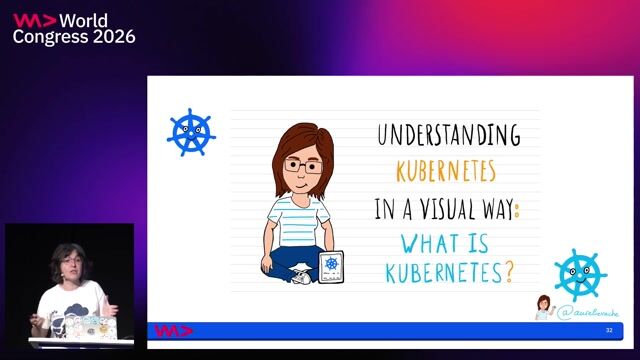
Visualizing Kubernetes for alternative and creative learning styles
 Aurélie Vache · World Congress 2026 Europe
More from WeAreDevelopers LIVE



Related videos
Related articles

BB
Benedikt Bischof
.gif)
CH
Chris Heilmann

From learning to earning
Jobs that call for the skills explored in this talk.
12 days ago
Cloud Engineer (German)

Stackit
Barcelona, Spain
Git
Okta
OAuth
11 days ago
Stackit (Senior) Software Engineer - Kubernetes Orchestration
Stackit
Madrid, Spain
Kubernetes
Cyber Security
Cloud Computing
about 1 month ago
•
Verified
GPU Cluster Engineer, Systems & Platform

Sciforium
San Francisco, United States
Expert
$150k–220k
Kubernetes
27 days ago
•
Verified
Senior Supply Chain Security Engineer
Docker, Inc.
Expert
Remote
Linux
Kubernetes
about 1 month ago
•
Verified
Lead Telemetry Pipeline Specialist

Dynatrace
Texas City, United States
Expert
Remote
Kafka
DevOps
Openshift
about 1 month ago
(Senior) Platform Engineer

MARKT-PILOT GmbH
Stuttgart, Germany
Expert
Datadog
Terraform
Prometheus