
DC
Daniel Cranney
World Congress 2022
•
Jun 15, 2022
Keep your code refactorable
Gerrit Stapper
- Discuss this with your agent
- Open in Claude
- Open in ChatGPT
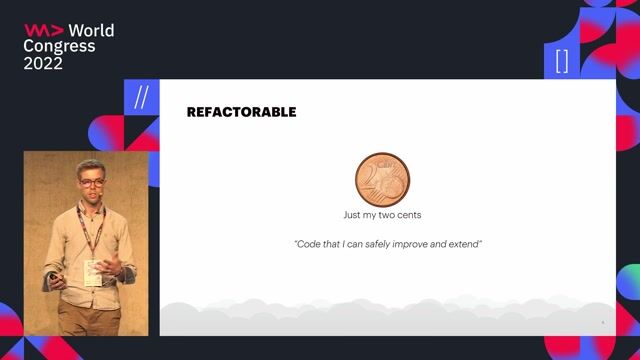
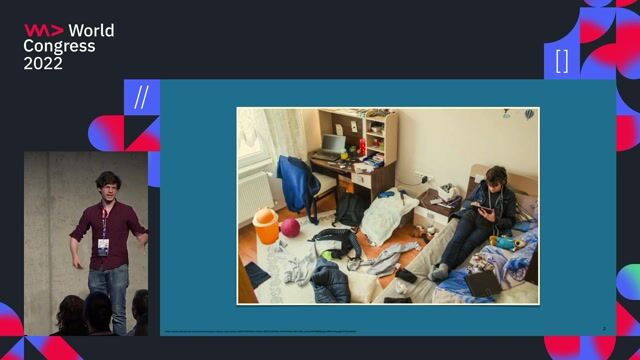
Fragile code isn't just a technical annoyance; it's a silent financial threat. Learn how TDD, expressive naming, and rich commit histories keep your systems safely refactorable.
Matching moments
1:52 min
Balancing technical debt and clean code practices
 Stefan Lingler +1 · Coffee With Developers
4:11 min
Applying targeted practices to reduce waste and technical debt
Tobias Modig · LIVE
48 sec
Managing the core conflict over software refactoring
Justyna Walkowska · World Congress 2023
6:44 min
Balancing technical debt reduction with feature delivery
 Jens Happe · LIVE
7:06 min
Building and maintaining sustainable software architectures
 Carola Lilienthal · World Congress 2022
1:29 min
Introduction to keeping test code clean
Gil Zilberfeld · LIVE
More from World Congress 2022
Related videos
Related articles
DC
Daniel Cranney
BB
Benedikt Bischof
.gif)
DC
Daniel Cranney

From learning to earning
Jobs that call for the skills explored in this talk.
about 1 month ago
•
Verified
Founding Developer Advocate

Plumber
San Francisco, United States
Experienced
$150k–190k
Remote
GIT
Bash
Linux
10 days ago
Senior Software Engineer

GitHub
United States
Expert
$124k–329k
Remote
Ruby
Golang
DevOps
26 days ago
•
Verified
Manager, Engineering, Secure Build and SCS Services

Docker, Inc.
Expert
Remote
Team Leadership
10 days ago
Software Engineer III
GitHub
New York, NY, United States
Experienced
$285k
Remote
Ruby
NoSQL
Golang
18 days ago
Senior Software Engineer, Angular

Bitpanda
Barcelona, Spain
Remote
Backend
Caching
ReactJS
about 1 month ago
Software Engineer I
GitHub
United States
Starter
$182k
Remote
Ruby
Golang
Github