


WeAreDevelopers LIVE Jun 15, 2022

The Billion Dollar Machine: First Time Right.

Andreas Kaldun

Building next-generation microchips requires precision so extreme that physical prototyping is impossible. Discover how engineers use Python and digital twins to simulate billion-dollar machines at the atomic level.

Pause
Mute Enter Fullscreen
#1 about 5 min

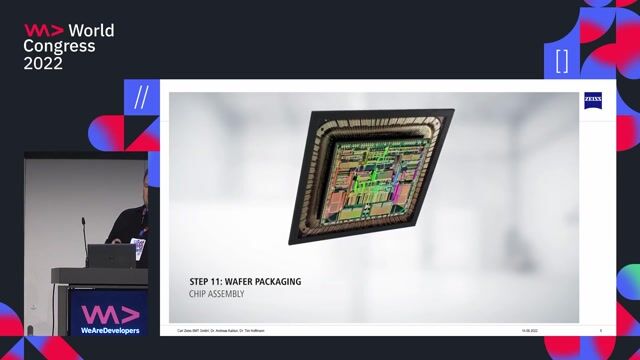
Introduction to modern silicon chip manufacturing

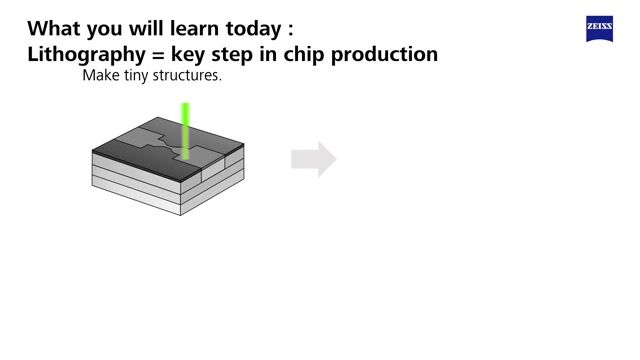
Transforming raw sand into advanced silicon CPUs depends entirely on the specialized precision of lithography machines.

#2 about 6 min

Extreme precision requirements for projection optics

Manufacturing chips at the nanometer scale requires mirrors with surface accuracy scaled down to atomic distances.

#3 about 5 min

Replacing hardware prototyping with software simulations

Prohibitive manufacturing costs make hardware iteration impossible, necessitating complete digital simulation of the production processes.

#4 about 5 min

Measuring atomic accuracy using digital twins

Creating an exact digital replica of the mechanical and optical properties isolates minimal signals from massive background noise.

#5 about 11 min

Q&A on software stacks and precision limits

Maintaining extreme calibration over time requires specialized technology stacks equipped with highly optimized finite element simulations.

Matching moments

3:18 min

Introduction to semiconductor technology and algorithms at Zeiss

Michael Niebisch Michael Niebisch · WWC 2024

2:32 min

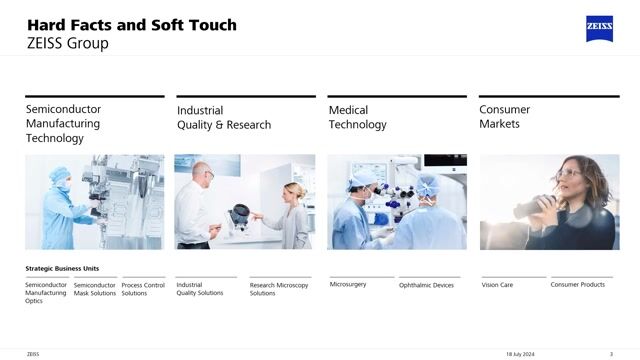
Introduction to Zeiss and industrial manufacturing hardware

Andreas Kaldun Andreas Kaldun

2:55 min

Discussion on software-driven manufacturing and simulator costs

Andreas Kaldun Andreas Kaldun

3:34 min

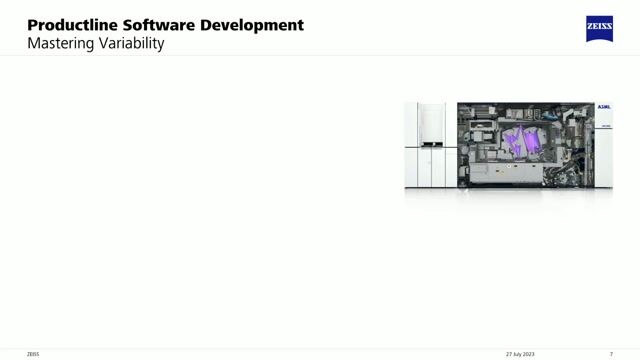
Building digital twins for lithography machine simulation

Andreas Kaldun Andreas Kaldun · WWC 2023

3:27 min

Exploring physical limits and alternatives to silicon chips

Stephen Jones · Coffee With Developers

4:15 min

Challenges of measuring high-precision semiconductor manufacturing components

Bernhard Bernhard +1 · WWC 2025

Upcoming sessions on this topic

Open session

World Congress 2026 North America

You Can’t Re-Run Sunlight: Designing ML Data Architectures for Physical AI

An Phan

Senior Data Infrastructure Engineer @ Hippo Harvest

An Phan
Open session

World Congress 2026 North America

Making Science Larger, not just Faster

Yuval Dvir

Commercial Executive, SandboxAQ

Yuval Dvir
Open session

World Congress 2026 North America

Building Stuff with GenAI - The Open Minded Workshop beyond OpenAI

Andreas Erben

CTO for Applied AI and Metaverse at daenet

Andreas Erben
Open session

World Congress 2026 North America

Engineering the Pivot: How Creative Strategy Solves the Hard Problems of AI Accuracy and Scale

Shruti Tiwari

AI/ML product manager, Dell

Shruti Tiwari
Open session

World Congress 2026 North America

AI ROI: The Hard Unit Economics of AI-Native Engineering

Manu Gurudatha

Manu Gurudatha, VP of Engineering at PagerDuty

Manu Gurudatha
Open session

World Congress 2026 North America

From Software Agents to Physical Devices: Inside the Agentic Hardware Stack

Michael Yuan, Vivian Hu

Michael Yuan
Vivian Hu