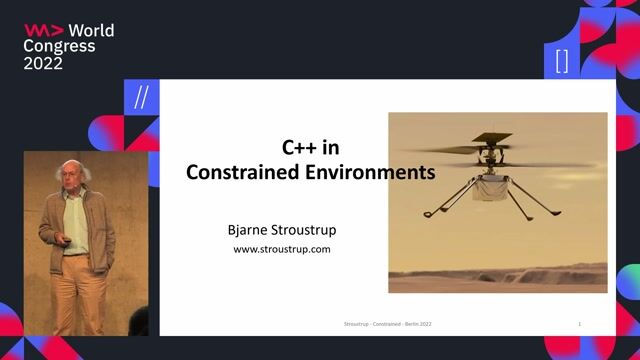
Think modern C++ is too heavy for embedded systems? This talk proves how new features can actually improve performance and safety in constrained environments.
#1about 5 minutes
Debunking common myths about C++ in constrained systems
Common misconceptions, such as needing to learn C first or that using a C-style subset is most efficient, are addressed to set the stage for modern C++ practices.
#2about 6 minutes
The onion principle and the C++ memory model
Design code using the onion principle by starting with clean, high-level interfaces and only peeling back layers of abstraction when performance tuning is necessary.
#3about 3 minutes
Understanding resource management with RAII
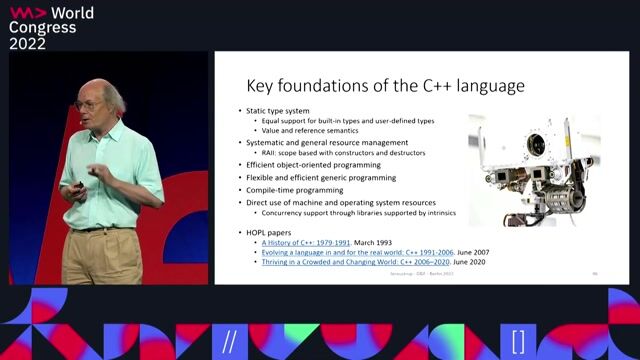
Resource management is the key to reliable C++, using constructors for acquisition and destructors for predictable, automatic release of resources like memory or threads.
#4about 8 minutes
Using modern language features for safer code
Replace unsafe, low-level constructs like unions and pointer-size pairs with safer, more expressive alternatives like `std::variant` and `std::span`.
#5about 7 minutes
Shifting computation from runtime to compile time
Improve performance and correctness by moving computations to compile time using `constexpr` functions, move semantics, and libraries like `std::chrono`.
#6about 6 minutes
Applying the C++ Core Guidelines for safety
The C++ Core Guidelines provide a framework for writing modern, safe code by starting with the full language and using libraries to encapsulate and restrict unsafe features.
#7about 12 minutes
Choosing the right error handling strategy
Adopt a clear policy for error handling by using error codes for expected, local failures and exceptions for rare, non-local errors that require a guaranteed handler.
#8about 6 minutes
Writing safe concurrent code and avoiding data races
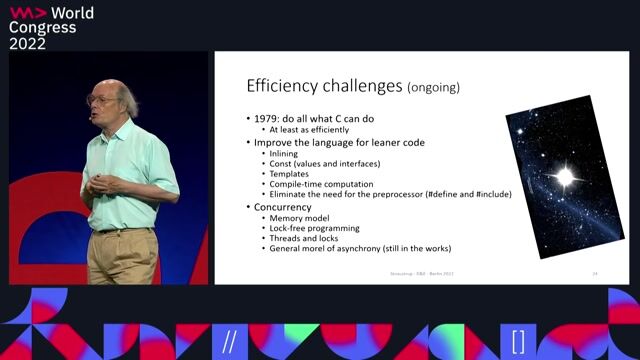
Avoid undefined behavior from data races in concurrent code by using the C++ memory model, atomics for synchronization, and higher-level abstractions like threads and locks.
#9about 7 minutes
Q&A on local error handling and C++23 features
The speaker answers audience questions about testing for locally handled errors and discusses the expected features and delays for the C++23 standard.
Related jobs
Jobs that call for the skills explored in this talk.
5 Reasons Why Attending Conferences in 2026 Matters More Than You ThinkIt’s 2026, and the “remote vs. office” debate has finally settled into a high-tech hybrid reality. While we’ve perfected the art of shipping production-grade code from decentralized hubs and home setups, something shifted. We realized that while AI c...
Christina Schaireiter
Why Attend a Developer Event in 2026?Modern software engineering moves too fast for documentation alone. Attending a world-class developer event is about shifting from tactical execution to strategic leadership — and in 2026, the opportunity to do that on US soil has never been stronger...
Chris Heilmann
All the videos of Halfstack London 2024!Last month was Halfstack London, a conference about the web, JavaScript and half a dozen other things. We were there to deliver a talk, but also to record all the sessions and we're happy to share them with you. It took a bit as we had to wait for th...
From learning to earning
Jobs that call for the skills explored in this talk.