Mario-Leander Reimer

Fifty Shades of Kubernetes Autoscaling

Is your Kubernetes autoscaling just HPA? Discover the layers of elasticity that slash costs and handle any demand.

Fifty Shades of Kubernetes Autoscaling
#1about 4 minutes

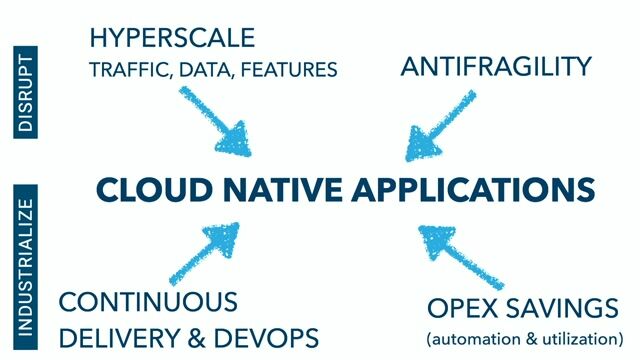
Why cloud-native systems require multi-layered elasticity

Modern applications need to be anti-fragile and support hyperscale, which requires elasticity at the workload level (horizontal/vertical) and the infrastructure level (cluster scaling).

#2about 5 minutes

How metrics and events drive Kubernetes autoscaling decisions

Autoscaling relies on events for cluster-level actions and a multi-layered metrics API for workload scaling based on resource, custom, or external data sources.

#3about 5 minutes

Implementing horizontal pod autoscaling with different metrics

The Horizontal Pod Autoscaler (HPA) can scale pods based on simple resource metrics like CPU, custom pod metrics, or external metrics from Prometheus.

#4about 2 minutes

Using the vertical pod autoscaler for right-sizing workloads

The Vertical Pod Autoscaler (VPA) can automatically adjust pod resources, but its recommendation mode is most useful for determining optimal CPU and memory settings.

#5about 4 minutes

How the default cluster autoscaler works on GKE

The default cluster autoscaler automatically provisions new nodes when it detects unschedulable pods due to resource constraints, as demonstrated on Google Kubernetes Engine.

#6about 5 minutes

Using Carpenter for fast and flexible cluster scaling on AWS

Carpenter provides a fast and flexible cluster autoscaling solution for AWS EKS, enabling cost optimization by using spot instances for scaled-out nodes.

#7about 1 minute

Exploring KEDA for advanced event-driven autoscaling

KEDA (Kubernetes Event-driven Autoscaling) enables scaling workloads, including to zero, based on events from various sources like message queues or databases.

#8about 1 minute

Summary of Kubernetes autoscaling tools and techniques

A recap of essential autoscaling components including the metric server, HPA, VPA, cluster autoscalers like Carpenter, KEDA, and the descheduler for cluster optimization.

#9about 2 minutes

Q&A on autoscaler reliability and graceful shutdown

Discussion on the production-readiness of autoscalers, the importance of observability, and how to achieve graceful pod termination during scale-down events.

Related jobs
Jobs that call for the skills explored in this talk.

Featured Partners

Related Articles

View all articles
Learning Kubernetes made easy with KubeCampus
Learning to use Kubernetes? KubeCampus by Kasten offers free educational content for all skill levels to get you started!Kubernetes is an open-source system for deploying, scaling and managing containerized applications. It allows you to deploy your ...
Learning Kubernetes made easy with KubeCampus
AG
Andre Braun, GitLab
Now is the time for industrialized software development
Now is the time for industrialized software development Recently, I received a letter from my car’s manufacturer alerting me to a recall. They had discovered a defective part and wanted to replace it. It was easily fixed, and I might have forgotten a...
Now is the time for industrialized software development

From learning to earning

Jobs that call for the skills explored in this talk.