
AF
Algorand Foundation
How to Build for Decentralized Systems
- Discuss this with your agent
- Open in Claude
- Open in ChatGPT
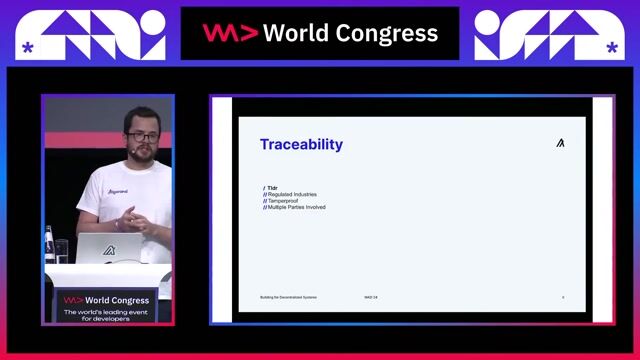
Building for blockchain no longer requires learning niche languages. Discover how to deploy decentralized, hyper-optimized applications using the Python and TypeScript tools you already know.
Matching moments
5:34 min
Preparing developer competencies for decentralized application architectures
Peter Busch · LIVE
2:18 min
Lowering the barrier to entry for blockchain development
Mike Swift · Coffee With Developers
2:39 min
Exploring decentralized web applications beyond basic cryptocurrency transactions
 Ed Marquez · World Congress 2023
6:50 min
Audience Q&A on Web5 and decentralization protocols
 Angie Jones · World Congress 2023
2:22 min
Integrating incremental blockchain features into legacy software architectures
 Michiel Mulders · World Congress 2025
1:40 min
Improving decentralized technology accessibility for non-developer mainstream users
Ed Marquez · World Congress 2023
More from World Congress 2024
Related videos
Related articles

AF
Algorand Foundation

JB
Julia Beyers

BR
Benjamin Ruschin

From learning to earning
Jobs that call for the skills explored in this talk.
about 2 months ago
Senior Backend Engineer, Blockchain (Smart Contracts)

Bitpanda
Laza, Spain
Web3.js
Backend
Datadog
about 2 months ago
Backend Engineer, Python (Web3)
Bitpanda
Laza, Spain
Backend
Web3.js
Ethereum
20 days ago
Software Engineer, Python (Asset Pricing & Hedging)
Bitpanda
Laza, Spain
Remote
NoSQL
Backend
Fastapi
about 2 months ago
Senior Fullstack Engineer, Angular & Nestjs (Defi Wallet)
Bitpanda
Laza, Spain
Remote
RxJS
Redis
NestJS
23 days ago
Digital Assets Crypto/BlockChain Manager

PwC
Detroit, MI, United States
Expert
$99k–232k
Blockchain
Tokenization
Digital Assets
about 1 month ago
•
Verified
Software Engineer, Fullstack

Sciforium
San Francisco, United States
Expert
$165k–210k
Python