
World Congress 2024 Aug 20, 2024 Session details

Modulith Instead of Monolith - Pragmatically Towards Microservices

Hendrik Lösch

Refactoring a 20-year-old codebase for multimillion-euro hardware demands precision. Discover how one team tamed their tangled C# legacy by shifting to a modular monolith instead of microservices.

Pause
Mute Enter Fullscreen
#1 about 2 min

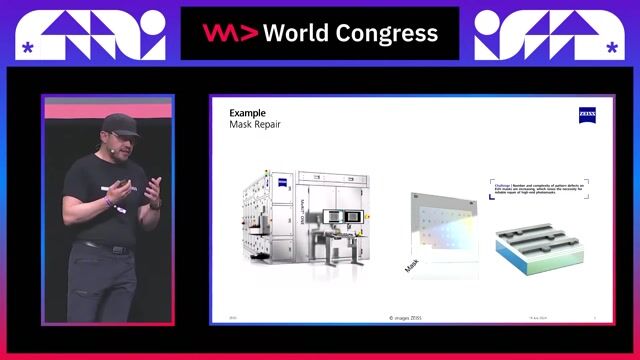
Refactoring a legacy monolith inside semiconductor manufacturing hardware

Context on upgrading a 20-year-old application controlling complex manufacturing machines without interrupting customer value.

#2 about 4 min

Technical debt and tangled architecture of the legacy monolith

An exploration of the unscalable architecture, entangled code base, and business constraints that make rewriting impossible.

#3 about 2 min

Identifying bounded contexts using domain-driven design principles

Breaking up the application by analyzing underlying business domains before touching the technical layers.

#4 about 3 min

Why microservices fail in resource-constrained hardware environments

Retaining a monolithic structure optimizes resource utilization, consistency, and debuggability on fixed hardware platforms.

#5 about 4 min

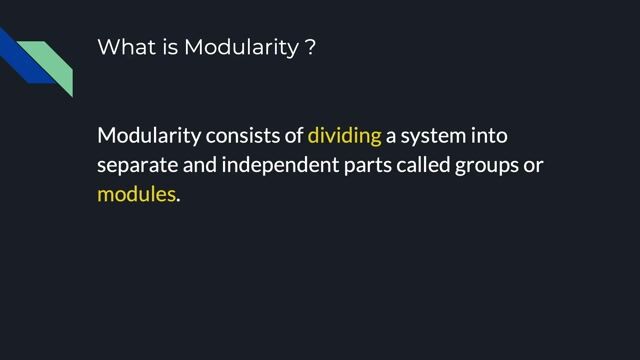
Defining the modulith approach for single deployment units

Moving toward a modular development model while deploying an optimized single-process monolithic application.

#6 about 4 min

Structuring modules around public interfaces and startup kernels

Encapsulating functionality into easily replaceable interface libraries integrated by a localized startup kernel.

#7 about 4 min

Managing hardware variations using product line software engineering

Controlling the complexity of different machine generations and vendor hardware by leveraging targeted software permutations.

#8 about 6 min

Implementing layered module architectures with foundation platforms

Organizing assets, features, and external integrations over a shared infrastructure framework that multiple teams consume.

#9 about 4 min

Extracting modules safely to restructure the legacy codebase

Encapsulating the old application as the first module and iteratively isolating domains without using legacy code.

Matching moments

2:34 min

The challenge of preventing modular monoliths from degrading

Christoph Kober Christoph Kober · WWC Europe 2026

8:14 min

Restructuring the monolith using domain-driven design

Jens Happe Jens Happe · LIVE

4:57 min

Rejecting unnecessary industry buzzwords and binary architectural thinking

Oliver Sturm · Coffee With Developers

3:28 min

Prioritizing modularity over the monolith versus microservices debate

Adam Mullen +1 · WWC 2021

5:06 min

Modernizing legacy applications through proactive leadership

Babette Wagner Babette Wagner · Coffee With Developers

1:59 min

Transforming to a cloud-native modular application architecture

Annette Schelten Annette Schelten +1 · WWC 2025

Upcoming sessions on this topic

Open session

World Congress 2026 North America

Offloading IoT State: Solving the Memory Crisis on Legacy Hardware

Pravin Nagare

Senior Software Engineer, Roku

Pravin Nagare
Open session

World Congress 2026 North America

From Legacy to Longevity – How a 17-Year-Old System stayed Modern

Alexander Arians

Empowering Engineers to drive innovation

Alexander Arians
Open session

World Congress 2026 North America

MicroAgents: The Microservices of the Agentic Era

Ashish Shubham

Runs the show bussiness at ThoughtSpot

Ashish Shubham
Open session

World Congress 2026 North America

It’s Alive! Taming the MLOps Franken-Stack: Write, Run, and Serve with Michelangelo

Paul Zimmerman, Eric Wang

Paul Zimmerman
Eric Wang
Open session

World Congress 2026 North America

Honey, look! I vibe-coded an OS!

Ian Smith

CTO, LYOS

Ian Smith
Open session

World Congress 2026 North America

You Can’t Re-Run Sunlight: Designing ML Data Architectures for Physical AI

An Phan

Senior Data Infrastructure Engineer @ Hippo Harvest

An Phan