The world is naturally quantum. To solve our biggest problems in medicine and climate, we need computers that speak its language.
#1about 1 minute
The physical limits of classical computing
Moore's Law is approaching a physical wall as transistors shrink to the size of a few atoms, creating the need for a new computing paradigm.
#2about 2 minutes
Understanding the fundamentals of quantum computing
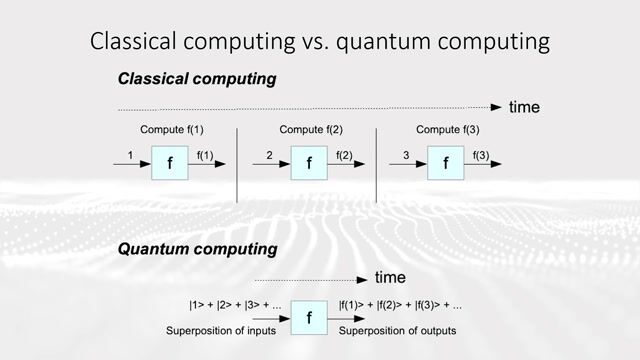
Quantum computing leverages quantum mechanics, allowing qubits to exist in multiple states at once (superposition) to perform parallel computations.
#3about 3 minutes
Building full-stack superconducting quantum computers
One approach to building quantum computers involves fabricating superconducting circuits on silicon chips that must be cooled to extremely low temperatures.
#4about 5 minutes
Using neutral atoms as a scalable qubit platform
Neutral atoms offer a promising path to scaling quantum computers, as they are naturally identical and can be operated at room temperature.
#5about 4 minutes
Achieving qubit stability and high-fidelity gates
Key milestones include maintaining a large array of qubits for over an hour and improving two-qubit gate fidelity to reduce cumulative errors in algorithms.
#6about 3 minutes
Exploring key use cases for quantum advantage
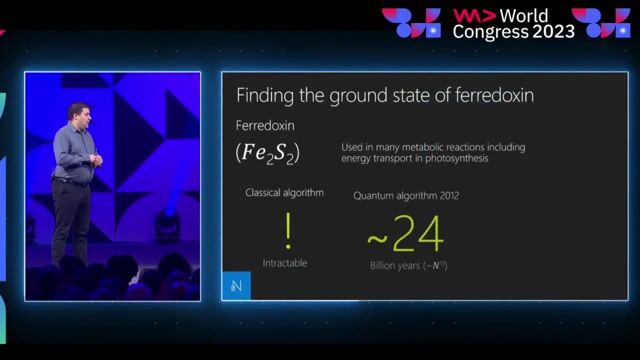
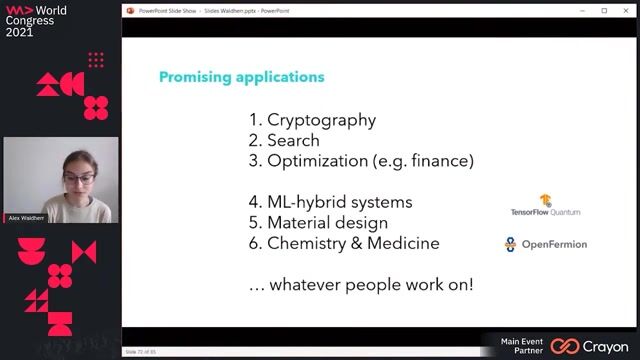
Quantum computers are expected to revolutionize fields like material science, drug discovery, and battery development by accurately simulating complex molecular interactions.
#7about 3 minutes
Making quantum computers accessible via the cloud
Cloud platforms and educational resources like IQM Academy provide developers and researchers with access to quantum hardware for experimentation and learning.
#8about 4 minutes
Applying quantum computing to real-world problems
Early proof-of-concept projects are exploring quantum machine learning for climate models, battery material design, and cybersecurity fraud analysis.
#9about 3 minutes
The unique challenge of quantum programming
Programming a quantum computer requires a fundamentally different approach than classical programming, necessitating a new workforce educated in quantum algorithms.
#10about 2 minutes
The future of diverse quantum hardware
The future will likely involve multiple specialized quantum computing platforms rather than a single dominant technology, alongside long-term goals like quantum memory and a quantum internet.
Related jobs
Jobs that call for the skills explored in this talk.
The Fastest-Growing Tech Sectors to Look Out for in 2025Whether you are a tech enthusiast, an aspiring developer or a triple-crown investor, keeping up with the latest tech trends can be both highly beneficial and remarkably tiring. As 2024 kicks off, some industries that were backwater contenders some ye...
Christina Schaireiter
5 Reasons Why Attending Conferences in 2026 Matters More Than You ThinkIt’s 2026, and the “remote vs. office” debate has finally settled into a high-tech hybrid reality. While we’ve perfected the art of shipping production-grade code from decentralized hubs and home setups, something shifted. We realized that while AI c...
Why Attend a Developer Event?Modern software engineering moves too fast for documentation alone. Attending a world-class event is about shifting from tactical execution to strategic leadership.
Skill Diversification: Break out of your specific tech stack to see how the industry...
From learning to earning
Jobs that call for the skills explored in this talk.






.webp?w=240&auto=compress,format)