Michele Riva

Things I learned while writing high-performance JavaScript applications

We built a full-text search engine in JavaScript that rivals Rust's performance. Here's how we did it using four key principles.

Things I learned while writing high-performance JavaScript applications
#1about 5 minutes

The four pillars of high-performance JavaScript

JavaScript can be as fast as lower-level languages by focusing on four key areas: algorithms, dependencies, optimizations, and architecture.

#2about 5 minutes

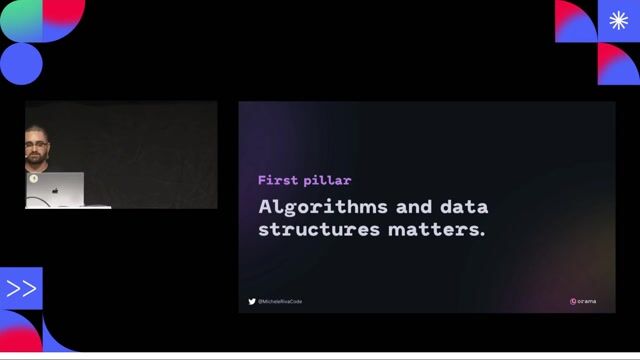
The importance of algorithms and data structures

Learning algorithms should be driven by practical goals like side projects, not just passing interviews at large tech companies.

#3about 4 minutes

Managing dependencies for better performance

Categorize dependencies as inevitable, convenient, or empowering to avoid unnecessary overhead from general-purpose libraries like Lodash.

#4about 6 minutes

Optimizing code by understanding the V8 runtime

Write faster code by using imperative programming, understanding V8 engine features like TurboFan, and using monomorphic functions.

#5about 4 minutes

How software architecture impacts performance

Performance strategies must adapt to the execution environment, such as browsers, servers, or constrained nano services like Cloudflare Workers.

#6about 2 minutes

Balancing performance metrics beyond raw speed

Consider performance trade-offs between raw execution speed, iteration speed for development, and team onboarding efficiency.

#7about 2 minutes

Q&A on TypeScript, clean code, and algorithms

The speaker answers audience questions about using TypeScript without performance penalties, the trade-offs of "dirty" code, and Dijkstra's algorithm.

Related jobs
Jobs that call for the skills explored in this talk.

Featured Partners

Related Articles

View all articles

From learning to earning

Jobs that call for the skills explored in this talk.