World Congress 2026 Europe Jul 9, 2026 Session details

Trust Issues: Because Zero-Trust Isn’t Optional Anymore

Jan Peer Stöcklmair

Updates alone aren't a complete security strategy. Why do patched applications still fall victim to remote code execution? Learn to enforce true zero-trust across your entire stack.

Pause
Mute Enter Fullscreen
#1 about 6 min

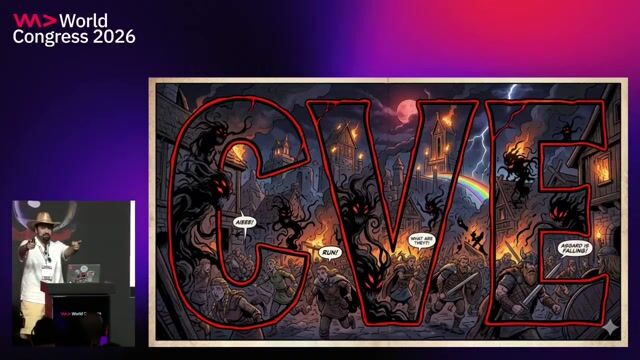
Understanding the React2Shell vulnerability and server impacts

How the critical React2Shell vulnerability enables remote code execution and reverse shells on vulnerable systems.

#2 about 4 min

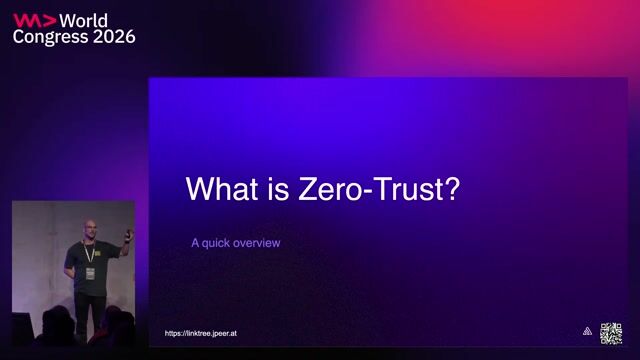
Core principles of the zero trust security model

The zero trust philosophy assumes networks are hostile and relies on the principle of least privilege and microsegmentation.

#3 about 4 min

Implementing zero trust security practices in frontend applications

Strong content security policies and delayed update strategies prevent malicious supply chain code from executing in the browser.

#4 about 4 min

Applying zero trust architecture to backend microservices

Restricting lateral movement and establishing trust boundaries between microservices using mutual TLS authentication prevents secret theft.

#5 about 2 min

Using distroless container images to reduce attack surfaces

Removing interactive shells limits the ability for attackers to establish reverse connections and utilize existing system binaries.

#6 about 3 min

Securing kubernetes clusters and database connections effectively

Implementing service mesh mutual TLS, restricting disk components, and enforcing row-level security hardens database interactions.

#7 about 6 min

Live demonstration of vulnerability exploitation and zero trust mitigation

Distroless containers and strict network policies proactively block reverse shell connections during an active container exploit.

#8 about 4 min

Implementing zero trust on traditional cloud providers and serverless

Utilizing virtual private cloud security groups and serverless application policies enforces strict default deny networking.

Matching moments

1:25 min

Implementing zero trust architectures for secure developer ecosystems

Vandana Verma · LIVE

3:09 min

Practical mitigation strategies for modern software supply chains

Adrian Mouat Adrian Mouat · World Congress 2026 Europe

7:50 min

Prioritizing cybersecurity and zero trust in development

Ash Ryan Arnwine Ash Ryan Arnwine +3 · World Congress 2024

2:13 min

Understanding software vulnerabilities and prominent exploits

Mohammad-Ali A'râbi Mohammad-Ali A'râbi · World Congress 2026 Europe

1:39 min

Introduction to Kubernetes security challenges and opportunities

Marc Nimmerrichter · World Congress 2022

2:36 min

Implementing secure network tunnels on managed cloud infrastructure

Den Prysukhin · LIVE

Upcoming sessions on this topic

Open session

World Congress 2026 North America

September 24, 2026 · 11:40–12:10

Stage 3

Stop Running Mystery Meat in Production

Jeroen van Erp

Technical Advocate @ SUSE

Jeroen van Erp
Open session

World Congress 2026 North America

September 24, 2026 · 11:00–11:30

Stage 7

Responsible AI Architecture with Zero Trust Agents

Ashok Prakash

Staff ML Engineer at Apple

Ashok Prakash
Open session

World Congress 2026 North America

September 24, 2026 · 14:50–15:20

Stage 1

The Era of Machine-Driven Defense is Here: Headless Security

Loris Degioanni

Founder & CTO of Sysdig

Loris Degioanni
Open session

World Congress 2026 North America

September 24, 2026 · 10:20–10:50

Stage 7

Zero-Trust Architecture for Agentic AI: Securing Multi-User Access and Third-Party Integrations

Borko Djurkovic

Member of Technical Staff at Cohere

Borko Djurkovic
Open session

World Congress 2026 North America

September 25, 2026 · 15:30–16:00

Mainstage

One Boundary for the Agentic Era

Mark Lechner

Chief Information Security Officer of Docker

Mark Lechner
Open session

World Congress 2026 North America

September 25, 2026 · 09:40–10:10

Stage 4

Your registry can't stop a valid login. What happens then?

Khushboo Verma

Systems Engineer at Cloudflare

Khushboo Verma