
CH
Chris Heilmann
How I built my own intelligent Robot Arm from Scratch
- Discuss this with your agent
- Open in Claude
- Open in ChatGPT
Building an intelligent robot arm from scratch no longer requires a robotics PhD. Ditch text-based hype and merge affordable microcontrollers with open-source AI for real-world physical automation.
Matching moments
2:22 min
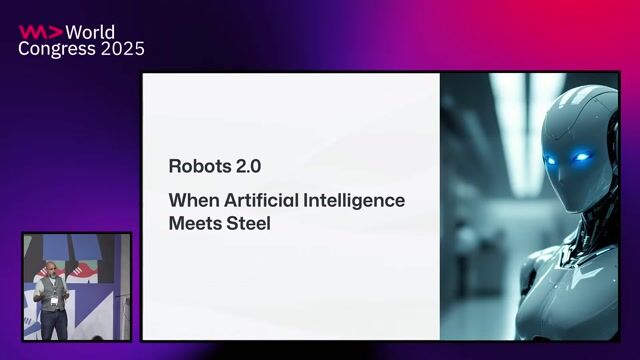
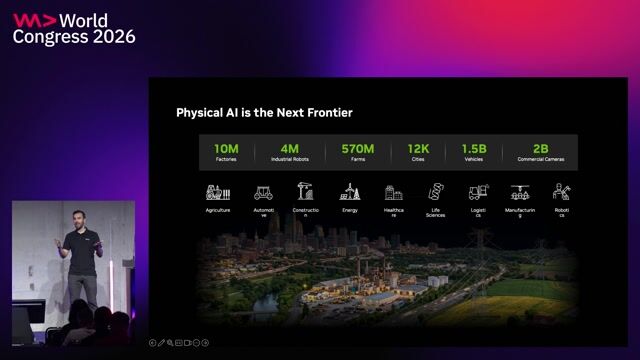
Introduction to physical AI and the physical world
 Moe Sani · World Congress 2026 Europe
2:44 min
Embodying artificial intelligence within physical robotic hardware platforms
 Zaid Zaim +1 · World Congress 2026 Europe
1:20 min
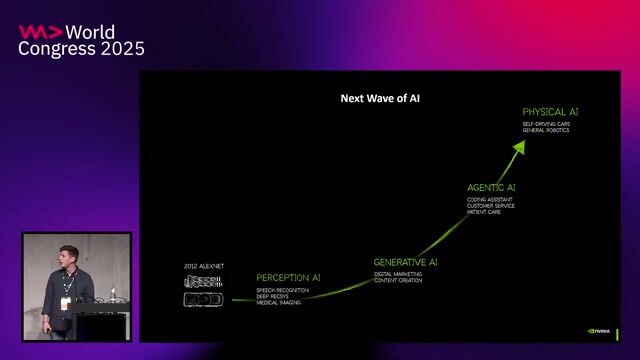
Shifting focus from large language models to physical AI
 Sergio Perez · World Congress 2026 Europe
3:46 min
Transitioning from rigid machines to autonomous AI robots
Teresa Conceicao · World Congress 2022
1:37 min
Transitioning from digital AI agents to physical AI
 Alexander Schwarz · World Congress 2025
7:01 min
Executing AI in the loop on robotic test hardware
 Falk Langer +1 · World Congress 2023
More from World Congress 2026 Europe
Related videos
Related articles
BB
Benedikt Bischof
.gif)
DC
Daniel Cranney

BB
Benedikt Bischof

From learning to earning
Jobs that call for the skills explored in this talk.
21 days ago
Principal Software Engineer, AI Inference Runtime

ARM
Seattle, WA, United States
Expert
$262k
Compilers
Low Latency
Concurrency
about 2 months ago
Staff Applications Engineer
ARM
Valbonne, France
Expert
€106k
Remote
Yocto
Linux
Pytorch
28 days ago
•
Verified
Staff Machine Learning Engineer
Arm
Austin, United States
Experienced
$249k–338k
Remote
Python
TensorFlow
9 days ago
Staff Machine Learning Engineer
ARM
Austin, TX, United States
Experienced
$249k–338k
Pytorch
Tensorflow
Deep Learning
21 days ago
Principal Software Engineer, AI Inference Cloud
ARM
Seattle, WA, United States
Expert
$262k
Pytorch
TensorRT
Kubernetes
about 1 month ago
•
Verified
Senior AI/ML Engineer

PagerDuty
Lisbon, Portugal
Expert
Remote
AI Frameworks
AI-assisted coding tools