


BR
Benjamin Ruschin
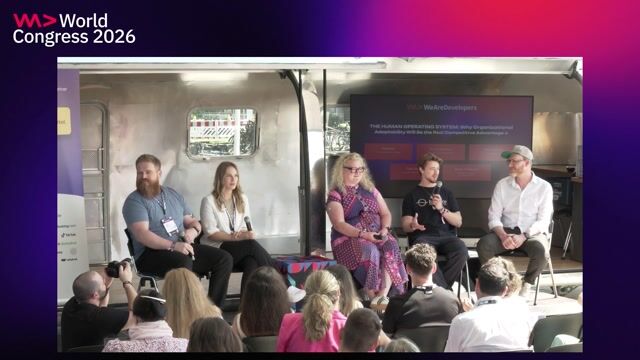
THE HUMAN OPERATING SYSTEM: Why Organizational Adaptability Will Be the Real Competitive Advantage o
Christian Wastlhuber , Cole Groom , Daniel Mühlbauer , Jessie Schofer , Ute Neher
- Discuss this with your agent
- Open in Claude
- Open in ChatGPT
Slapping AI onto outdated workflows only magnifies existing inefficiencies. To survive constant disruption, leaders must prioritize institutional trust, psychological safety, and their underlying human operating system.
Matching moments
3:36 min
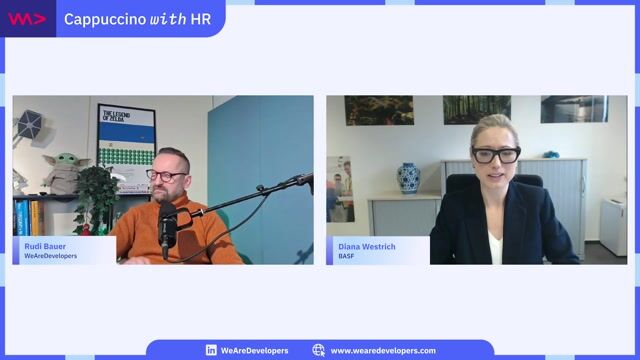
Sustaining HR credibility through direct AI technological proficiency
 Rudi Bauer +1 · Cappuccino with HR
1:57 min
Moving past artificial intelligence to focus on work wellbeing
 Ute Neher · World Congress 2025
2:23 min
Addressing the emotional layers of workplace AI transformation
 Daria Rudnik · Europe 2026 Virtual
2:32 min
The future of the human element in leadership
 Meghan Hennessy · World Congress 2025
6:21 min
Balancing AI transformation with a people-centric approach
 Alexander Birke +3 · World Congress 2025
2:20 min
Balancing human emotional intelligence with artificial adaptability
 Madalena Costa · Europe 2026 Virtual
More from World Congress 2026 Europe
Related videos
Related articles

DC
Daniel Cranney

CH
Chris Heilmann

DC
Daniel Cranney
From learning to earning
Jobs that call for the skills explored in this talk.
about 2 months ago
Interim Change Manager

ZEISS Group
München, Germany
Expert
E-Business
Agile Methodology
Artificial Intelligence
1 day ago
•
Verified
AI Software Engineer (Germany)

Sunhat
Berlin, Germany
Expert
€70k–100k
Remote
REST
TypeScript
AI Frameworks
about 1 month ago
SAP AI & Delivery Transformation Senior Manager

PwC
London, UK
Expert
SAP S/4HANA
Generative AI
SAP (Applications)
9 days ago
Oracle HCM Implementation Consultant - Senior Associate
PwC
Rosemont, IL, United States
Expert
$77k–202k
Oracle HCM
HR Software
Data Analytics
22 days ago
AI Full Stack Engineer

Almedia
Berlin, Germany
€80k–130k
Node.Js
Databases
TypeScript
2 months ago
Senior Cloud Software Architect (all genders welcome) for our Intelligent Service Operations Hub

Rosenxt Group
Osnabrück, Germany
Expert
Remote
DevOps
Github
Ansible