World Congress 2026 Europe Jul 10, 2026 Session details

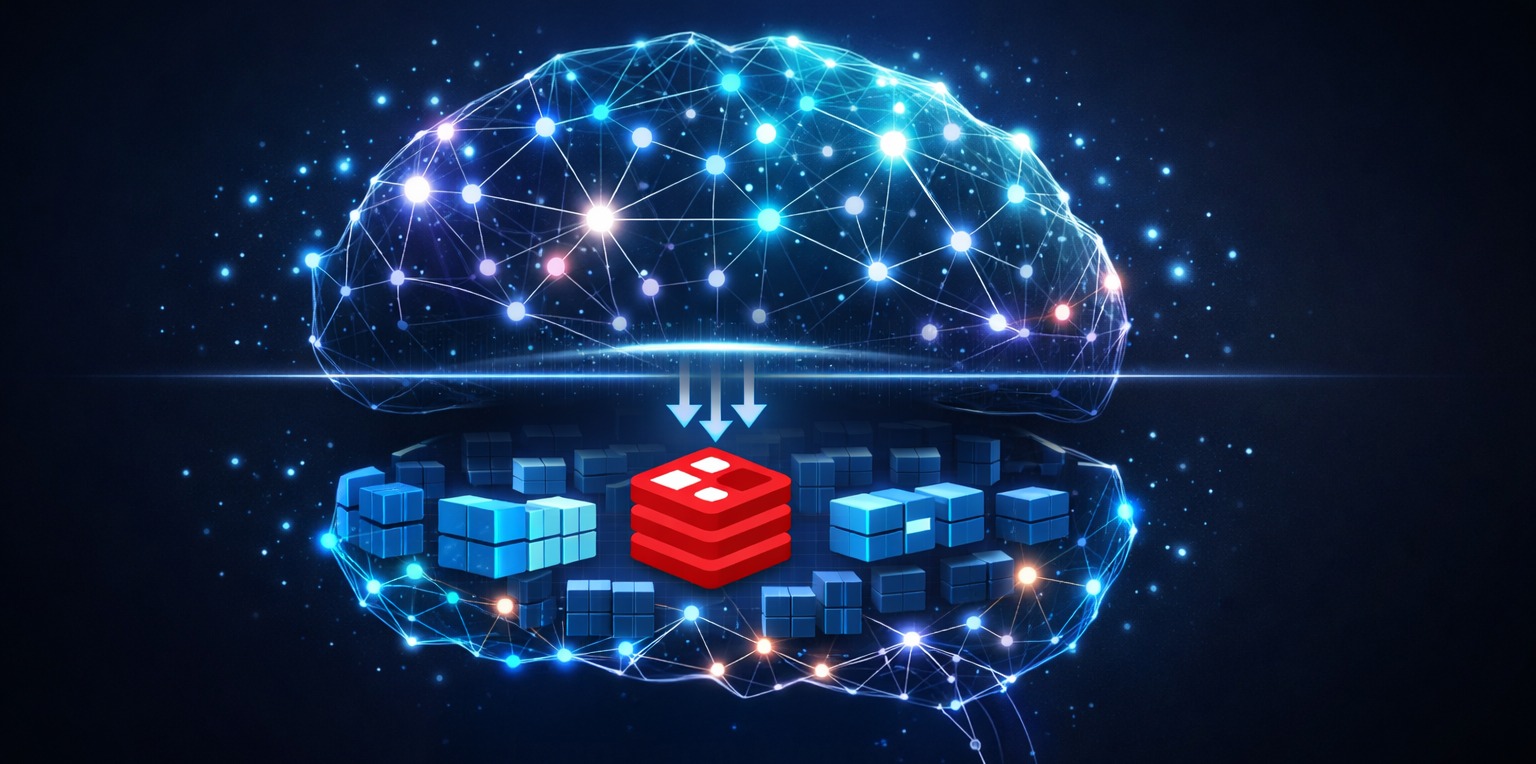
Context Graphs for Explainable, Decision-Aware AI Agents

Zaid Zaim , Jordi Spranger

How do you equip AI agents with the strict rules needed for true explainability? Discover how context graphs weave operational policies into queryable knowledge layers for autonomous robotics.

Pause
Mute Enter Fullscreen
#1 about 3 min

Unlocking generative AI capabilities using knowledge graphs

Knowledge graphs provide foundational context and precise tooling to enhance the capabilities of large language models.

#2 about 2 min

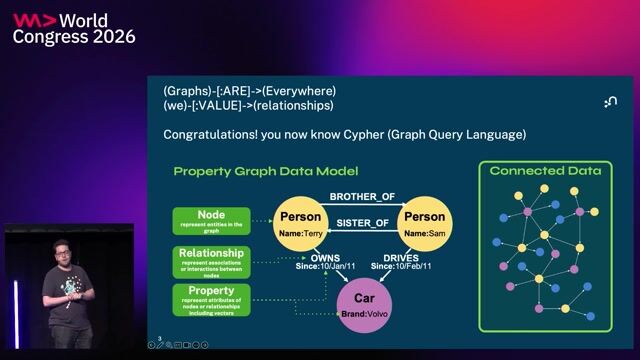
Fundamentals of graph databases and semantic relationships

Graphs model real-world relationships by connecting nodes through descriptive edges and key-value properties.

#3 about 4 min

Structuring physical environments through embodied artificial intelligence

Embodied artificial intelligence uses sensors to process visual data and categorize real-world objects into hierarchical semantic relationships.

#4 about 2 min

Overcoming spatial data limits with graph architecture

Graph architectures process spatial relationships in physical spaces efficiently compared to complex relational join tables.

#5 about 3 min

Integrating rules and policies into context graphs

Context graphs extend prompt engineering by embedding operational policies and rules to guide autonomous agent decisions.

#6 about 2 min

Designing short-term and long-term memory for intelligent agents

Agents balance task context utilizing short-term session state alongside long-term environmental observation and explicit reasoning rules.

#7 about 3 min

Defining objects and spatial rules through graph ontologies

Ontologies establish rigorous categorization schemas to populate graph databases mapping objects within literal digital twins.

#8 about 3 min

Optimizing retrieval performance using graph memory as cache

An agented memory service tracks and persists execution traces as workflow graphs to ensure subsequent dynamic queries resolve instantly.

#9 about 2 min

Tracking real-world environmental changes using graph timelines

Comparing sequential digital twin snapshots enables verifiable detection of moved or updated objects within physical spaces.

#10 about 3 min

Embodying artificial intelligence within physical robotic hardware platforms

Physical software development kits expose cloud-scale artificial intelligence models to control mechanical arms and humanoid robots.

#11 about 2 min

Overcoming challenges in adopting organizational context graphs

Providing developers with optimized tools to construct robust schemas is critical for driving broader enterprise adoption of knowledge graphs.

Matching moments

3:30 min

Orchestrating AI agents with a knowledge graph of thought

Gregor Schumacher Gregor Schumacher +2 · World Congress 2025

1:15 min

Equipping AI agents with memory and context

Oren Penso Oren Penso · World Congress 2026 Europe

1:45 min

Overcoming data complexity and context retrieval formatting challenges

Dennis Zielke Dennis Zielke +1 · World Congress 2025

3:20 min

Enhancing agent repository context using engineering knowledge graphs

Bastian Heilemann Bastian Heilemann +1 · World Congress 2026 Europe

4:00 min

Integrating architecture decisions into generative artificial intelligence agents

Vladas Diržys · Europe 2026 Virtual

1:44 min

Introduction to generative AI and knowledge graphs

Michael Hunger Michael Hunger · World Congress 2024

Upcoming sessions on this topic

Open session

World Congress 2026 North America

September 25, 2026 · 16:10–16:40

Stage 3

Building World-Aware Robots with Agent Memory and Context Graphs

Zaid Zaim

Developer Advocate EMEA at Neo4j | Microsoft AI MVP

Zaid Zaim
Open session

World Congress 2026 North America

September 24, 2026 · 16:10–16:40

Stage 3

Sandboxing the Swarm: Building Secure, Serverless AI Agents with Wasm

Lena Hall, Thorsten Hans

Lena Hall
Thorsten Hans
Open session

World Congress 2026 North America

September 25, 2026 · 11:40–12:10

Stage 1

Context Engineering: How machines remember and forget

Emre Okcular

Solutions Architect at OpenAI

Emre Okcular
Open session

World Congress 2026 North America

September 24, 2026 · 10:20–10:50

Stage 5

Vector, Graph, or Key Value? Choosing Your Agent's Memory

Elizabeth Fuentes Leone

AWS - Developer Advocate/SDE, GenAI

Elizabeth Fuentes Leone
Open session

World Congress 2026 North America

September 24, 2026 · 16:50–17:20

Stage 5

Context Engineering Kung Fu

Carl Lapierre

Tech Lead and AI Engineer at Osedea

Carl Lapierre
Open session

World Congress 2026 North America

September 23, 2026 · 13:15–15:15

Stage 9

DeepAgents: Build Multi-Agent AI Systems That Actually Work

Anagha Rumade, Anjana Umapathy, Apoorva Jaiswal

Anagha Rumade
Anjana Umapathy
Apoorva Jaiswal