Roman Alexis Anastasini

Using code generation for test automation – the fancy way

What if refactoring your API created a compile error instead of a runtime failure? Learn a powerful code generation strategy for safer, faster API tests.

Using code generation for test automation – the fancy way
#1about 3 minutes

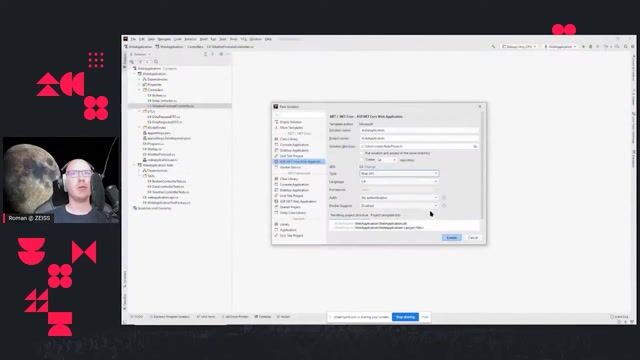
Setting up NSwag for OpenAPI documentation in .NET

Replace the default Swashbuckle with NSwag to generate OpenAPI specifications for a new .NET web application.

#2about 3 minutes

Automating swagger.json generation on every build

Configure the project file to automatically run the NSwag command-line tool after each build to create an up-to-date swagger.json file.

#3about 4 minutes

Generating a typed C# client for the test project

Use the generated swagger.json file to automatically create a strongly-typed C# HTTP client within the test project.

#4about 4 minutes

Using the generated client for robust API-level tests

Write API-level tests that consume the generated client, ensuring that any API signature changes result in compile-time errors.

#5about 7 minutes

Testing DTOs, validation, and API error handling

Leverage the generated client and DTOs to easily test complex validation rules, serialization formats, and API exception handling.

#6about 4 minutes

Achieving high test coverage with API-level tests

Focusing on API-level tests provides high code coverage and confidence for refactoring while reducing the effort spent on traditional unit tests.

#7about 2 minutes

Key lessons learned from this testing approach

This approach requires writing precise controller code and evolving from slow Docker-based databases to faster in-memory databases for tests.

#8about 1 minute

Q&A: Why API tests can be more efficient than unit tests

API-level tests reduce the developer time spent writing and maintaining numerous small unit tests, especially as the codebase grows.

#9about 1 minute

Q&A: Managing code coverage targets and exceptions

Set a high but realistic code coverage target like 90-95% to avoid writing useless tests for unreachable edge cases.

#10about 2 minutes

Q&A: Automating checks for breaking API changes

A potential improvement is to add a CI step that tests the new API version against a client generated from a previous API version.

#11about 2 minutes

Q&A: Managing test state and database setup

Use the web application factory to manage test setup, such as spinning up an in-memory database and seeding it with data for each test class.

#12about 2 minutes

Q&A: Mocking external service dependencies in tests

Isolate the API under test by mocking external service calls through interfaces, reserving full integration tests for the CI pipeline.

#13about 3 minutes

Q&A: The accidental discovery of this testing workflow

The idea to use the generated client in tests originated from the initial goal of providing an easy-to-use client for other consumer APIs.

Related jobs
Jobs that call for the skills explored in this talk.

Featured Partners

Related Articles

View all articles
DC
Daniel Cranney
Why Attend a Developer Event?
Modern software engineering moves too fast for documentation alone. Attending a world-class event is about shifting from tactical execution to strategic leadership. Skill Diversification: Break out of your specific tech stack to see how the industry...
Why Attend a Developer Event?

From learning to earning

Jobs that call for the skills explored in this talk.