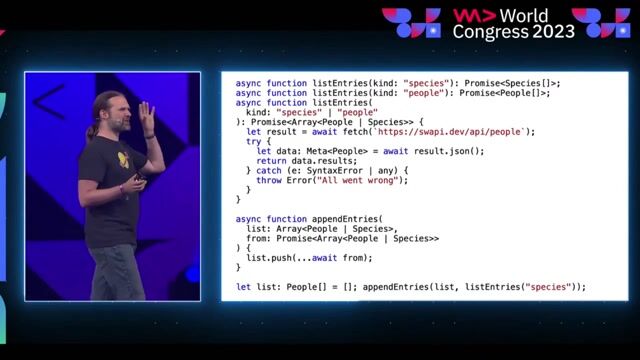
How can 10 lines of valid TypeScript still be full of runtime errors? Discover the surprising gaps in its type system.
#1about 2 minutes
The hidden dangers in everyday TypeScript code
A seemingly simple code snippet that passes type checks can still be riddled with runtime errors that TypeScript is supposed to prevent.
#2about 2 minutes
Why network requests returning `any` breaks type safety
The `any` type returned by default from I/O operations like `fetch` allows unsafe assignments, which can be mitigated by patching interfaces to return `unknown`.
#3about 2 minutes
Handling errors safely with the `unknown` type
Since anything can be thrown in JavaScript, catch block errors are typed as `any`, but using `unknown` and `instanceof` checks provides a safer way to handle them.
#4about 2 minutes
The disconnect between function overloads and implementation
Function overloads define a public API but do not enforce that the implementation correctly returns the specified types for each overload signature.
#5about 1 minute
Using conditional types to enforce return types
Conditional types can replace function overloads to create a more complex type signature that forces the developer to correctly handle different return paths.
#6about 3 minutes
How mutability breaks TypeScript's type tracking
TypeScript does not track type changes that occur from mutable operations like `array.push`, leading to a disconnect between the static type and the runtime value.
#7about 5 minutes
The trade-offs and lies within the solutions
Each proposed solution, from declaration merging to generics, introduces its own set of new problems and potential bugs.
#8about 3 minutes
Understanding TypeScript's core design philosophy
TypeScript intentionally prioritizes developer productivity over a provably sound type system, requiring developers to understand and manage these trade-offs.
#9about 3 minutes
The developer's role is to make conscious decisions
Software engineering is about making informed decisions and choosing the right tools and patterns for your team, rather than following dogmatic advice.
#10about 6 minutes
Q&A on Rust, `instanceof` alternatives, and `ts-reset`
The speaker answers audience questions about his favorite language (Rust), using Zod for runtime type checking instead of `instanceof`, and the trade-offs of using `ts-reset`.
Related jobs
Jobs that call for the skills explored in this talk.
Exploring TypeScript: Benefits for Large-Scale JavaScript ProjectsJavaScript is the backbone of web development, powering everything from small websites to large-scale enterprise applications. However, as projects grow in complexity, maintaining JavaScript code can become increasingly difficult. This is where TypeS...
Daniel Cranney
Dev Digest 198: 30 years of JS, In-Browser AI, How Attackers Abuse GenAI Inside last week’s Dev Digest 198 .
🎂 30 years of JavaScript
⏰ How long is a JavaScript second
💻 Clean code in Angular
🤦♂️ AI makes different mistakes than humans
👨💻 In-browser and offline AI
🟠 Undocumented Hacker News features
🐋 DeepSeek censored...
Dev Digest 159: AI Pipelines, 10x Faster TypeScript, How to InterviewInside last week’s Dev Digest 159 .
🤖 How to use LLMs to help you write code
⚡ How much electricity does AI need?
🔒 Is your API secure? Learn all about hardening it…
🟦 TypeScript switches to go and gets 10 times faster
🖼️ An image cropper in your ap...
From learning to earning
Jobs that call for the skills explored in this talk.