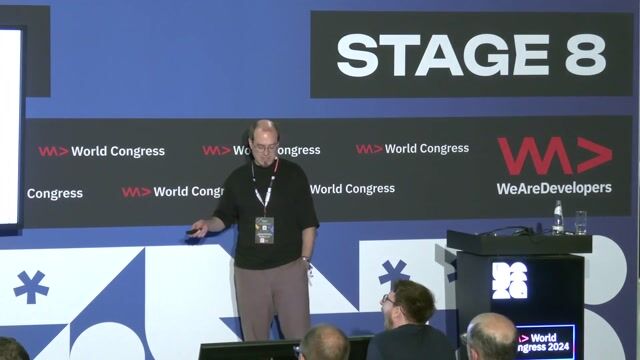
Maximising Cassandra's Potential: Tips on Schema, Queries, Parallel Access, and Reactive Programming
Our first design required 81 sequential queries. See how we used parallel access and a reactive stack to slash that to two, achieving sub-10ms latency.
#1about 2 minutes
Designing a high-performance social media feed backend
The goal is to design a backend and data layer for a social platform feed that responds in under 10 milliseconds at massive scale.
#2about 2 minutes
Defining functional requirements for the social feed
Key features include pinned pagination to handle real-time updates and an endless scroll, supported by core data entities like posts and users.
#3about 2 minutes
Understanding Cassandra's query-first data modeling
Unlike relational databases, Cassandra requires designing your data model based on specific query patterns due to its lack of joins and limited indexing.
#4about 3 minutes
Defining access patterns and the initial post schema
The first step in schema design is defining the five core query patterns and creating the main posts table with a feed ID partition key.
#5about 4 minutes
Using time-based ULIDs for efficient pagination
Using universally unique lexicographically sortable identifiers (ULIDs) as clustering keys enables efficient, time-based pagination without needing slow offsets.
#6about 3 minutes
Optimizing counts and the initial sequential process
The initial design avoids slow SELECT COUNT queries by using a LIMIT, but the sequential process flow is still highly inefficient, requiring 81 queries per page.
#7about 6 minutes
Iterative refinement through schema and process changes
The design is iteratively improved by merging tables, introducing parallelism, and modifying the schema to enable efficient bulk data fetching with IN clauses.
#8about 6 minutes
Implementing the flow with a reactive programming stack
A non-blocking, reactive stack using Kotlin, Quarkus, and Mutiny is chosen to efficiently orchestrate the parallel database queries required by Cassandra.
#9about 2 minutes
Achieving sub-4ms response times with optimization
An OpenTelemetry trace demonstrates the final implementation achieving a 3.72 millisecond response time for the complex feed API request.
#10about 3 minutes
Understanding the complexities and trade-offs of Cassandra
Cassandra introduces significant operational complexity, including data denormalization and difficult migrations, making it a choice for massive scale rather than general use.
Related jobs
Jobs that call for the skills explored in this talk.
Why Attend a Developer Event?Modern software engineering moves too fast for documentation alone. Attending a world-class event is about shifting from tactical execution to strategic leadership.
Skill Diversification: Break out of your specific tech stack to see how the industry...