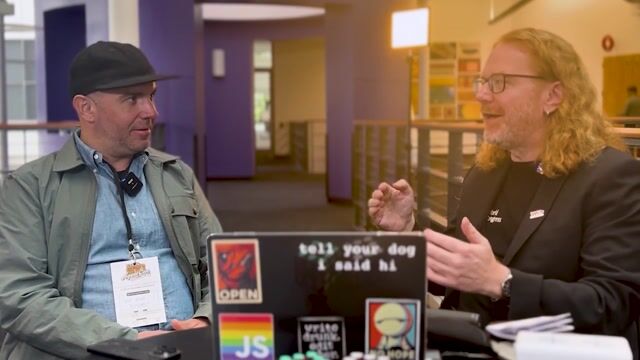





ChatGPT vs Google: SEO in the Age of AI Search - Eric Enge
ChatGPT will confidently tell you the battleship Bismarck was sunk by torpedoes, but it's wrong. This reveals the biggest challenge for the future of AI search.
#1about 2 minutes
Google's advantage in specific types of search queries
Google excels at commercial, local, and navigational queries by leveraging proprietary databases that web crawlers cannot access.
#2about 2 minutes
ChatGPT's superiority in content analysis and disambiguation
ChatGPT provides better results for ambiguous queries by presenting multiple possible meanings, unlike Google's focus on the most probable one.
#3about 3 minutes
How SEO and paid ads dilute traditional search results
Aggressive SEO tactics and paid advertisements often clutter search engine results, making it difficult to find authentic, high-quality content.
#4about 2 minutes
The risk of factual errors in AI-generated content
Generative AI can produce plausible-sounding but factually incorrect information that requires a subject matter expert to identify and correct.
#5about 6 minutes
LLMs confidently hallucinate instead of admitting uncertainty
Unlike search engines that can return no results, LLMs are designed to always provide an answer, leading to confident hallucinations when they lack information.
#6about 3 minutes
Leveraging generative AI as a brainstorming partner
Instead of treating AI as a source of truth, use it as a brainstorming tool to generate outlines, facts, and questions to accelerate the content creation process.
#7about 2 minutes
Standing out in an era of AI-generated content
As the web fills with low-quality AI-generated content, building a strong, trustworthy brand becomes a key differentiator for creators.
#8about 2 minutes
Why search engines beat LLMs on content freshness
Traditional search engines have a significant advantage with real-time information because their indexing is continuous, unlike the periodic training of LLM models.
#9about 6 minutes
The business and technical hurdles for AI search
AI platforms struggle with a viable monetization model for informational queries and face technical challenges in crawling modern JavaScript-based websites.
#10about 3 minutes
Shifting from general LLMs to specialized models
The future of AI likely involves smaller, specialized models focused on specific topics and augmented with RAG databases to improve accuracy and reduce errors.
#11about 4 minutes
User discernment will shape the future of information retrieval
The long-term success of AI versus traditional search will be driven by user experiences and the real-world consequences of relying on each platform's information.
Related jobs
Jobs that call for the skills explored in this talk.

SEO in an AI world - Google vs. ChatGPT and survival tips for content creatorsIn the ever-evolving world of technology, the landscape of search engines and AI tools is shifting at an unprecedented pace. This transformational journey is being shaped by the rising influence of AI-powered tools like ChatGPT, which are increasingl...
Chris Heilmann
Dev Digest 151: SEO in an AI world, security fixes and Doomed PDFsInside last week’s Dev Digest 151 .
🔎 How ChatGPT compares to search and what that means for SEO
✂️ Job cuts across the board as companies curb DEI programs
🟨 @Microsoft releases 161 Windows security updates
⚠️ @Google’s OAuth bug endangers million...
Daniel Cranney
DeepSeek R1 vs ChatGPT o1: How Do They Compare?It’s fair to say DeepSeek has arrived.
The Chinese startup and its R1 model exploded onto the AI scene last week, and - at least temporarily - turned the industry on its head.
With OpenAI having established itself as the market leader over the last ...
Daniel Cranney
AI & A11Y, Meta's privacy and the future of SEOInside last week’s Dev Digest 173 .
🏆 GitHub reaches 1bn repos, with underwhelming final submission
🎮 Atari 2600 beats ChatGPT at chess
💬 Chatbots don’t improve work for 7k companies
🕵️ Meta AI app is a privacy disaster
⚠️ Microsoft Copilot’s Zero C...
From learning to earning
Jobs that call for the skills explored in this talk.