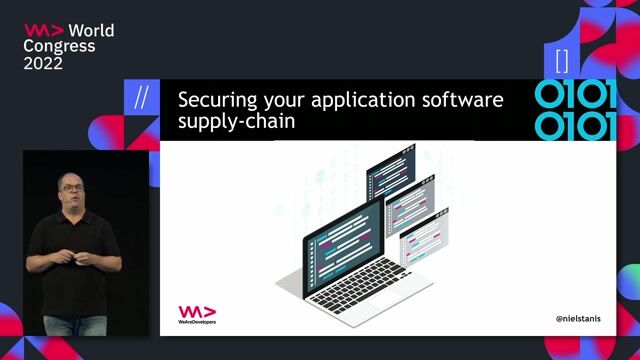
Stop thinking about security tools. DevSecOps is a cultural transformation, not a technology problem.
#1about 2 minutes
The evolution from traditional security to DevSecOps
Traditional security testing at the end of the pipeline creates friction and downtime, leading to the rise of DevSecOps to integrate security with development and operations.
#2about 2 minutes
DevSecOps is a culture, not just a set of tools
Implementing DevSecOps successfully requires focusing on its three core pillars—people, process and tools, and governance—rather than just adopting new technologies.
#3about 3 minutes
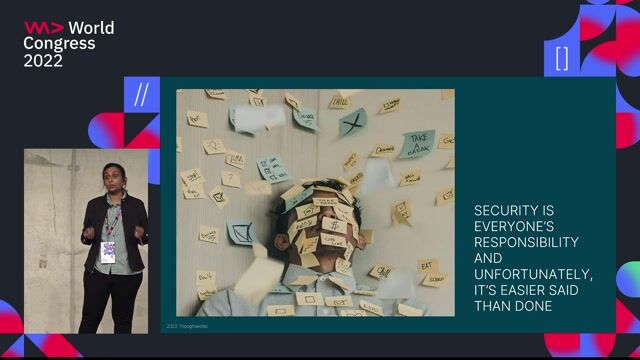
The people pillar and establishing shared responsibility
Breaking down traditional silos between development, security, and operations is crucial for creating a shared responsibility model where everyone contributes to security.
#4about 2 minutes
The technology pillar and automating security tests
Technology enables DevSecOps by automating repeatable security tests like secret scanning, SAST, and software composition analysis within the CI/CD pipeline.
#5about 2 minutes
The governance pillar for tracking progress and compliance
Governance provides structure through policy as code and visualization, helping teams track security posture, manage expectations, and ensure compliance.
#6about 2 minutes
Overcoming common DevSecOps implementation challenges
Successfully implementing DevSecOps involves navigating cultural resistance, ensuring seamless tool integration, and meeting complex compliance requirements like ISO 27001 and SOC 2.
#7about 2 minutes
Reducing costs by shifting security left
Shifting security practices earlier in the development lifecycle, such as with pre-commit hooks, significantly reduces the cost and effort required to find and fix vulnerabilities.
#8about 1 minute
Communication is key to a successful DevSecOps journey
Clear and consistent communication with developers about the purpose and implementation of security measures is the most critical factor in reducing friction and ensuring adoption.
Related jobs
Jobs that call for the skills explored in this talk.
Now is the time for industrialized software developmentNow is the time for industrialized software development
Recently, I received a letter from my car’s manufacturer alerting me to a recall. They had discovered a defective part and wanted to replace it.
It was easily fixed, and I might have forgotten a...
Christina Schaireiter
Why Attend a Developer Event?Modern software engineering moves too fast for documentation alone. Attending a world-class event is about shifting from tactical execution to strategic leadership.
Skill Diversification: Break out of your specific tech stack to see how the industry...
Daniel Cranney
Dev Digest 216: CyberSec + Mythos, Stack Overflow for Agents & DOOM in TTFInside last week’s Dev Digest 216 .
🧠 Prompts are now tools in Chrome
📜 The AI Coding Agent Manifesto
🔐 How Claude Mythos changes Cyber Security
🧱 GitHub Stacked PRs to battle AI slop
⚙️ Git commands to run before reading code
🐍 A Python framework f...
Christina Schaireiter
5 Reasons Why Attending Conferences in 2026 Matters More Than You ThinkIt’s 2026, and the “remote vs. office” debate has finally settled into a high-tech hybrid reality. While we’ve perfected the art of shipping production-grade code from decentralized hubs and home setups, something shifted. We realized that while AI c...
From learning to earning
Jobs that call for the skills explored in this talk.