
World Congress 2026 Europe Jul 9, 2026 Session details

The Retrieval Layer for Edge AI

Sasha Denisov , Chadha Sridi

Are your local AI agents acting like amnesic observers? Give edge devices persistent, offline memory with Qdrant Edge. Build personalized, latency-free vector search directly on physical endpoints.

Pause
Mute Enter Fullscreen
#1 about 3 min

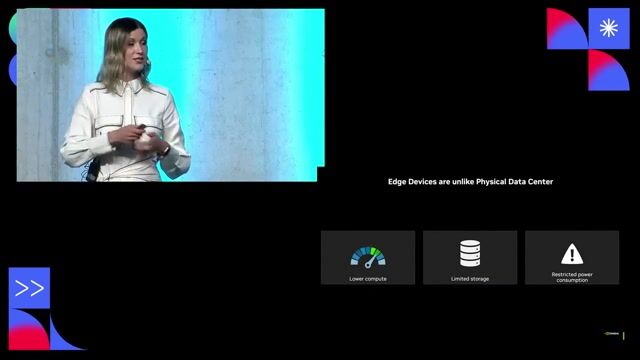
The necessity of Edge AI and its driving constraints

Running artificial intelligence systems strictly on edge devices eliminates reliance on network connections while guaranteeing strict latency limits and data privacy.

#2 about 5 min

Enabling edge intelligence with small language models

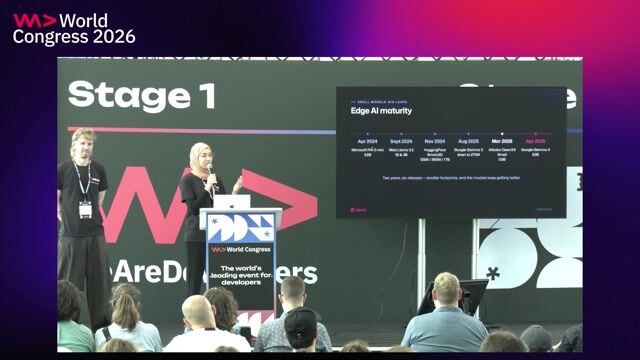
Deploying lightweight open weights models onto consumer hardware provides reasoning skills without exposing personal context across cloud boundaries.

#3 about 3 min

Bringing semantic memory to devices with Qdrant Edge

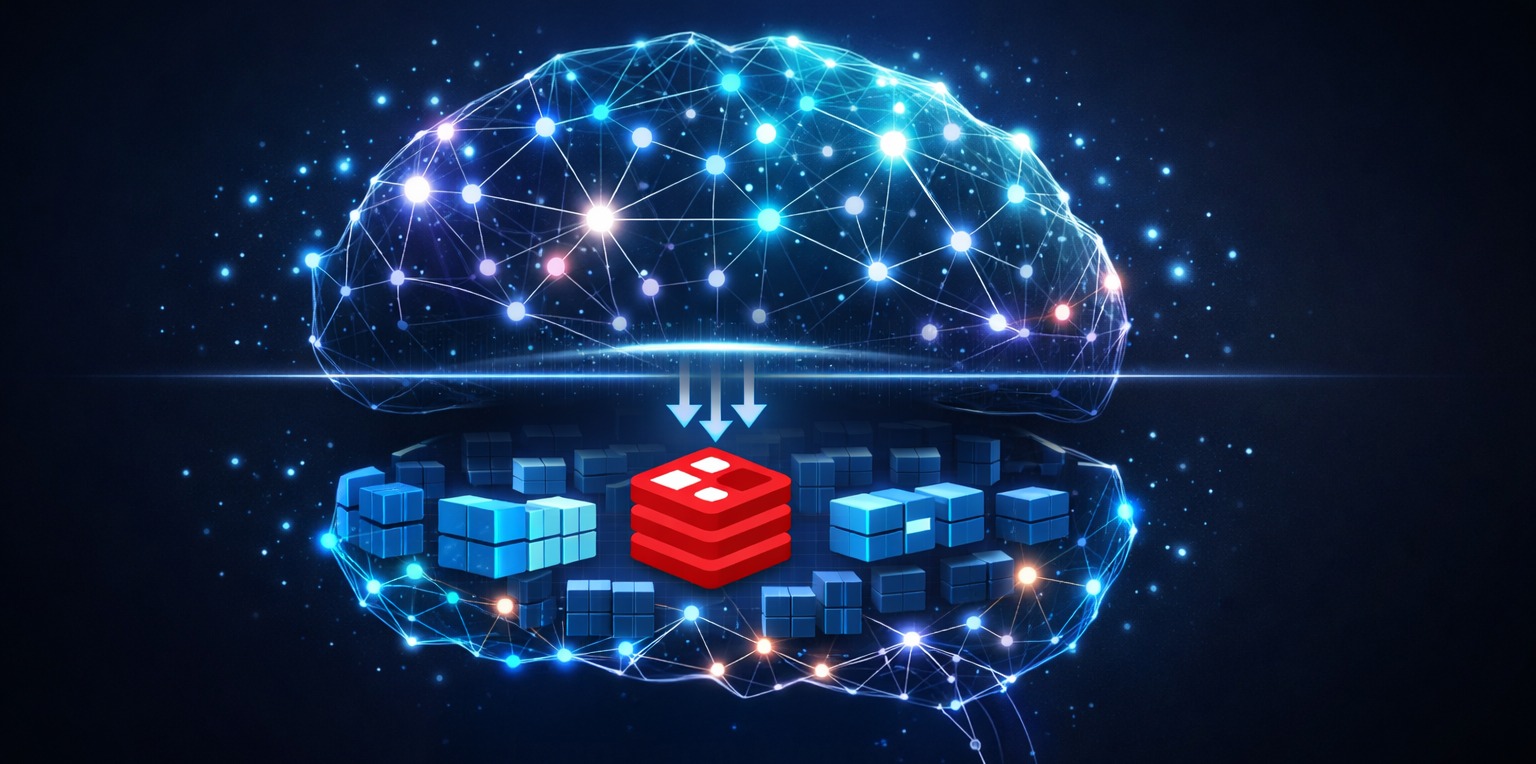
Embedding a Rust-based vector search engine locally allows low-resource environments to index unstructured data and maintain persistent personalized contexts.

#4 about 5 min

Demonstrating on-device semantic memory with mobile apps

Implementing local vector indexing within mobile applications creates a private semantic search experience for personal messages and image collections.

#5 about 3 min

Architecting the memorize and recall flows on mobile

Integrating a local Gemma model handles both embedding generation from visual data and query parsing with smart filters to fetch accurate historical records.

#6 about 4 min

Deploying local vector search for home robotics

Combining object detection captures with hybrid search functionality gives standalone robots the spatial awareness needed to quickly locate missing items.

#7 about 3 min

Building real-time object tracking with smart glasses

Processing continuous camera feeds into a localized vector database enables wearable devices to log asset locations for future retrieval via natural voice commands.

#8 about 3 min

Evaluating performance metrics of on-device object memory

Routing detection tasks to hardware neural processing units minimizes inference bottlenecks while continuous upsert safeguards data during sporadic power cycles.

#9 about 2 min

Synchronizing edge device memory with cloud clusters

Bridging standalone local indexes via a centralized cloud repository allows collaborative search strategies across distributed personal hardware nodes.

#10 about 4 min

Addressing network challenges and offline edge synchronization

Identifying peak energy demands for network hopping isolates failure patterns and underscores the value of hybrid offline-first index operations.

Matching moments

2:26 min

Key drivers and definitions for physical edge artificial intelligence

Moe Sani Moe Sani · World Congress 2026 Europe

3:21 min

Reducing cloud dependency with on-device edge AI models

Precious Osaro Precious Osaro · World Congress 2026 Europe

3:19 min

Technological shifts enabling practical edge AI deployment

Sasha Denisov Sasha Denisov · World Congress 2026 Europe

6:37 min

Defining edge AI and its widespread industry applications

Ekaterina Sirazitdinova · World Congress 2023

1:50 min

Overview of the Edge AI ecosystem and tech stack

Maxim Salnikov Maxim Salnikov · World Congress 2025

4:29 min

Distributing multimodal intelligence via edge computing architectures

Clemens Wasner Clemens Wasner +3 · World Congress 2026 Europe

Upcoming sessions on this topic

Open session

World Congress 2026 North America

September 24, 2026 · 14:10–14:40

Stage 5

Edge AI: Running Agentic Intelligence Where Internet Can't Reach

Nitin Eusebius

AWS - Principal Solutions Architect

Nitin Eusebius
Open session

World Congress 2026 North America

September 25, 2026 · 13:30–14:00

Stage 1

The State of Local AI in 2026

Kirah Sapong

Co-founder & CTO at Aquaduck AI

Kirah Sapong
Open session

World Congress 2026 North America

September 24, 2026 · 16:10–16:40

Stage 5

From Software Agents to Physical Devices: Inside the Agentic Hardware Stack

Michael Yuan, Vivian Hu

Michael Yuan
Vivian Hu
Open session

World Congress 2026 North America

September 25, 2026 · 16:10–16:40

Stage 3

Building World-Aware Robots with Agent Memory and Context Graphs

Zaid Zaim

Developer Advocate EMEA at Neo4j | Microsoft AI MVP

Zaid Zaim
Open session

World Congress 2026 North America

September 24, 2026 · 11:00–13:00

Stage 14

Ducks, Sensors, and Agents

Brian McFadden

Staff Engineer, Developer Relations at Qualcomm

Brian McFadden
Open session

World Congress 2026 North America

September 25, 2026 · 11:40–12:10

Stage 9

You Can’t Re-Run Sunlight: Designing ML Data Architectures for Physical AI

An Phan

Senior Data Infrastructure Engineer @ Hippo Harvest

An Phan