
World Congress 2026 Europe Jul 9, 2026 Session details

Trust Issues: Because Zero-Trust Isn’t Optional Anymore

Jan Peer Stöcklmair

Updates alone aren't a complete security strategy. Why do patched applications still fall victim to remote code execution? Learn to enforce true zero-trust across your entire stack.

Pause
Mute Enter Fullscreen
#1 about 6 min

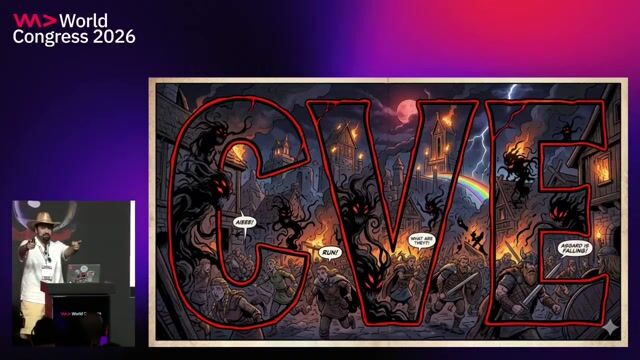
Understanding the React2Shell vulnerability and server impacts

How the critical React2Shell vulnerability enables remote code execution and reverse shells on vulnerable systems.

#2 about 4 min

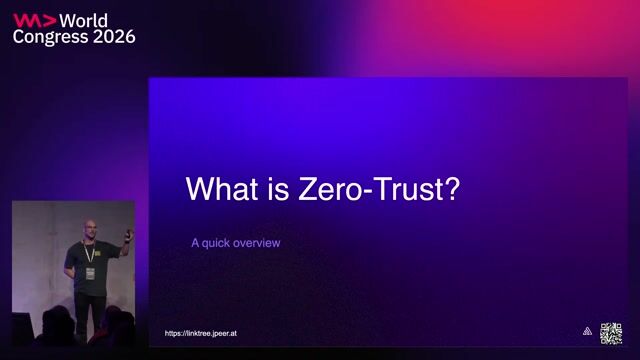
Core principles of the zero trust security model

The zero trust philosophy assumes networks are hostile and relies on the principle of least privilege and microsegmentation.

#3 about 4 min

Implementing zero trust security practices in frontend applications

Strong content security policies and delayed update strategies prevent malicious supply chain code from executing in the browser.

#4 about 4 min

Applying zero trust architecture to backend microservices

Restricting lateral movement and establishing trust boundaries between microservices using mutual TLS authentication prevents secret theft.

#5 about 2 min

Using distroless container images to reduce attack surfaces

Removing interactive shells limits the ability for attackers to establish reverse connections and utilize existing system binaries.

#6 about 3 min

Securing kubernetes clusters and database connections effectively

Implementing service mesh mutual TLS, restricting disk components, and enforcing row-level security hardens database interactions.

#7 about 6 min

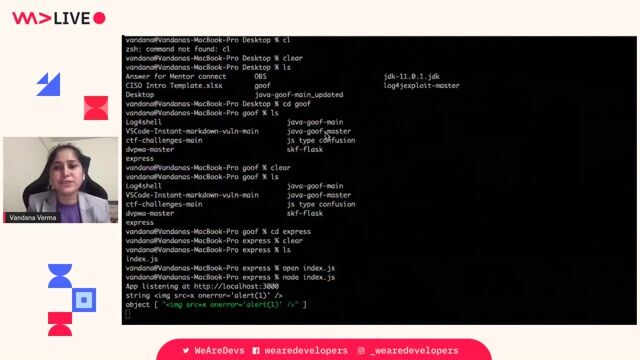
Live demonstration of vulnerability exploitation and zero trust mitigation

Distroless containers and strict network policies proactively block reverse shell connections during an active container exploit.

#8 about 4 min

Implementing zero trust on traditional cloud providers and serverless

Utilizing virtual private cloud security groups and serverless application policies enforces strict default deny networking.

Matching moments

1:25 min

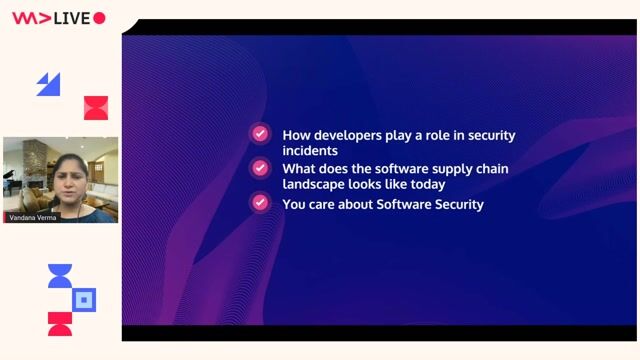
Implementing zero trust architectures for secure developer ecosystems

Vandana Verma · LIVE

3:09 min

Practical mitigation strategies for modern software supply chains

Adrian Mouat Adrian Mouat · WWC Europe 2026

7:50 min

Prioritizing cybersecurity and zero trust in development

Ash Ryan Arnwine Ash Ryan Arnwine +3 · WWC 2024

2:13 min

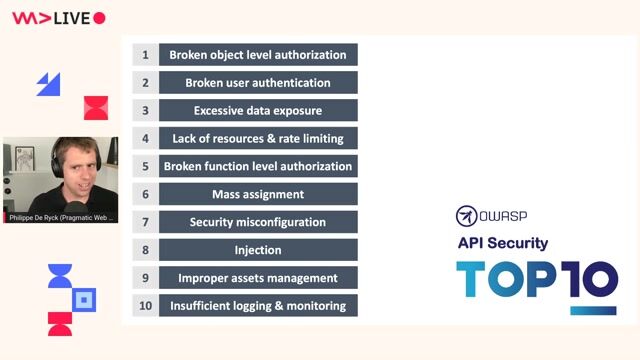
Understanding software vulnerabilities and prominent exploits

Mohammad-Ali A'râbi Mohammad-Ali A'râbi · WWC Europe 2026

1:39 min

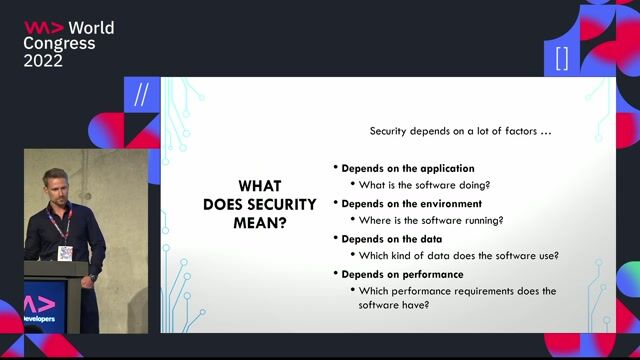
Introduction to Kubernetes security challenges and opportunities

Marc Nimmerrichter · WWC 2022

2:36 min

Implementing secure network tunnels on managed cloud infrastructure

Den Prysukhin · LIVE

Upcoming sessions on this topic

Open session

World Congress 2026 North America

Stop Running Mystery Meat in Production

Jeroen van Erp

Technical Advocate @ SUSE

Jeroen van Erp
Open session

World Congress 2026 North America

Responsible AI Architecture with Zero Trust Agents

Ashok Prakash

Staff ML Engineer at Apple

Ashok Prakash
Open session

World Congress 2026 North America

Zero-Trust Architecture for Agentic AI: Securing Multi-User Access and Third-Party Integrations

Borko Djurkovic

Member of Technical Staff at Cohere

Borko Djurkovic
Open session

World Congress 2026 North America

On the Public Clock: Open-Source Defense When You're Not in the Club

Nicholas Muy

VP Engineering Platform and Security at Scrut.io

Nicholas Muy
Open session

World Congress 2026 North America

rm -rf: Horror Stories From Unsandboxed AI Agents (and How Docker Fixes This)

Rishab Kumar

Staff Developer Evangelist @ Twilio

Rishab Kumar
Open session

World Congress 2026 North America

Securing AI Agent Infrastructure: Identity, Attestation, and Trust at Scale

Abdel Fane

Founder of OpenA2A

Abdel Fane