

DC
Daniel Cranney
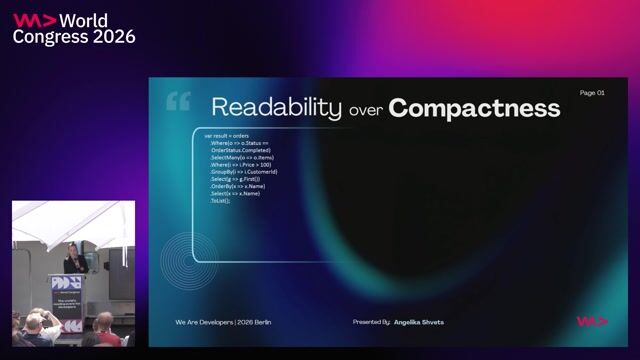
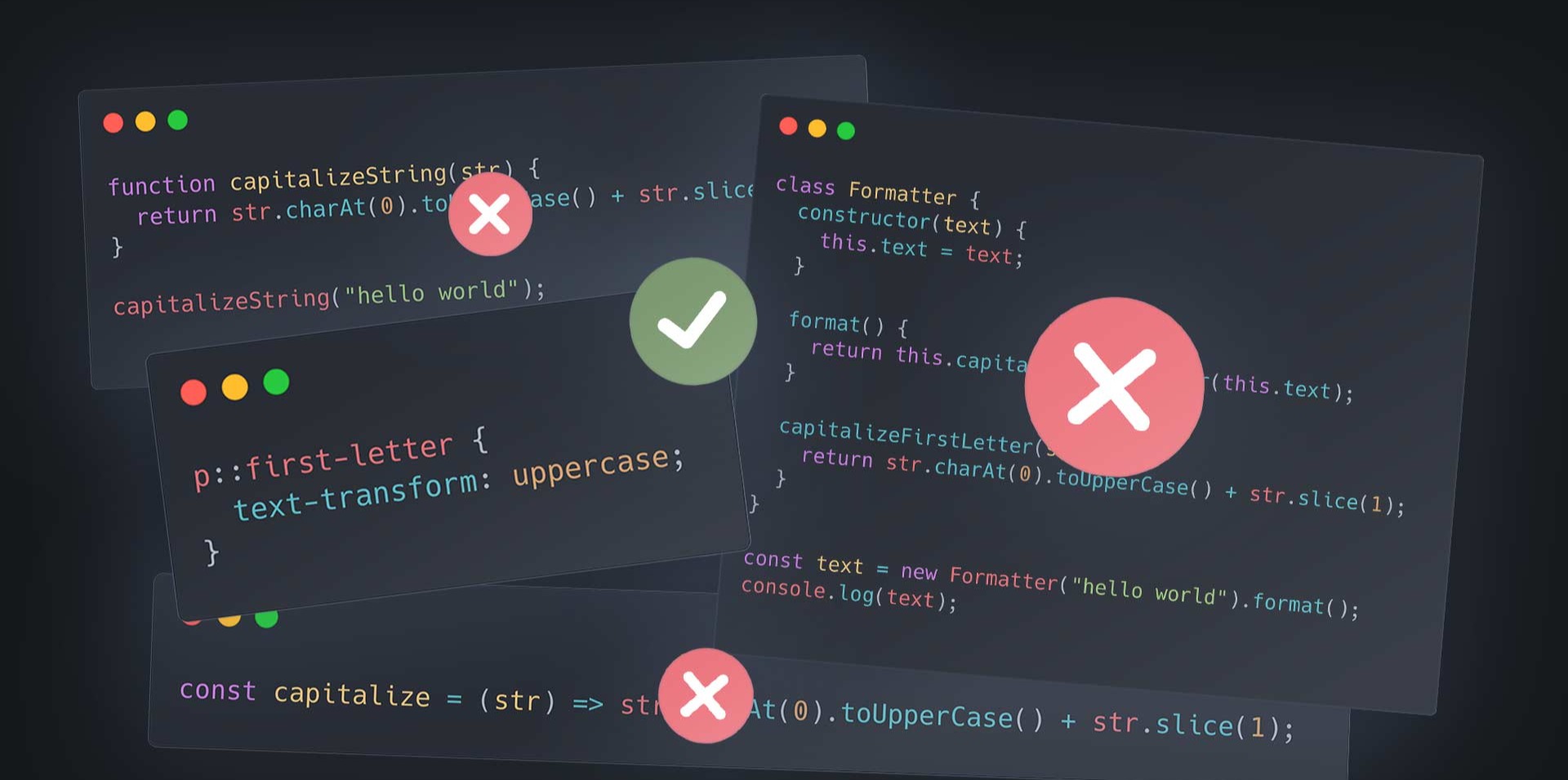
Practical tips for keeping your C# code base clean
- Discuss this with your agent
- Open in Claude
- Open in ChatGPT
Is your C# codebase slowly turning into a tangled, distributed monolith? Discover pragmatic habits and architectural tweaks to shed unnecessary complexity and reclaim your code's maintainability.
Matching moments
1:29 min
Introduction to keeping test code clean
Gil Zilberfeld · LIVE
6:34 min
Defining the core principles of clean code
Gil Zilberfeld · LIVE
5:55 min
Evaluating generated code syntax and maintaining quality control
Phil Nash · Coffee With Developers
53 sec
Tackling code smells during routine peer code reviews
 Benjamin Bischoff · World Congress 2024
2:01 min
Combining refactoring techniques with best programming practices
Kamila Santos · LIVE
1:52 min
Balancing technical debt and clean code practices
 Stefan Lingler +1 · Coffee With Developers
More from World Congress 2026 Europe
Related videos
Related articles
DC
Daniel Cranney

DC
Daniel Cranney

DC
Daniel Cranney
From learning to earning
Jobs that call for the skills explored in this talk.
about 1 month ago
•
Verified
Founding Developer Advocate

Plumber
San Francisco, United States
Experienced
$150k–190k
Remote
GIT
Bash
Linux
17 days ago
Senior Software Engineer

GitHub
United States
Expert
$124k–329k
Remote
Ruby
Golang
DevOps
about 1 month ago
Staff Software Engineer, GitHub Intelligence (Copilot Agents)
GitHub
San Francisco, CA, United States
Experienced
Ruby
Golang
Github
about 1 month ago
•
Verified
Manager, Engineering, Secure Build and SCS Services

Docker, Inc.
Expert
Remote
Team Leadership
23 days ago
Senior AI Developer
PwC
United States
Expert
Remote
Docker
Github
Fastapi
about 1 month ago
Senior Software Engineer, Sandboxes (Eu Or East Coast Preferred)
Docker, Inc.
Madrid, Spain
€94k–155k
Remote
Docker
Adobe InDesign
Virtual Agents