


DC
Daniel Cranney
From Perception to Autonomy: Building Agentic Edge AI Robots with ROS 2
- Discuss this with your agent
- Open in Claude
- Open in ChatGPT
The next engineering moat is physical edge AI. Learn to build offline, agentic robots using ROS 2 and local LLMs. Master multi-model architectures for real-world autonomy.
Matching moments
3:55 min
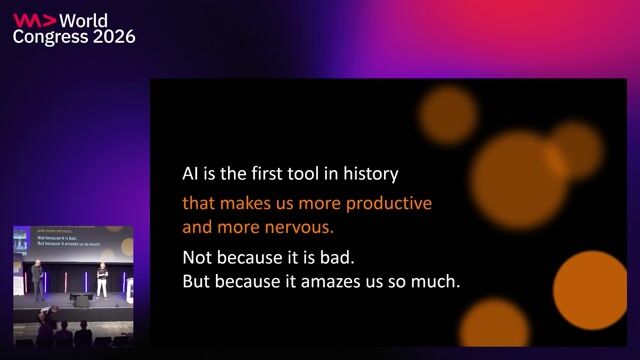
Technical catalysts driving real-world artificial intelligence
 Clemens Wasner +3 · World Congress 2026 Europe
1:20 min
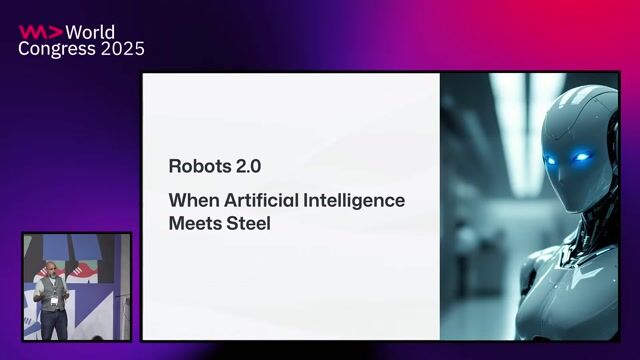
Shifting focus from large language models to physical AI
 Sergio Perez · World Congress 2026 Europe
6:05 min
Identifying the primary industries driving physical artificial intelligence adoption
 Tomislav Tipurić +4 · World Congress 2026 North America
2:17 min
Managing tactile sensing and optimizing edge inference performance
 Ashutosh Saxena · World Congress 2026 North America
3:37 min
Hardware evolution from local inference to physical artificial intelligence
 Vini Senger · World Congress 2026 North America
1:44 min
Navigating hardware constraints and edge computing challenges
 Thomas Tomow · World Congress 2025
More from World Congress 2026 Europe
Related videos
Related articles

BB
Benedikt Bischof
.gif)
BR
Benjamin Ruschin

MH
Michael Hunger
N
Neo4j

From learning to earning
Jobs that call for the skills explored in this talk.
26 days ago
Principal Software Engineer, AI Inference Runtime

ARM
Seattle, WA, United States
Expert
$262k
Compilers
Low Latency
Concurrency
26 days ago
Principal Software Engineer, AI Inference Cloud
ARM
Seattle, WA, United States
Expert
$262k
Pytorch
TensorRT
Kubernetes
26 days ago
Staff Software Engineer, AI Inference Runtime
ARM
Seattle, WA, United States
Expert
$209k–282k
Compilers
Low Latency
Concurrency
26 days ago
Staff Software Engineer, AI Inference Cloud
ARM
Seattle, WA, United States
Expert
$209k–282k
Pytorch
TensorRT
Kubernetes
27 days ago
Senior AI Developer

PwC
United States
Expert
Remote
Docker
Github
Fastapi
26 days ago
Principal Software Engineer, AI Compute Infrastructure
ARM
Seattle, WA, United States
Expert
$262k
Linux
Grafana
Pytorch