World Congress 2024 Aug 20, 2024 Session details

The Quantum Computing Future

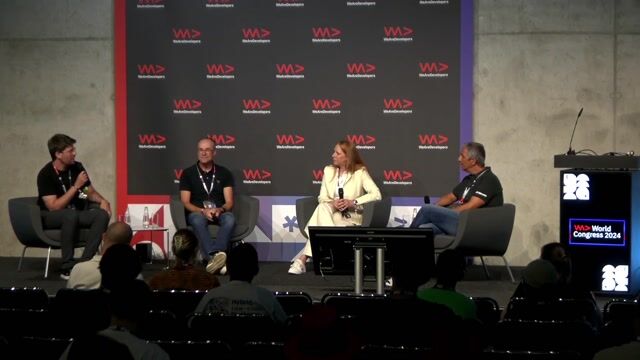
Alexander Glätzle , Florian Neukart , Jan Goetz , Tomislav Tipurić

Transistors have reached atomic limits, signaling the exhaustion of Moore’s Law. Learn how quantum entanglement will solve combinatorial nightmares and why developers must master hybrid algorithms today.

Pause
Mute Enter Fullscreen
#1 about 4 min

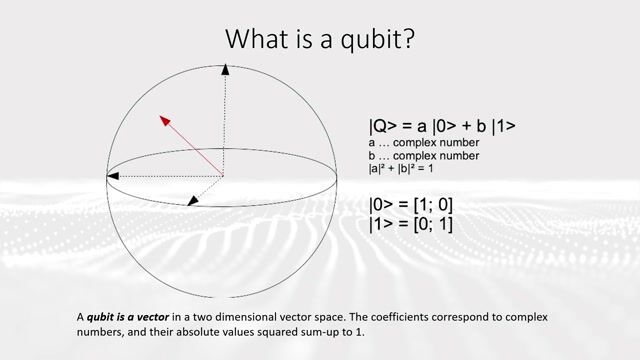
Redefining computing limits with quantum mechanics

How principles of superposition enable quantum computers to process multiple states simultaneously.

#2 about 2 min

Building full-stack superconducting quantum hardware

Engineering silicon processors with microwave structures controls qubits at cryogenic temperatures.

#3 about 2 min

Overcoming hardware limits with quantum error correction

Why physical qubit instability requires extensive error correction to achieve viable commercial computing power.

#4 about 5 min

Scaling quantum systems using neutral atom technology

Trapping strontium atoms in laser-cooled vacuum chambers allows massive hardware scaling without fabricating complex circuits.

#5 about 2 min

Extending operational stability with optical lattices

Using crystals of light to trap over a thousand atomic qubits maintains system viability for an hour.

#6 about 3 min

Increasing computing power through quantum gate fidelity

How reducing individual operation errors prevents compounding failures and enables deep entanglement across multiple qubits.

#7 about 4 min

Simulating complex chemistry and material science properties

Modeling intrinsic molecular behavior solves constraints that overwhelm traditional high-performance supercomputing capacity.

#8 about 3 min

Democratizing access through cloud-based quantum data centers

Hosting stable quantum hardware environments provides remote access for researchers and enterprise software testing.

#9 about 3 min

Accelerating climate and battery material research

Combining quantum machine learning with specialized algorithms optimizes battery charge transfers and global climate models.

#10 about 2 min

Preparing enterprises for practical quantum computing integration

Identifying suitable business workflows helps organizations prepare to adopt new mathematical problem-solving configurations securely.

#11 about 2 min

Solving immense scheduling variables beyond classical capabilities

Processing deeply intertwined matrices resolves complex logistical combinations like nationwide train networks and vast academic schedules.

#12 about 2 min

Educating developers for the new quantum programming paradigm

Writing efficient quantum code demands a foundational shift away from linear algorithms toward entanglement logic.

#13 about 3 min

Envisioning an interconnected diverse quantum hardware landscape

Distributing unique algorithms across specialized processors paves the way for scalable quantum memory and networking communications.

Matching moments

8:17 min

Practical applications and hybrid solutions for quantum computing advantage

Alexander Glätzle Alexander Glätzle +3 · World Congress 2025

4:06 min

Combining quantum, neural, and classical computing paradigms

Stephen Jones · Coffee With Developers

2:35 min

Current state of quantum hardware and market investments

Julian Julian · World Congress 2025

52 sec

Software development challenges in quantum computing ecosystems

Alex Waldherr Alex Waldherr · World Congress 2024

1:57 min

Current state of quantum computing capabilities

Jakub Gaj Jakub Gaj · World Congress 2026 Europe

2:13 min

Current landscape of quantum applications and cloud access

Ilie-Daniel Gheorghe-Pop Ilie-Daniel Gheorghe-Pop · World Congress 2025

Upcoming sessions on this topic

Open session

World Congress 2026 North America

September 25, 2026 · 11:40–12:10

Stage 4

Quantum Close-Up: What Engineers Need to Know Before Q-Day

Scott Likens

Global Chief AI Engineer, Principal at PwC US

Scott Likens
Open session

World Congress 2026 North America

September 24, 2026 · 11:00–11:30

Stage 3

Making Science Larger, not just Faster

Yuval Dvir

Commercial Executive, SandboxAQ

Yuval Dvir
Open session

World Congress 2026 North America

September 24, 2026 · 11:00–11:30

Stage 1

Application-Defined Compute: Rethinking Infrastructure for AI Applications

Anurag Goel

Founder and CEO of Render

Anurag Goel
Open session

World Congress 2026 North America

September 24, 2026 · 14:10–14:40

Stage 5

Edge AI: Running Agentic Intelligence Where Internet Can't Reach

Nitin Eusebius

AWS - Principal Solutions Architect

Nitin Eusebius
Open session

World Congress 2026 North America

September 24, 2026 · 14:10–14:40

Stage 6

Compute for your AI model: GPUs, LPUs, TPUs and beyond..

Kushaagra Goyal

Tech Lead at Rubrik, ex-CTO at Gan.AI, ex-Databricks

Kushaagra Goyal
Open session

World Congress 2026 North America

September 24, 2026 · 17:30–18:00

Stage 3

Scaling Distributed Queues for AI workloads

Jasmit Kaur Saluja

Software Engineer at Meta Platforms Inc

Jasmit Kaur Saluja