

How can you find critical security vulnerabilities before writing a single line of code? Learn to apply threat modeling in the earliest design phase.
#1about 3 minutes
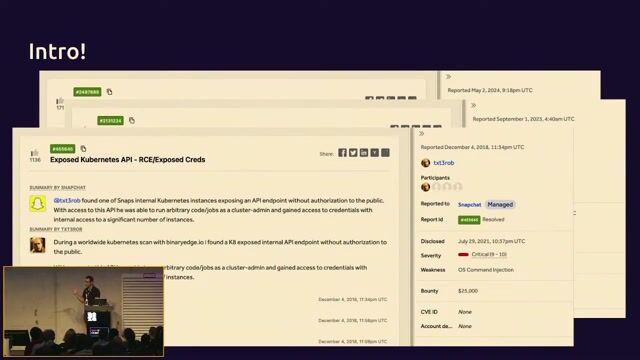
Why shift left security is crucial for modern development
High-cost bug bounties for production vulnerabilities demonstrate the need to integrate security earlier in the software development lifecycle.
#2about 2 minutes
What threat modeling is and where it fits in development
Threat modeling is a structured process to identify and mitigate security risks during the design phase, before coding begins.
#3about 3 minutes
Understanding core security concepts and their relationships
A clear definition of terms like weakness, vulnerability, attack, and risk helps to understand how threats exploit system weaknesses.
#4about 2 minutes
Introducing the six components of the STRIDE methodology
The STRIDE framework categorizes threats into six types: Spoofing, Tampering, Repudiation, Information Disclosure, Denial of Service, and Elevation of Privilege.
#5about 3 minutes
Using data flow diagrams to apply the STRIDE model
The STRIDE workflow involves creating data flow diagrams (DFDs) and applying the six threat categories to each DFD element to identify potential issues.
#6about 2 minutes
Exploring four options for handling identified security threats
Once a threat is identified, it can be addressed by mitigating, eliminating, transferring, or formally accepting the associated risk.
#7about 2 minutes
Building a multi-level data flow diagram for an application
A practical example demonstrates how to build a data flow diagram for a ticketing system, starting from a high-level view and adding more detail in subsequent levels.
#8about 1 minute
How to define and use trust boundaries in threat modeling
Establishing clear trust boundaries within an application architecture is a critical first step for identifying where threats are most likely to cross.
#9about 4 minutes
Using OWASP Threat Dragon for practical threat modeling
The open-source tool OWASP Threat Dragon helps visualize the data flow diagram, identify threats for each component, and track mitigation plans.
Related jobs
Jobs that call for the skills explored in this talk.

Dev Digest 216: CyberSec + Mythos, Stack Overflow for Agents & DOOM in TTFInside last week’s Dev Digest 216 .
🧠 Prompts are now tools in Chrome
📜 The AI Coding Agent Manifesto
🔐 How Claude Mythos changes Cyber Security
🧱 GitHub Stacked PRs to battle AI slop
⚙️ Git commands to run before reading code
🐍 A Python framework f...
Christina Schaireiter
Why Attend a Developer Event?Modern software engineering moves too fast for documentation alone. Attending a world-class event is about shifting from tactical execution to strategic leadership.
Skill Diversification: Break out of your specific tech stack to see how the industry...
Christina Schaireiter
5 Reasons Why Attending Conferences in 2026 Matters More Than You ThinkIt’s 2026, and the “remote vs. office” debate has finally settled into a high-tech hybrid reality. While we’ve perfected the art of shipping production-grade code from decentralized hubs and home setups, something shifted. We realized that while AI c...
Chris Heilmann
Why Presentations Should Always Work Offline—Even at Online ConferencesWe just finished the WeAreDevelopers World Congress 2025 in Berlin, and I am still recovering from the event. It was a fantastic experience, and I am grateful to everyone who attended and made it a success. As the main moderator of the main stage, I ...
From learning to earning
Jobs that call for the skills explored in this talk.