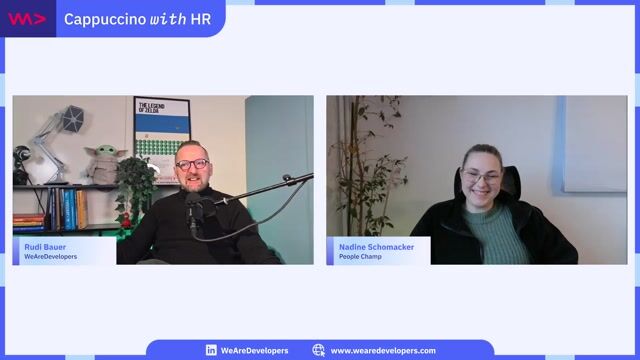
Rudi Bauer & Nadine Schomacker
Neuroinclusion: The Future of Work Starts in Your Meeting Room
#1about 4 minutes
Defining neurodiversity and its growing workplace relevance
Neurodiversity refers to the natural variation in human brain function, and its importance is growing as companies move away from standardized industrial-era work models.
#2about 4 minutes
A three-step framework for implementing neuroinclusion
Begin with a company-wide information audit of processes and policies, then focus on leadership training for psychological safety and affirmative leadership.
#3about 4 minutes
Supporting the specific needs of neurodivergent employees
Instead of making assumptions, ask individuals what they need, focusing on practical adjustments like communication preferences and work styles to create a more individualized environment.
#4about 9 minutes
Designing a neuroinclusive physical and hybrid office
Encourage office return with inclusive design features like focus rooms, fidget toys, dimmable lighting, and separated seating areas to manage sensory input.
#5about 3 minutes
Building trust and proving the business case for neuroinclusion
Establish psychological safety as a foundation for trust and justify investment with proven ROI data on increased retention, productivity, and innovation.
#6about 5 minutes
A practical starter kit for your neuroinclusion journey
Begin your neuroinclusion initiative with simple tools like a 'Manual of Me' for individual preferences, a structured meeting guide, and sensory-friendly items like fidget toys.
#7about 5 minutes
The future of work is a psychologically safe environment
The ultimate vision for a neuroinclusive workplace is one where psychological safety is a lived reality, not a buzzword, making inclusion an inherent part of the culture.
Related jobs
Jobs that call for the skills explored in this talk.
Wilken GmbH
Ulm, Germany
Senior
Kubernetes
AI Frameworks
+3
Matching moments
03:29 MIN
Designing for cultural differences and neurodiversity
The Neuro-Architecture of Productivity: How Work Environments Impact Cognitive Performance
03:55 MIN
Actionable advice for being a better workplace ally
Coding and Mental Illness. A Survival Guide
02:57 MIN
Taking practical steps to foster an inclusive workplace
Thriving Is a Feature, Not a Bug: Wellbeing for the Future of Work
04:46 MIN
Defining neuro-architecture for human-centric office design
The Neuro-Architecture of Productivity: How Work Environments Impact Cognitive Performance
03:21 MIN
Creating a supportive and autism-friendly work environment
Autism in Tech
02:51 MIN
Overcoming roadblocks to diversity and inclusion
From Words to Action: Advancing Inclusion Through Leadership
09:38 MIN
Q&A on adapting onboarding for different contexts
Developers don't need onboarding, do they? The balance between corporate culture and day-to-day project work.
00:59 MIN
Navigating global diversity and inclusion challenges
HR Leaders Summit Opening
Featured Partners
Related Videos
From Words to Action: Advancing Inclusion Through Leadership
Rudi Bauer & Kobi Ampoma
Beyond the 9–5: Designing Work Around Humans
Rudi Bauer & Gina Schinkel
Leading with Care: Tackling Burnout and Mental Health
Rudi Bauer & Marie Chaproniere
Culture Starts With You: Rethinking Leadership in 2025
Rudi Bauer & Meghan Hennessy
From Stress to Strength: How to Build Workplace Resilience
Rudi Bauer & Ludmila Tomperi
The Neuro-Architecture of Productivity: How Work Environments Impact Cognitive Performance
Rudi Bauer & Elena de Kan
Putting People at the Center: Women in Tech and the Future of Work
Rudi Bauer & Christine Regitz
How Trust, Healthy Tension, and Sustainable Culture Shape the Future of Work
Rudi Bauer & Nora Dietrich
Related Articles
View all articles.gif?w=240&auto=compress,format)


From learning to earning
Jobs that call for the skills explored in this talk.


Confideck GmbH
Vienna, Austria
Remote
Intermediate
Senior
Node.js
MongoDB
TypeScript


Smart Future Campus GmbH
Regensburg, Germany
ETL
JSON
Azure
NoSQL
Data analysis