Most teams retest their entire codebase on every commit. Learn how Nx uses a project graph to only test code that has actually changed.
#1about 7 minutes
The paradox of choice in front-end development
Front-end development presents an overwhelming number of choices for frameworks and libraries, leading to decision fatigue.
#2about 4 minutes
Three approaches to making technical decisions
Developers typically make decisions as a randomizer, an analyst, or a follower, each with its own trade-offs.
#3about 3 minutes
Overcoming initial skepticism about Nx and monorepos
The speaker shares their initial reservations about Nx being too opinionated and complex before realizing its benefits for projects of all sizes.
#4about 7 minutes
Core benefits of using a monorepo architecture
Monorepos enable atomic changes, simplify code sharing, and enforce a single set of dependencies across multiple applications and libraries.
#5about 5 minutes
Why simple code co-location is not enough
Co-locating projects in one folder fails to solve issues like running unnecessary builds, enforcing code boundaries, and maintaining consistent tooling.
#6about 8 minutes
Addressing common misconceptions about Nx
Nx is not just for large, Angular-based enterprise projects; it's a flexible tool with a manageable learning curve for various ecosystems.
#7about 5 minutes
How Nx scales from proof of concept to startup
Nx provides value at every project stage, from scaffolding a proof of concept with generators to managing migrations and best practices for a growing startup.
#8about 5 minutes
Enterprise-grade features like caching and boundary enforcement
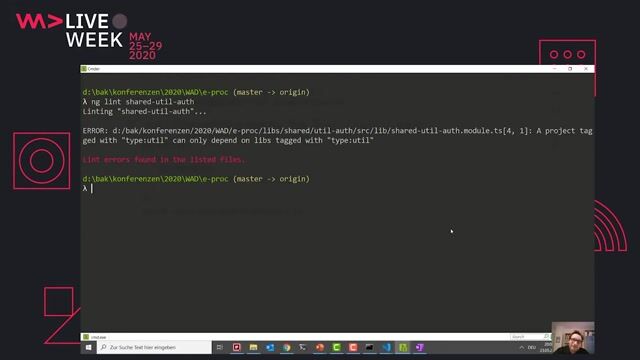
Nx improves large-scale development with powerful features like local and distributed caching, strict module boundaries, and the affected command graph.
#9about 1 minute
Key takeaways for adopting Nx and monorepos
Adopting a monorepo with Nx provides superpowers for any project size or framework, not just large enterprise Angular applications.
Related jobs
Jobs that call for the skills explored in this talk.
Exploring TypeScript: Benefits for Large-Scale JavaScript ProjectsJavaScript is the backbone of web development, powering everything from small websites to large-scale enterprise applications. However, as projects grow in complexity, maintaining JavaScript code can become increasingly difficult. This is where TypeS...
Daniel Cranney
Dev Digest 206: X Algorithm, Super Monkey Ball, Moltbot vs. SecurityInside last week’s Dev Digest 206 .
👀 How X chooses what you see
🟨 Building a JavaScript runtime in a month and a browser API in one shot
🔲 JavaScript frameworks heading into 2026
⚠️ AI is getting better at detecting security issues
🔓 Moltbot is a s...
Benjamin Ruschin
The HTML Elements That You’re Probably Over-EngineeringAs frameworks have become more and more commonplace in the world of web development, so too has the over-engineering of features made possible by our humble old friend, HTML.
The mental models that come with using state management in React, Vue and o...
Daniel Cranney
Dev Digest 188: CfP time, the risks of NPM and IKEA algorithmsInside last week’s Dev Digest 188 .
🤖 GitHub Copilot CLI is now in public review
💻 Microsoft is bringing ‘vibe working’ to office apps
🎣 Attackers abuse AI tools to generate captchas in fishing attacks
⚠️ When LLMs autonomously attack
🧠 Common cause...
From learning to earning
Jobs that call for the skills explored in this talk.